Jammed Door Lock From Outside? Safe Checks Before You Damage the Key or Door
Standing outside with the correct key and a lock that will not turn is different from forgetting the keys on the kitchen table. You have an access method that has stopped behaving normally, and forcing it can leave a broken fragment in the cylinder. The useful response is to identify what the key, handle and door are doing before deciding what kind of help is needed.
This guide covers checks available from outside a door you are authorized to use. It does not assume that you can open the door to inspect the edge or safely reach another entrance. If somebody is at immediate risk inside, contact the appropriate emergency service rather than working through routine troubleshooting.
Stop when force starts increasing
If the key is bending, the handle is breaking or the lock housing moves unexpectedly, stop. Pliers and a longer lever do not diagnose the problem; they increase the chance that a repairable fault becomes damaged hardware.
Keep the situation safe while arranging access. Use an authorized spare-key holder, property manager or reputable locksmith. Do not climb to an upper window, break glazing or enter another person’s property to reach your own door.
For a routine forgotten-key situation rather than a jammed mechanism, our home lockout guide explains the service and quotation process. Here the priority is communicating the fault accurately.
Identify the exact symptom
| Observation | What it may involve | What to report |
|---|---|---|
| Key does not enter completely | Wrong or damaged key, keyway obstruction or cylinder damage | How far it enters and whether a spare behaves differently |
| Key enters but will not rotate | Cylinder fault or pressure through the locking system | Whether normal door pressure changes anything |
| Key rotates partway and stops | Mechanism, required sequence or receiver interaction | The point of resistance and handle behavior |
| Key turns normally but door remains closed | Latch, gearbox or another engaged locking point | Whether the handle still feels normal |
| Electronic command fails but key works | Electronic, power or motor-related fault | Exact error and successful backup method |
| Fresh visible damage | Possible impact or interference, not necessarily a confirmed cause | Photographs and when it was first noticed |
These observations are not a remote diagnosis. They help the repairer distinguish a key problem from a larger door-system problem without asking you to dismantle the entrance.
Check the key you are using
Confirm it is the correct key, particularly after a move, replacement or a change of keyring. Inspect it under good light for visible bends, cracks or damage. Do not straighten or file it in an attempt to make it work.
If a known-good authorized spare is readily available, compare it gently. A spare that operates normally suggests the usual key deserves assessment. A spare that also fails does not prove the cylinder must be destroyed; the door or linked mechanism may be involved.
Keep damaged keys and fragments for the professional. If you have key-control documentation, bring it through an appropriate private channel rather than posting photographs of working keys online.
Use only normal door operation
Check whether the door is fully seated and whether ordinary handle operation changes the symptom. A door under pressure from a seal or slight misalignment can behave differently when gently held in its normal closed position. Do not turn that observation into repeated lifting, kicking or violent pulling.
If you normally have to lift a multipoint handle before locking or unlocking, confirm the manufacturer’s sequence. Automatic and other designs differ, so do not copy a technique from a door that merely looks similar.
A new need for extra force is a fault to investigate, not a maintenance routine. Once access is restored, the repair should address why the fit or mechanism changed.
When the key turns but nothing releases
The cylinder may be moving while the part that retains the door does not respond. On a multipoint door, a central mechanism connects several locking points. On another lockset, a latch or retractor may have failed.
The Master Locksmiths Association’s repair guidance distinguishes several door and mechanism failures. Describe what turns and what remains stuck rather than ordering a cylinder replacement before inspection.
Check for another legitimate locking point that remains engaged, but do not assume every resistance is a forgotten bolt. If the normal controls do not release the door, obtain appropriate assistance.
Cold weather and moisture
Notice whether the problem is associated with freezing conditions, rain or a recent temperature change. The cylinder may be affected by moisture, or the door and frame may have changed fit. Those possibilities need different remedies.
Do not use an open flame, boiling water or improvised heat around the lock. Follow the hardware manufacturer’s approved winter-care guidance and seek assistance when the entrance cannot be used safely.
After access is restored, inspect exposure and recurring movement rather than treating every winter episode as unavoidable. A suitable repair may involve seals, drainage, alignment or replacement of an unsuitable component.
Do not experiment with several lubricants
There is no single product appropriate for every keyway. Different manufacturers specify different maintenance products, and some expressly reject substances commonly recommended in generic tutorials. Pouring oil into an unidentified cylinder can make the eventual cleaning more difficult.
Use the exact manufacturer’s instructions if the situation genuinely calls for maintenance. Do not introduce glue, picks, improvised hooks or other objects that can damage the mechanism while you are locked out.
Our lock-maintenance guide compares the relevant component-specific questions. Lubrication will not repair a broken gearbox or create missing frame clearance.
Smart-lock failures need a separate branch
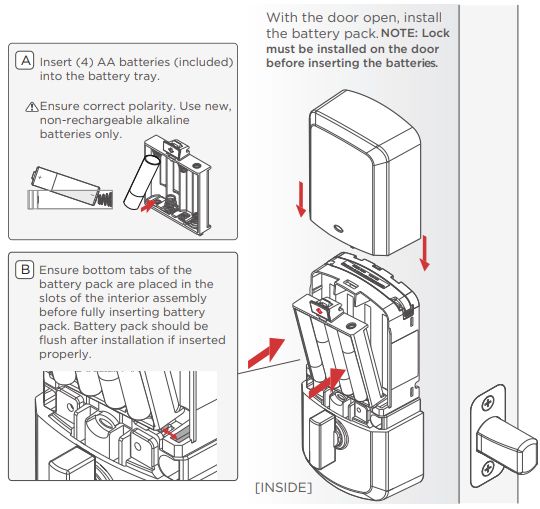
Check the product’s approved backup method. A local keypad, mechanical key or specified emergency-power contact may remain useful when a phone or cloud service fails. Do not assume an internet problem changes the mechanical state of the lock.
If the physical key operates but the motor does not, that is useful evidence. Schlage’s motorized-deadbolt troubleshooting uses mechanical operation and strike fit among its checks. Apply only the steps relevant to the exact model.
Do not factory-reset a device while outside unless you understand how authorized access will be restored and the manufacturer recommends it. Removing accounts or calibration may create a second problem while the original door remains shut.
If you see signs of damage
Photograph visible damage from a safe position and record when you noticed it. A scratch or stiff key alone does not prove attempted intrusion; wear, accidental impact and previous work can also leave marks.
If there are clear signs of forced entry or a reason to suspect someone may be inside, do not enter to investigate. Move to safety and contact the appropriate authorities. Preserving evidence matters more than immediately testing every possible access method.
Tell the locksmith about the damage before work begins. A post-incident repair should assess the frame and supporting hardware as well as the cylinder, not simply restore key rotation.
Arrange the right kind of professional visit
Provide the door material, lock markings where visible, symptoms and any urgency. State whether the property is rented or managed and whether the entrance has special fire or access requirements. Ask what proof of authority they require and explain if the relevant documents are inside.
Request a clear breakdown of call-out, labor and possible parts. Non-destructive access may be possible, but a broken mechanism can require repair or replacement. Ask why any destructive work is necessary and authorize significant additional work consciously.
The MLA’s selection guidance advises checking the business and its credentials rather than relying only on a low advertised fee. Licensing and approval systems vary by location, so verify the arrangement that actually applies.
What should happen once the door is open?
The diagnosis should continue. Compare the mechanism’s operation without frame pressure, inspect the receivers and assess hinges and door position. A working key with the door open may expose an alignment problem, while continued stiffness points elsewhere.
Keep the door controlled until the repair is tested. Do not allow another occupant to close a failed latch and recreate the lockout. If a temporary arrangement is needed, it must preserve appropriate security and safe exit.
Our key and cylinder guide and closed-door alignment guide provide the next diagnostic branches. The reason for the failure should be explained before replacement parts are chosen.
Decide whether keys or access permissions must change
A mechanical jam does not automatically mean someone else has access. If the key was simply worn, a suitable replacement and hardware repair may be enough. If keys were stolen or lost with information linking them to the address, review the access risk separately.
Rekeying, where supported, and replacing a failed lock are different tasks. For connected hardware, also review digital invitations or lost-phone access where relevant. Do not assume a mechanical-key change revokes every electronic permission.
In a shared system, coordinate with the owner or manager. Replacing a controlled cylinder independently can interfere with legitimate building arrangements.
Check the completed repair in normal use
Test the supplied or retained keys, inside release and any electronic access with a safe alternative route available. Confirm full movement with the door open and closed. It should not require a new trick involving lifting, pulling or a particular key angle.
Ask for the exact parts fitted and the maintenance instructions. Keep the invoice and warranty details. If the problem recurs under particular weather conditions, record that rather than repeatedly paying for unexplained adjustments.
A sound repair restores ordinary operation and explains the failure. It does not merely make the door open once while leaving the cause for the next visitor.
Prevent the next jam
Respond early to changes in key or handle effort. Inspect and maintain components according to their own instructions, and replace damaged keys rather than continuing to force them.
Keep an authorized backup access arrangement and trusted repair contact. Do not leave a window unlocked as a permanent workaround. For a household that frequently forgets keys, consider whether a suitable keypad or another access routine addresses that separate issue.
Frequently asked questions
Can I tell from outside whether the cylinder is broken?
You can collect useful symptoms, but a definitive diagnosis may require access and inspection. Key movement, handle behavior and visible damage should be reported separately.
Should I push harder on the key?
No. Stop if force increases or the key begins to bend. Extra leverage can turn a repairable problem into a broken key or damaged mechanism.
Why does a key turn without opening the door?
A latch, gearbox or another locking component may not be releasing, even though the cylinder rotates. The correct repair depends on the actual mechanism.
Is a factory reset the answer for a smart lock?
Not as a first step. Establish whether the failure is mechanical, power-related or digital and use the supported backup and troubleshooting process.