

Construction Site Safety: Practical Controls for Changing Work and Serious Hazards
A construction site can change between the morning briefing and lunch. A delivery blocks a walkway, an opening is created in a floor and another trade starts cutting material beside an occupied work area. Yesterday’s safe route and last week’s induction cannot be the entire safety arrangement for work that is still changing.
Effective control begins with planning the task, removing or isolating hazards and ensuring people understand the current arrangements. Personal protective equipment is important, but a hard hat and high-visibility vest do not make an uncontrolled lifting operation or unsupported excavation safe. This article is an overview for recognizing the decisions that need competent management; it is not a construction method statement, legal compliance certificate or technical rescue guide.
Establish who controls the work
Identify the responsible site management, supervisors and competent specialists for the task. Workers and visitors should know whom to contact about a changing condition and how to stop and report an unsafe situation. Responsibilities must be practical, not merely names buried in a document.
Requirements vary by jurisdiction and type of project. The US OSHA and UK HSE sources below explain their respective systems; they are not a single worldwide rulebook. Use the regulations, plans and authorized procedures applicable to the actual site.
For a small domestic project, do not assume that fewer workers remove the need for planning. Existing residents, children, deliveries and the public can add risks that are absent from a fully separated commercial site.
Use the hierarchy of controls
The NIOSH hierarchy prioritizes eliminating hazards, substituting safer processes and engineering controls before relying on administrative measures and PPE. The point is to control exposure at its source rather than depending entirely on everyone reacting perfectly all day.
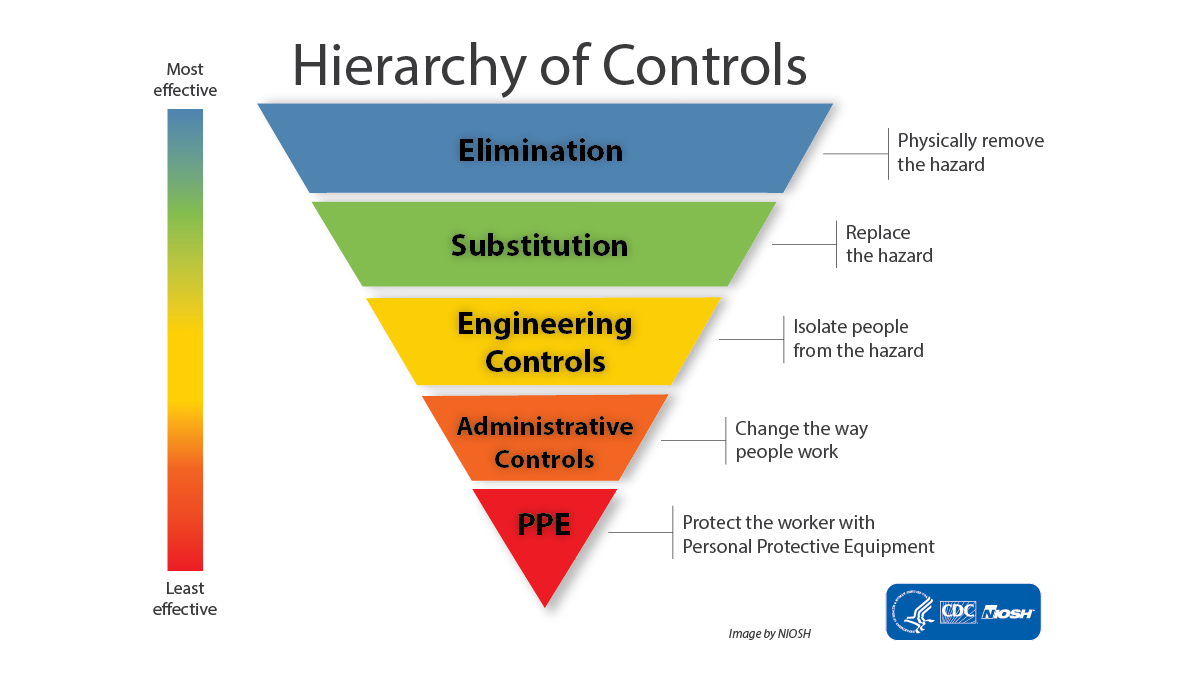
For example, reducing unnecessary cutting through design can be preferable to creating dust and asking workers to tolerate it. Separating pedestrian routes from moving plant is more robust than telling everyone to make eye contact. Each proposed control still needs to be suitable and checked for new risks it introduces.
Induction must describe this site
A worker’s general qualification does not identify today’s delivery route, emergency assembly point or restricted area. Provide an induction proportionate to the person’s tasks and access, including visitors who may only be present briefly.
HSE’s induction guidance covers site-specific hazards, first aid, reporting, traffic and ongoing briefings. Instructions need to be understood, including language and accessibility requirements, not merely signed for.
Check understanding through practical questions. Can the new worker identify the safe route to the work area and the person authorizing the next task? If not, the signed induction form has not completed the operational job.
Keep the daily briefing connected to changes
Before work starts, review what is different: weather, plant movements, simultaneous trades, newly opened areas and changes to protection. Repeat the relevant assessment when the task or conditions change, not only at a fixed time on the calendar.
A useful briefing identifies the work, the hazards, the controls and who verifies them. Avoid reading a generic checklist while the team remains unclear about which area is isolated or when a lifting operation begins.
Make it possible to report a near miss without automatic blame. A dropped object that injured nobody still reveals a control problem worth correcting before the next person passes underneath.
Separate vehicles and pedestrians
Plan suitable access, delivery, loading and turning arrangements. Use physical separation and controlled crossings where appropriate rather than relying on a painted line or high-visibility clothing alone. Consider visitors and drivers unfamiliar with the site.
HSE’s traffic-management guidance prioritizes keeping people and vehicles apart and reducing unnecessary vehicle movements. A person seeing an operator does not prove the operator can see them, particularly around blind spots and changing loads.
Do not walk into a plant operating area to obtain attention or take a shortcut behind a reversing vehicle. Follow the site’s authorized communication and crossing procedure. Drivers and spotters need appropriate training and clear roles rather than improvised signals.
Falls: plan the work platform and rescue together
Work near edges, openings and fragile surfaces requires an appropriate assessed arrangement. A ladder, scaffold, platform and personal fall-protection system have different intended uses and limitations. Select the work method through competent planning instead of treating any elevated surface as an acceptable platform.
OSHA’s Focus Four resources place falls alongside struck-by, caught-in/between and electrical hazards as major training priorities. That does not provide a universal height rule for every country or activity; the applicable requirements must be established for the task.
Personal fall arrest also needs suitable anchorage, compatible components, inspection and an effective rescue plan. Do not assume calling emergency services is the entire recovery arrangement for a suspended worker. Only trained authorized people should select and manage the system.
Excavations can change while the job is underway
Do not enter an excavation simply because it looked stable yesterday or somebody has already worked inside it. Soil, water, nearby loads, services and structural support need competent assessment and the required protective system.
OSHA’s excavation guidance emphasizes competent-person inspection, safe access, collapse protection and conditions such as water and hazardous atmospheres. It provides US requirements that should be applied through the authorized site plan, not converted into a claim that every excavation below a single depth is harmless.
If there is a collapse or suspected hazardous atmosphere, keep others out and activate the emergency plan. An untrained entry to rescue a colleague can create additional victims. Do not improvise shoring, ventilation or entry arrangements from a general article.
Electrical work and concealed services
Identify and control electrical hazards before drilling, lifting, excavating or using powered equipment near services. A cable’s appearance does not prove it is inactive. Work requiring isolation or electrical competence belongs to appropriately authorized personnel.
OSHA’s electrical-incidents overview identifies overhead and underground lines, damaged equipment and improper cord use among significant hazards. Keep defective tools out of use and report damage through the site’s process rather than taping over an unknown fault.
Use the correct approved supply, protection and equipment for the environment. Do not modify a plug to fit an incompatible socket or bypass a protective device because it interrupts the work. An electrical problem should change the work plan, not the safeguards.
Lifting and falling objects
Plan lifting operations with the right competent personnel, equipment and exclusion arrangements. A load that appears balanced from one angle can still be unsuitable to move. Do not stand under suspended loads or enter a controlled area to save a few steps.
Secure tools and materials through the method specified for the task, and keep people below protected appropriately. Head protection does not make exposure to uncontrolled falling objects acceptable.
Consider simultaneous work. A team fitting services beneath another trade’s activity needs coordination, not only separate toolbox talks. Changes in schedule should not silently remove the separation planned for the original work sequence.
Dust is a health hazard, not just a housekeeping problem
Assess the material and task before cutting, grinding or demolition. Choose appropriate methods that avoid or control dust at the source, and verify that extraction or suppression equipment is suitable and working. A visible reduction is not always proof that exposure has been adequately controlled.
HSE’s construction-dust guidance explains that repeated exposure can cause serious respiratory disease. Where respiratory protection is required, selection, fit, use and maintenance need a proper program; a random mask is not a complete control plan.
Do not dry-sweep hazardous dust or use compressed air simply because it clears the immediate work surface. Follow the site’s approved cleaning and waste-handling method so the cleanup does not create another exposure.
Stop when an unexpected material changes the assessment
If suspected asbestos or another unexpected hazardous material is found, stop the affected work and notify the responsible person. Do not break off a sample, sweep it away or continue while somebody searches the internet for a reassuring photograph.
HSE’s worker guidance says work should not proceed until the necessary information and arrangements are established. Existing surveys can have limits, and only appropriately trained or licensed people should carry out the relevant work.
The same principle applies to unidentified containers, services and structural conditions. A schedule does not make an incomplete assessment adequate. Record the finding and use the site’s competent review process.
PPE must fit the task and the worker
Select protective equipment for the assessed hazards and applicable requirements. Check compatibility between items, such as hearing protection, eye protection and a respirator. A combination that prevents an item sealing or being used correctly can reduce its intended protection.
Provide appropriate fit, instruction, inspection and replacement. Damaged PPE should not remain in use because a replacement is inconvenient. Visitors also need equipment and controls suitable to their exposure, not merely a spare hard hat handed over at the gate.
Do not use PPE to justify continuing work where a higher-level control is missing. A harness without the required system, or a vest in uncontrolled traffic, is not evidence that the task is safe.
Weather, fatigue and welfare
Review heat, cold, wind, rain and visibility against the work and equipment limits. A change can affect lifting, surfaces, temporary structures and workers’ ability to concentrate. Follow the approved stop criteria rather than waiting until someone is injured.
Provide the necessary water, rest, toilets and suitable welfare arrangements. A worker who cannot take a break or communicate a health concern may be more likely to make an error. Treat fatigue and impairment as operational issues requiring a safe response, not only a personal weakness.
Keep work schedules realistic and account for travel and lone working where relevant. An instruction to stay alert is not a substitute for managing an excessively demanding arrangement.
Housekeeping, boundaries and the public
Maintain clear routes, appropriate storage and controlled access to dangerous areas. Remove unnecessary trip hazards and secure materials so normal movement does not disturb them. Housekeeping should continue through the work, not only before an inspection.
Keep the public and occupants separated from active work through the site’s assessed barriers and procedures. Children, delivery staff and people unfamiliar with the project may not recognize a hazard that seems obvious to a trained worker.
For an occupied building, coordinate fire routes, services and access changes with the responsible manager. A locked site gate should not obstruct a required emergency route. Our business-security guide covers access management, but it does not replace the construction safety plan.
Emergency response must be site-specific
Know how to raise the alarm, contact emergency services and give the exact access location. A large site may have several entrances, changing roads or a work area that is difficult to describe by street address alone.
Identify first-aid arrangements, trained responders and task-specific rescue needs before work. Do not assume that every worker is authorized to enter a confined space, unstable structure or electrical hazard to help somebody else.
After an incident, preserve relevant facts and follow required reporting procedures without delaying urgent care. Review the control failure and verify corrective action before resuming affected work.
A practical pre-task record
| Question | Evidence needed |
|---|---|
| What is the work? | Defined task, location and responsible supervisor |
| What has changed? | Current conditions and simultaneous activities reviewed |
| Which hazards are controlled? | Suitable assessed measures actually in place |
| Who is competent and authorized? | Required training, supervision and permits confirmed |
| How will people move? | Safe routes and exclusion areas understood |
| What stops the task? | Clear reporting and stop criteria |
| What happens in an emergency? | Access, communication and appropriate rescue arrangements |
A record should support the actual briefing, not become a substitute for observing the work. If a control on paper is absent on site, the task is not ready merely because every box has a tick.
Frequently asked questions
Is a safety induction enough for the whole project?
No. People need updates when tasks, routes and hazards change. Initial orientation does not replace competent ongoing assessment and supervision.
Does PPE make a hazardous task safe?
Not by itself. Remove or control hazards at the source where possible and use suitable PPE as part of the assessed system.
Can a general checklist certify legal compliance?
No. Requirements depend on the location, project and work. Use the applicable regulations and qualified site-specific assessment.
What should a visitor do?
Use the authorized entrance, complete the relevant briefing, remain within permitted areas and follow the escort’s instructions. Do not explore active work areas independently.


