

Pickup Truck Bed Security: Covers, Tailgate Locks, Toolboxes and Safe Cargo Storage
A pickup bed is designed to make loading easy. That same openness becomes inconvenient when expensive tools must stay in the truck during a meal, an overnight stop or a worksite visit. A cover can hide the load, but the material, latches, tailgate and mounting decide how much more than concealment it provides.
Separate two jobs from the beginning: securing cargo against movement while driving and restricting access while parked. A theft lock is not automatically a rated tie-down, and a properly tensioned cargo strap is not automatically theft-resistant. The best arrangement handles both without damaging the truck or interfering with normal operation.
Start with what you carry and when it is unattended
Make a list of the normal load, its dimensions and the times it stays in the bed without supervision. A contractor carrying small power tools has a different problem from someone transporting a kayak for an afternoon. A cover that suits low cargo may be incompatible with a ladder rack or tall equipment.
Decide which items genuinely need to remain in the truck overnight. Removing a compact high-value item may reduce risk more directly than paying for another alarm. For equipment that must stay, plan an appropriate enclosure and a reliable closing routine.
Include the tailgate itself in the inventory. It can be a valuable vehicle component, and its access or removal protections are not necessarily identical to protecting the cargo above it.
Compare the main storage arrangements
| Option | Practical contribution | Important limitation |
|---|---|---|
| Soft tonneau cover | Concealment and specified weather protection | Flexible material is not equivalent to a rigid security enclosure |
| Hard folding or rolling cover | More substantial closure on a compatible installation | Often depends on rails, latches and a secured tailgate |
| Retractable cover | Adjustable access and a defined locking arrangement | Canister space and exact locking design vary |
| One-piece cover or cap | Enclosed storage with model-specific doors and locks | Limits some loads and still is not a burglary-rated safe by default |
| Truck-bed toolbox | A separate compartment for smaller equipment | Needs appropriate mounting and suitable locks |
| Drawer or internal storage system | Organization and separate access control | Weight, dimensions and vehicle compatibility affect usefulness |
Do not choose solely from a better-versus-best label. A rigid cover may suit ordinary tools but prevent you carrying the tall load you move every week. A separate toolbox may solve the important storage problem while leaving the rest of the bed available.
Soft covers: useful concealment, limited physical resistance
A soft roll-up or folding cover can keep ordinary cargo out of sight and provide the weather protection its manufacturer specifies. That can be worthwhile when the objective is not advertising what is in the bed. It should not be presented as equivalent to a rigid locked compartment against deliberate access.
Check how it attaches and closes, how it interacts with the tailgate and how it must be secured for driving in an open position. Weather seals and tensioning need maintenance. A cover partly fastened because the load is too high is not operating as intended.
RealTruck’s cover-security comparison distinguishes flexible covers from harder constructions and explains that closure arrangements vary. Treat the manufacturer’s category rankings as product guidance, not independent proof that any cover prevents all theft.
Hard folding, rolling and retractable covers
Rigid panels or slats can provide a more substantial barrier than a flexible fabric layer, but the complete assembly still matters. Look at the rails, latches, mounting clamps and how the closed cover relates to the tailgate. A loose installation can undermine a well-made product.
Ask how the cover is opened by an authorized user and whether it locks independently or relies on the tailgate remaining secured. Check every panel rather than assuming the first one catching proves the whole bed is closed.
For example, the BAKFlip G2 product page describes a hard-folding system with panel latches and a clamp-on mounting arrangement. That is a model-specific design example, not a recommendation that the same part fits every pickup. Select the truck, year, bed configuration and relevant accessories before ordering.
The tailgate may be the controlling access point
Some covers are designed so ordinary release is accessed through an open tailgate. In that arrangement, leaving the tailgate unlocked can defeat the intended access control even when the cover itself appears closed. Other covers use their own external locking mechanism.
Confirm how the factory tailgate lock behaves when the cab is locked. Do not assume every trim level or aftermarket arrangement links them identically. Test using the owner’s manual and the accessory instructions, not a remembered behavior from another truck.
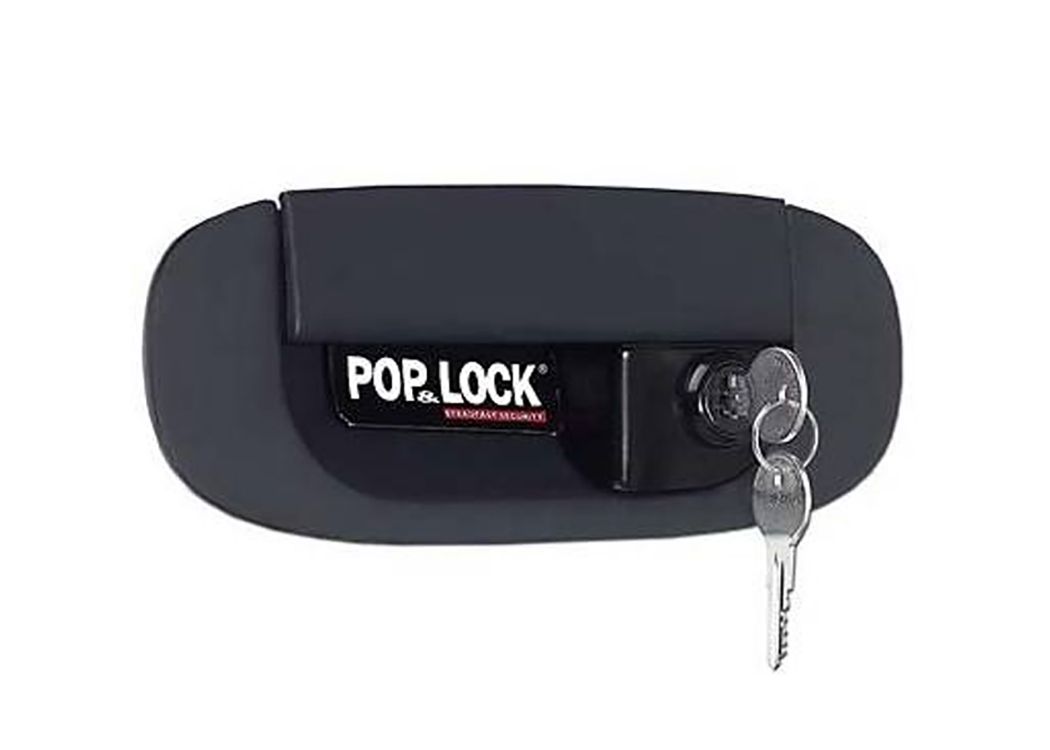
A retrofit may be useful where the original tailgate lacks the required locking function. Ask about camera compatibility, handle operation and maintenance. Do not treat marketing language about preventing theft as an absolute guarantee or assume one retrofit fits every factory handle.
Toolboxes need sound mounting as well as a lock
A separate toolbox can organize valuable equipment and keep it out of casual view. Its usefulness depends on the body, hinges, lid, lock and installation. A strong-looking box that can be removed intact is a different problem from one properly secured to suitable mounting points.
Choose a system designed for the truck and load. Ask whether drilling is required, what lies behind the proposed fixing points and how the installation affects factory corrosion protection or warranty. Do not improvise holes in unknown structural or electrical areas.
Check usable internal dimensions and access with the cover or rack fitted. A box that can only open after removing other equipment may encourage you to leave frequently used tools outside it. Good organization should make secure storage the easiest ordinary action.
Caps and canopies
A cap can create more enclosed space than a low tonneau cover, but its windows, doors and mounting introduce their own access points. Check the lock arrangement and how the cap is secured to the bed. A tinted window provides privacy, not the same protection as a solid tested barrier.
Compare ventilation and access requirements for the intended use. Never treat a cargo enclosure as a safe place for a person or animal without a specifically suitable design. Do not enclose running fuel-powered equipment or create an unsafe environment to reduce theft exposure.
If the cap is used for work storage, consider internal compartments for valuable tools. The whole exterior enclosure should not be the only layer when a relatively small cabinet can protect the highest-value items separately.
Keep road-load restraint separate
Cargo must be restrained for travel using the vehicle and equipment manufacturers’ guidance. A cover may not be designed to keep a heavy object from moving during braking. A cable used for theft deterrence may not have the rated working load, geometry or attachment needed for transport.
NHTSA’s load-security guidance emphasizes proper securing and avoiding excessive loads. Use suitable anchors and restraints, observe the truck’s capacities and check the load before driving. A theft-prevention article should not encourage substituting a padlock for a safe transport system.
Inspect restraints after stops and according to the load’s requirements. Remove or stow anti-theft devices that could interfere with movement, braking or access before departure. Make that a visible part of the driver’s routine.
Do not overload the cover or ignore accessory conflicts
A cover’s published load capacity applies under its stated conditions. It is not automatically permission to stand on it, carry concentrated weight or drive with an improvised rack attached. Check whether ratings concern distributed static loads or another defined use.
Ladder racks, bed rails, toolboxes, liners and factory cargo systems can affect compatibility. Two accessories that each fit the truck may not fit each other. Ask the suppliers to confirm the complete proposed arrangement.
Also confirm the approved open-driving position. A partly folded cover or unsecured rolled section can behave differently at road speed. Theft protection should not create a loose component that becomes a hazard during normal travel.
Parking choices and overnight storage
Choose legal, reasonably visible parking with controlled access where available. A managed site or garage can provide another layer, but only when its own gates and routines work. Do not obstruct exits or other vehicles to protect the truck.
For overnight stays, remove the items that can be stored more appropriately indoors. Check hotel or worksite arrangements before arrival when the load is valuable. A room overlooking the parking area is useful for awareness but does not constitute continuous monitoring.
Avoid leaving inventory paperwork, access keys and the tools they unlock together. Keep serial numbers and purchase records somewhere available even if the truck and its entire contents are taken.
Alarms and camera coverage
An alarm may detect particular openings or movement when properly configured, but not every factory vehicle alarm monitors the bed, cover or toolbox. Ask exactly which event a proposed sensor detects and how it behaves during ordinary loading.
A camera covering the parking area can supply evidence, but its angle may not show activity behind a raised tailgate or under a cap. Test nighttime footage and the approach path rather than assuming a front-facing dash camera sees the whole vehicle.
Our camera-placement guide explains useful detail and coverage. Monitoring does not replace a sound enclosure or a practical response arrangement.
Work trucks need accountable access
When several people use a vehicle, define who checks the bed at departure, breaks and the end of the shift. Track toolbox keys and any remote or digital access. A shared key left in the cab can undermine separate storage.
Use a simple equipment check-out process for valuable items. It helps distinguish theft from a tool moved to another vehicle and makes a report more accurate. A photograph of the loaded bed can be useful as an inventory record without becoming a substitute for proper storage.
Review access when employees or contractors leave. Our small-business guide connects vehicle equipment, accounts and staff procedures so the responsibility does not fall between departments.
Insurance and installation evidence
Ask how the policy treats tools, personal belongings, aftermarket accessories and overnight storage. Vehicle cover does not automatically mean every item in the bed is insured on the same terms. Document the security required by your specific policy.
Keep receipts, installation details and records of product models. A cover called heavy duty is not evidence that it meets an insurer’s named condition. If a claim or requirement depends on a certified product, verify the exact model and current documentation.
Do not claim a self-installed accessory was professionally installed if it was not. Accurate records help establish what was actually fitted and maintained.
Inspect the finished setup
Close each compartment in the intended sequence and confirm full engagement. Check that covers and doors do not interfere with lights, cameras, sensors or the tailgate’s normal operation. Follow the specified tightening and inspection procedure for mounting hardware.
Test the ordinary workflow with the actual load. Can you retrieve a tool, resecure the compartment and verify closure without unloading half the bed? If not, adjust the storage plan rather than expecting busy users to maintain an impractical routine.
Recheck after servicing, accessory changes and any sign of loosening or water intrusion. A system that worked on installation day still needs condition-based maintenance.
Frequently asked questions
Is a hard tonneau cover theft-proof?
No. It can provide a more substantial closure than a soft cover, but latches, mounting, tailgate security and the exact design determine its contribution.
Will locking the cab lock the tailgate?
Check the exact vehicle and any aftermarket installation. Do not assume every pickup uses the same central-locking arrangement.
Can a cover replace cargo tie-downs?
Not unless the manufacturer specifically designs and rates the arrangement for that task. Road restraint and theft protection are separate requirements.
Should I choose a toolbox or a cover?
Choose by the cargo. A toolbox may secure smaller valuable items while preserving open-bed capacity; a cover may suit a broader low load. They can also be combined where compatible.
What is the first improvement worth making?
Remove unnecessary valuables, verify the existing tailgate and compartment locks, then select a compatible enclosure for the equipment that must remain. Buy monitoring only after the physical storage plan is clear.


