Lost Your Safe Key or Combination? Authorized Recovery and Locksmith Options
.sl-safe table{border-collapse:collapse;width:100%;margin:24px 0}.sl-safe th,.sl-safe td{border:1px solid #bccbd0;padding:12px;text-align:left;vertical-align:top}.sl-safe th{background:#edf3f1}.sl-safe .table-scroll{overflow-x:auto}.sl-safe figure{max-width:700px;margin:28px auto}.sl-safe img{display:block;max-width:100%;height:auto;margin:auto}.sl-safe figcaption{font-size:14px;line-height:1.6;color:#405b62;padding-top:10px}
The safe has been in the family for years, but the key has disappeared and nobody can find the combination record. Before trying anything destructive, identify the product and establish who is authorized to request access. Manufacturers and safe specialists have different recovery routes, and the correct one may preserve both the safe and its contents.
Start with the safe maker’s official support process, the exact model and suitable proof of authority. A replacement key, a recorded factory combination and service by a safe technician are different possibilities—not promises that every locked safe can be opened the same way. This guide does not cover bypassing another person’s lock.
Separate missing credentials from a faulty lock
If you know the correct code but the keypad is silent, the immediate issue may be power rather than a lost combination. If the key turns normally but the door will not release, the lock or door mechanism may need repair. Describe the actual symptom before ordering a replacement credential.
For a digital lock that does not respond as expected, use the keypad troubleshooting guide. It separates battery requirements, rejection, configured delays and mechanical problems. Repeatedly guessing codes can add a temporary lockout to the original problem.
| Situation | Appropriate starting point | What not to assume |
|---|---|---|
| Key lost, model known | Manufacturer’s authorized replacement process | Any key with a similar shape is correct |
| Combination record missing | Safe-maker support and ownership verification | The lock manufacturer keeps every current user code |
| Known code, no keypad response | Model-specific power checks | A credential reset fixes absent power |
| Door open, code uncertain | Keep it safely open and follow the supported owner procedure | Closing it is a useful way to test the uncertainty |
| Inherited or business-owned safe | Establish the responsible authorized person | Physical possession alone settles access rights |
Keep notes factual. A clear distinction between an unknown credential and a malfunction helps the manufacturer identify the correct service.
Find the model without creating a handling problem
Look at the original paperwork, purchase account, visible labels and the maker’s identification guide. The cabinet and its lock can carry different names. Record both where visible, because the lock may have been changed during earlier servicing.
SentrySafe’s model and serial-number guide illustrates how locations vary among products. Do not assume a photograph of a similar cabinet identifies your model accurately, especially when capacity or lock variants share the same appearance.
A heavy safe should not be tilted or pulled away from its anchoring merely to search for a number. Use suitable professional help when a label cannot be accessed safely. Existing receipts or installer records may provide the information without moving anything.
Keep identifying information private
Share serial numbers, key references and ownership documents only through a verified support or service channel that needs them. Avoid posting a photograph containing the safe location, credential record and full identification together in a public discussion.
Verify the support address through the manufacturer’s established website. An advertisement promising instant recovery should not be given identity documents merely because it appears above the official result.
Keep a private record of the contact, date and reference number. That prevents the recovery process becoming a confusing sequence of calls to unrelated businesses with no clear responsibility.
What a manufacturer may be able to provide
Depending on the product and its records, a maker may offer replacement keys, retrieval of an applicable factory combination or another documented owner-support route. Availability, identity checks, charges and delivery vary by country and model.
SentrySafe’s recovery page directs customers to country-specific processes. Its US replacement service identifies model, serial or key-reference information and states that identity verification may be required. Use the route for your region rather than submitting a request to a service that does not cover it.
Do not rely on an estimated shipping period for an urgent need. Ask the actual provider what it can confirm for your request. A replacement service also cannot necessarily supply a user-changed code that was never registered or retained.
The safe maker and lock maker are not always the same company
A lock can leave its manufacturer, be fitted by a safe maker and then receive new owner credentials. The name on the keypad does not mean that company has a record of the final combination.
Sargent & Greenleaf’s lost-combination guidance tells owners to contact the safe maker first and explains that it does not retain reset codes for those installations. It also recommends appropriately experienced safe technicians when a valid combination cannot be recovered.
Provide the complete product history you actually know. A secondhand safe with an unrecorded replacement lock may require a different service from a new cabinet still using its documented original arrangement.
A key may not override a missing combination
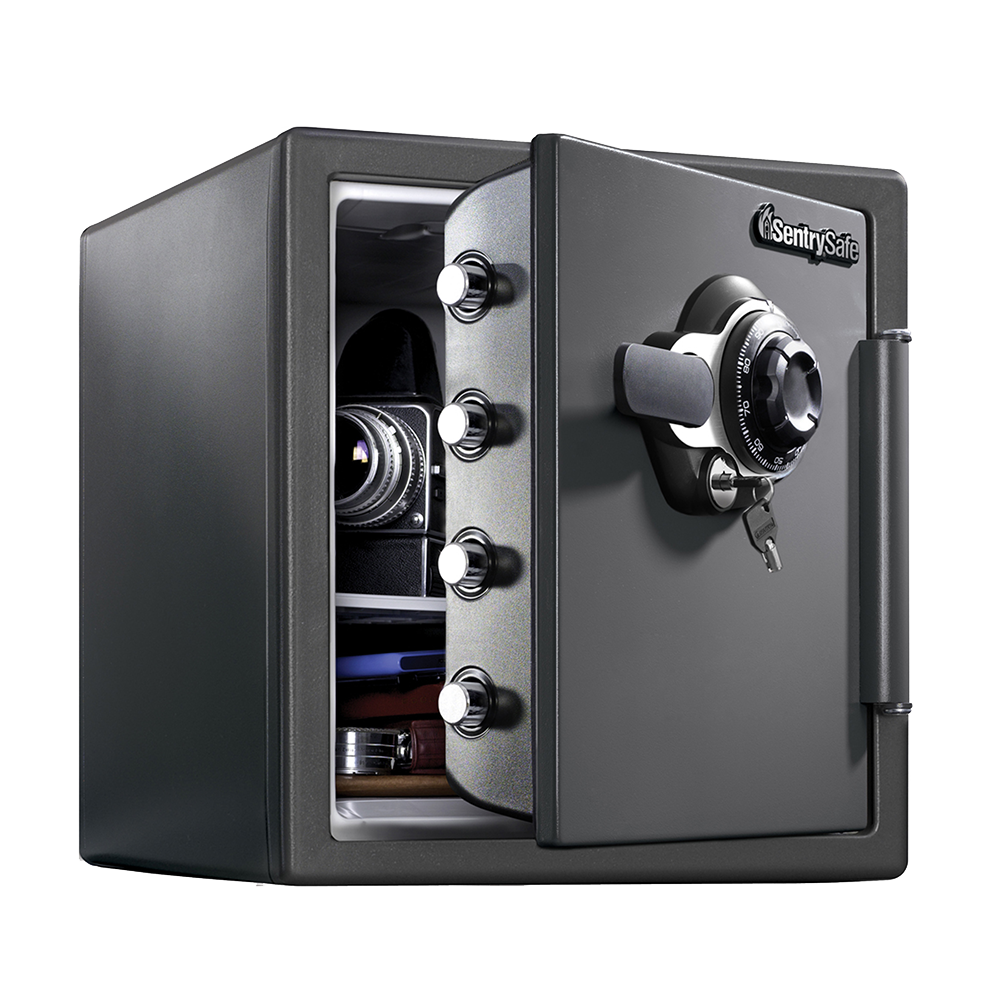
Some products use a key as the primary access method, some have an authorized alternative key, and others use a key as an additional condition. Those functions are not interchangeable. Confirm the role before paying for a key replacement you expect to solve an unrelated missing-code problem.
The safe-lock comparison explains why access and recovery should be evaluated before purchase. The question is what the exact mechanism supports, not what an online description calls a backup key.
When the door is already open
Keep the safe stable and do not close it until the authorized access procedure is confirmed. Follow the manufacturer’s instructions for setting or changing credentials and testing the result with the door open where permitted.
Do not start internal adjustments simply because the back of the lock is visible. Some changes require particular tools, authorization or a trained technician. A mistake can turn a manageable record problem into a locked-door service call.
After any approved change, verify all intended access methods and remove obsolete permissions through the correct process. Store the new credential securely, separately from the safe, rather than keeping the only copy inside it.
When a safe technician is the appropriate route
Use a specialist when the maker cannot recover the credential, the model is unsupported, the lock is damaged or the history is uncertain. Tell the provider that the job concerns a safe, not an ordinary house-door lock.
Ask about experience with the specific safe or lock category and how authority is verified. The Safe & Vault Technicians Association and FindALocksmith are service-finding routes referenced by Sargent & Greenleaf for relevant North American users. Availability and the appropriate professional directory differ elsewhere.
Do not assume a general locksmith necessarily performs every type of safe work. An accountable provider should explain whether it can assess the job and which information is needed before attending.
Request the call-out, diagnosis, labor and likely parts charges where circumstances allow. Ask whether the quote covers restoring usable access, replacing the lock and making the safe fit for continued service, or merely opening it.
Discuss the provider’s proposed approach and obtain your approval before destructive work. Do not assume either that destructive work is always necessary or that a non-destructive outcome can always be guaranteed. The safe, lock condition and available records determine the options.
If a certified container needs repair, ask whether its protection remains valid afterward and what documentation will be supplied. A patched cabinet that opens and closes is not automatically equivalent to its original rated configuration.
Inherited safes and estate administration
Establish who has authority to instruct the work. An executor, estate representative or other authorized person may need to provide relevant documents, depending on the jurisdiction and circumstances. The technician should not be expected to decide a family ownership dispute from possession of a house key.
Keep records of who requested the work and how contents are documented through the appropriate process. Obtain legal advice where ownership or access is uncertain rather than using a general article as a ruling on inheritance rights.
A safe found in a purchased property raises similar questions. Check the sale documents and responsible parties before assuming the contents or access rights transferred in a particular way.
A departing employee’s missing code or key is an access-management problem as well as a recovery task. Identify the responsible owner or manager and check any existing authorized administrative method before calling a new service provider.
Preserve relevant logs and records where an incident or dispute may be involved. Do not erase user information simply to make the next setup easier. Coordinate the work with the person responsible for security and any applicable investigation.
The business security guide explains how physical keys and digital permissions should be managed together. After recovery, assign an owner for the safe’s access records rather than recreating the same undocumented dependency.
Lost credentials versus compromised credentials
A misplaced key later found in your own drawer creates a different concern from a key stolen with information identifying the property. Similarly, retrieving an old combination does not remove access from someone who already knows it.
After regaining entry, discuss appropriate rekeying, credential changes or lock replacement with the manufacturer or safe technician. The right change depends on the actual exposure and supported hardware.
Do not leave an unsuitable lock in service just because the door now opens. Recovery and restoring the intended security are related but separate completion checks.
What not to use as a shortcut
Avoid improvised drilling, striking, prying or attempts to defeat the mechanism. They can damage the safe and contents, complicate professional recovery and alter its protection. A household safe should not become a trial-and-error project based on a short demonstration of another model.
Do not pay an anonymous person who promises a universal code in exchange for your serial number and identity documents. Legitimate support should have an accountable business identity, a defined process and appropriate verification.
Keep the situation proportionate. For replaceable contents in a low-cost container, ask a qualified provider to explain the total service cost before approving expensive work. For irreplaceable records, prioritize preserving them rather than the cheapest advertised opening.
After recovery: test and document the result
Confirm that the safe operates normally and that the intended credentials work through the approved test sequence. Check that any secondary key function, delay or authorized user arrangement is understood.
Keep the model, invoice, technician’s details and official instructions somewhere accessible without opening the safe. Store the credential record securely and separately, using a recovery method appropriate to the household or business.
If the service exposed moisture or corrosion, address that environment before returning valuables. The safe-care guide covers that separate issue. Restoring access is not proof that damaged records are ready to be sealed away again.
A useful support-request checklist
| Information | Purpose |
|---|---|
| Safe and visible lock identifiers | Finds the correct product and support route |
| Door open or closed | Defines the available authorized procedures |
| Lost key, lost code or mechanical symptom | Prevents ordering the wrong service |
| Known history and previous repairs | Identifies changed locks or unsupported assumptions |
| Authority documents through a private channel | Allows legitimate verification |
| Required outcome | Clarifies opening, repair and continued protection |
Provide facts you know and label uncertainty. Guessing a model or claiming an original code has never changed can waste time and lead to the wrong part or procedure.
Frequently asked questions
Can the manufacturer always recover my combination?
No. It depends on the product, records and any changes made after manufacture. Ask the safe maker through its official process and be prepared for ownership verification.
Does having the key mean I can ignore the combination?
Not necessarily. Some keys are an additional locking layer rather than an override. Check the exact mechanism.
Should I reset the safe to fix a forgotten code?
Use only a documented authorized procedure applicable to that model and situation. A closed safe does not necessarily offer an owner reset, and an improvised sequence can make the problem worse.
What is the best preparation for a future loss?
Keep model records, official support information and secure recovery credentials separately from the safe. Review them when ownership, users or locks change.