Moisture in a Safe: Prevent Condensation, Mold and Damage to Documents
.sl-safe table{border-collapse:collapse;width:100%;margin:24px 0}.sl-safe th,.sl-safe td{border:1px solid #bccbd0;padding:12px;text-align:left;vertical-align:top}.sl-safe th{background:#edf3f1}.sl-safe .table-scroll{overflow-x:auto}.sl-safe figure{max-width:660px;margin:28px auto}.sl-safe img{display:block;max-width:100%;height:auto;margin:auto}.sl-safe figcaption{font-size:14px;line-height:1.6;color:#405b62;padding-top:10px}
You open the safe expecting dry paperwork and find a musty smell, soft envelopes or moisture on the interior. The safe may have remained locked and never experienced a flood. Keeping outside water out does not automatically remove humidity already inside the enclosure.
Correct the moisture source, follow the safe’s care instructions and use an appropriate monitoring and desiccant plan. Do not drill ventilation holes or put damaged documents straight back after wiping the cabinet. The contents, the room and the enclosure need to be assessed separately.
Start by identifying what you have actually found
Visible water after a plumbing leak is different from an elevated humidity reading, and a musty smell is not a complete diagnosis. Note whether the moisture is on the safe’s exterior, inside its cabinet or within a document sleeve. Look for recurring conditions rather than assuming a single damp item proves the whole product has failed.
Do not closely sniff suspected mold or disturb damaged materials unnecessarily. For valuable records, an appropriate conservation professional can advise on handling and recovery. The immediate goal is to prevent further damage while identifying the cause.
| Observation | Investigate | Do not assume |
|---|---|---|
| Water after a building leak | Source, exposure and the safe’s actual water conditions | A new desiccant packet repairs water damage |
| Humidity rises while the safe stays closed | Room conditions, contents, existing desiccant and enclosure behavior | A water-resistant seal guarantees a dry interior |
| Damp folders but a dry metal surface | Whether materials were stored damp or have absorbed moisture | The paperwork is safe because no puddle is visible |
| Recurring condensation | Temperature changes and the surrounding environment | More airflow through a drilled hole is an approved repair |
| Visible growth or persistent mustiness | Material-specific conservation and moisture control | Removing the smell has resolved the underlying condition |
Why moisture can accumulate in a closed safe
Air and contents carry moisture into the enclosure when it is opened. Paper, fabrics and protective packaging can also arrive with moisture already present. A tightly closed product can then have limited exchange with the room.
Some fire-protective designs have additional care requirements associated with their construction. Master Lock’s fire-safe care guidance explains why owners should maintain desiccant and periodically air relevant SentrySafe products according to instructions. That is product care, not evidence that the safe has become unsuitable for its certified fire purpose.
Do not assume every safe needs the same airing interval. Identify the model and use the current manual, particularly where a small portable document chest and a large cabinet have different instructions.
Check the room before adding accessories
Inspect the proposed location for dampness, leaks, temperature changes and contact with a wet surface. A safe in an uncontrolled garage or damp basement may need a different plan from one in a stable indoor room. Moving to a more suitable assessed location can solve more than repeatedly replacing saturated desiccant.
The safe-location guide covers environmental, structural and access considerations together. Do not relocate a heavy cabinet or elevate it on improvised furniture without addressing support and anchoring.
If a building leak is active, correct it through the appropriate repair process. The enclosure’s water claim should not be used as a reason to leave important documents beneath a known recurring leak.
Measure humidity, but use the reading intelligently
A suitable small hygrometer can help reveal whether conditions change while the safe is closed. Follow its placement and operating instructions, and allow time for a representative reading. A measurement taken immediately after opening may partly reflect the room rather than the previous enclosed conditions.
Record room and safe readings alongside approximate temperature, recent openings and desiccant changes. A pattern is more useful than one unexplained number. A consumer sensor is a monitoring aid, not laboratory proof that every item is safe.
Check the contents’ requirements before selecting a target. Documents, photographic materials, metals and mixed collections do not all call for one universal lowest-possible humidity. Aggressive drying can create a different preservation problem for some materials.
What conditions suit photographs and paper?
The Library of Congress recommends a relatively dry, cool and stable environment for photographs, describing 30–50% relative humidity and temperatures at or below 70°F as general storage guidance. It also notes that particular photographic materials can require different treatment.
Those figures are not a universal setting for every object in a household safe. They show why a room with repeated temperature and moisture swings is a poor starting point for an irreplaceable photograph collection.
Keep documents in suitable protective enclosures with room for normal handling. The capacity guide explains why squeezing folders against the door or discarding their protective packaging to gain space is an avoidable compromise.
Use a desiccant intended for the job
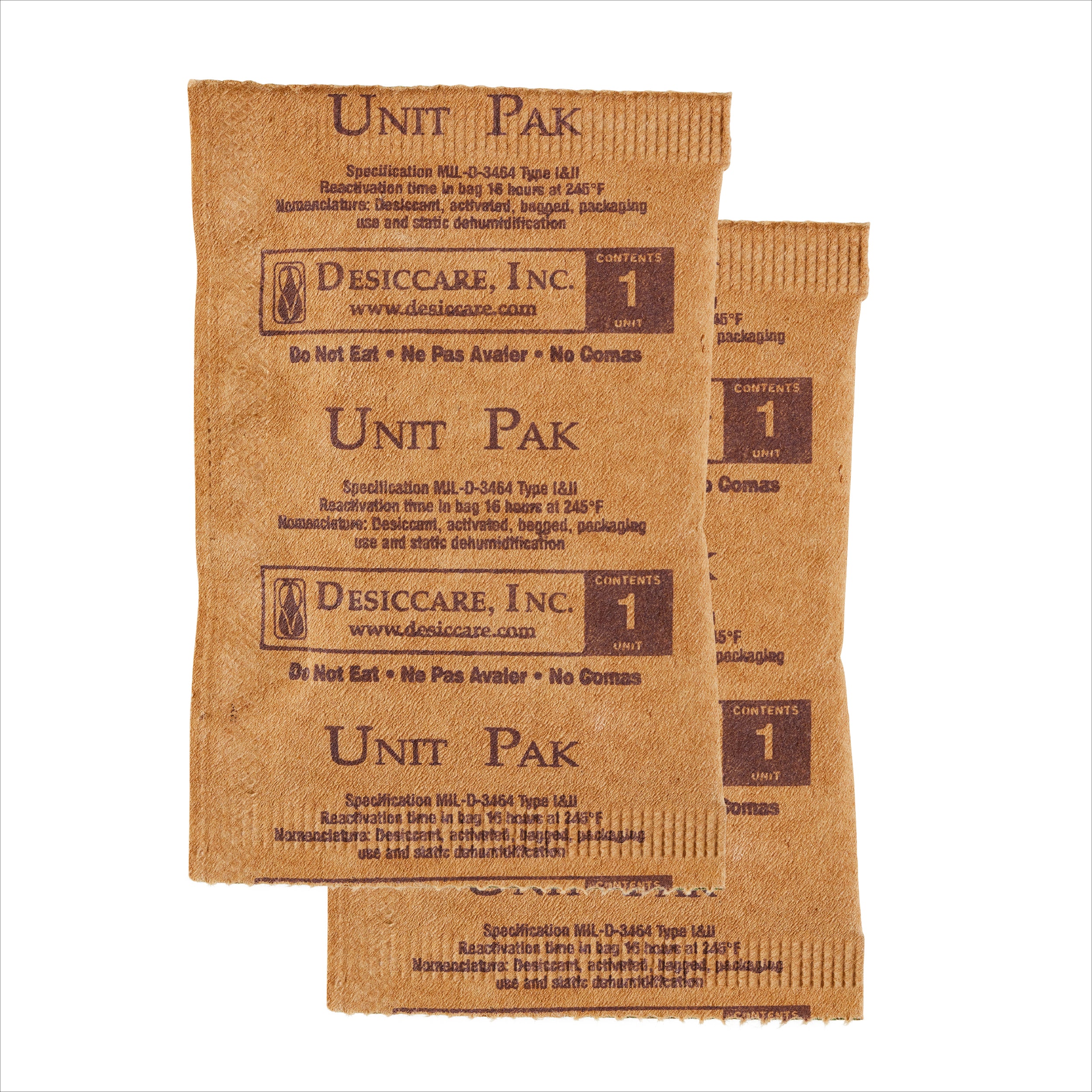
A desiccant takes up moisture within its intended capacity and conditions. Its effectiveness depends on the enclosure, amount of material, starting condition and maintenance. It does not remove unlimited moisture indefinitely just because the packet remains physically present.
The Canadian Conservation Institute’s silica-gel bulletin explains passive humidity control in enclosed storage. The important household lesson is to treat the sorbent and enclosure as a system, with monitoring and replenishment rather than a one-time purchase.
Use the safe manufacturer’s approved accessory or another appropriate product supported for the intended use. Keep it positioned as instructed and away from children or pets when handling the contents. Do not empty loose material over documents or electronic components.
Replacement and regeneration are product-specific
SentrySafe’s P50200 instructions provide their own replacement and care advice, including more frequent attention where humidity is high. Another packet, canister or indicating desiccant may have a different procedure.
Do not put an unidentified packet in an oven or microwave because a video recharges a similar-looking product. Packaging, contents and indicator materials can differ. Use only a regeneration method explicitly permitted by the exact manufacturer.
If the instructions do not support reuse, replace the product appropriately. A cheap packet is not worth risking damage to the household, the safe or the belongings it was meant to protect.
Airing the safe is a controlled maintenance task
Where the manual recommends periodic airing, do it while you are present and able to keep the contents secure. Choose suitable room conditions rather than leaving the safe open during particularly humid weather or exposing papers to direct heat.
Follow the model’s interval and method. Do not turn one accessory page’s monthly suggestion into a universal rule for every fire safe. Keep a private reminder and record what you observed, especially if the previous inspection found dampness.
Relock the safe and verify normal closure afterward. Maintenance should not accidentally leave the contents accessible because the door was forgotten behind a cupboard front.
Do not add unapproved heaters or ventilation holes
A powered accessory needs appropriate electrical installation and explicit compatibility with the safe. Running a cord through a door gap can interfere with closure or seals. Drilling a cable hole changes the enclosure and may affect its protection.
Heating also differs from removing moisture. A warmer enclosure can change relative humidity without providing an independent repair for wet contents or an active leak. Choose any powered system for its documented purpose and the materials being stored.
Ask the safe maker before modifying the cabinet. The ratings guide explains why an altered enclosure should not simply be assumed to retain every original claim.
Rice and improvised moisture absorbers are not a maintenance plan
A household material placed in a bowl gives you little reliable information about capacity, cleanliness or when replacement is needed. A purpose-made product with clear instructions is easier to manage around valuable records.
Avoid open liquid-collecting containers or other arrangements that could spill onto contents unless the system is specifically approved and appropriate. Do not add scented products to mask a musty smell; that can hide the symptom while the moisture remains.
The useful question is whether conditions improve and stay suitable after the cause is corrected. It is not whether the safe smells fresher immediately after adding another substance.
When documents or photographs are already affected
Keep affected materials separate from unaffected items and obtain appropriate preservation advice. Do not rub delicate photographs, peel stuck prints apart, or apply household cleaning chemicals as a generic remedy. Different materials can respond badly to the same treatment.
The National Archives’ mold guidance recommends isolation, correcting the environment and professional advice for high-value records. The Library of Congress photograph FAQ likewise directs readers toward material-specific salvage guidance and precautions.
Do not return damaged records to the same conditions immediately after cleaning the cabinet. Preserve documentation of the incident and ask the conservator or relevant provider how to handle important originals safely.
Check the cabinet and lock after water exposure
Visible corrosion, damaged seals or abnormal lock behavior deserves manufacturer or qualified service assessment. Drying the interior does not establish that every component remains dependable. Do not repeatedly operate a wet electronic lock to test whether it has recovered.
Keep access credentials and model records available outside the affected enclosure. That makes it easier to contact legitimate support without publishing identifying details or asking an unverified service to handle private documents.
Water damage and a lost combination are different problems. Explain the actual exposure and symptoms to the technician so the service addresses more than restoring one successful opening.
A maintenance log that is worth keeping
| Record | Example of a useful entry |
|---|---|
| Date and conditions | Routine check after a wet week; room climate unchanged |
| Observation | No visible moisture; one folder feels softer than previously |
| Measurement | Room and safe readings from the same identified sensor |
| Accessory condition | Desiccant replacement date or indicator state, where supported |
| Action | Material checked, location issue reported or approved packet replaced |
| Follow-up | Date to confirm whether the change resolved the pattern |
Do not record the safe code or a detailed valuables inventory in a casual maintenance note. The log is for conditions and actions, not for creating an easy-to-find access guide.
Keep an independent record copy
A safe can be one useful layer for original papers, but appropriately secured digital copies can make recovery easier after damage. Keep those copies somewhere independent of the same container and verify that you can access them.
Protect personal information in the backup through suitable account and storage security. The identity-protection guide explains why collecting every document scan in an openly shared folder creates a different risk.
Copies do not automatically replace originals for every legal or administrative purpose. They support recovery and reference while the original documents receive the storage conditions they need.
Frequently asked questions
Why is a water-resistant safe damp inside?
Water resistance addresses a defined external exposure, not automatic interior humidity control. Moisture can enter with air or contents, and the product may have specific care requirements.
How often should desiccant be replaced?
Follow the exact product instructions and observed conditions. A fixed interval is not a guarantee when the environment is unusually humid or the packet is already exhausted.
Should I drill holes to let the safe breathe?
No. Unapproved holes can affect protection and do not address every cause of dampness. Follow the manufacturer’s care and service guidance.
What is the first useful change?
Identify whether the problem comes from the room, an actual leak, damp contents or the maintenance arrangement. Correct that cause before relying on another accessory.