How to Close and Lock a VELUX Roof Window: Identify the Model and Fix Common Problems
A VELUX roof window can have a top ventilation bar, a bottom handle, powered operation or a combination that is not obvious at first glance. Closing it correctly begins with identifying the model. Repeatedly forcing whichever control is nearest can damage the hardware without explaining why the sash remains unsecured.
For a manual centre-pivot design, the normal closing action generally involves returning the sash to the frame and putting its operating control into the documented closed position. Top-hung and powered models have different procedures. Follow the model-specific instructions and distinguish a ventilation-flap setting from a sash left physically open.
Find the identification plate before ordering parts
VELUX’s identification guide shows the type sign used to identify the window type, size, variant and production code. Its location is described for the roof windows covered by that regional guide. Other product families and markets can use different identification arrangements.
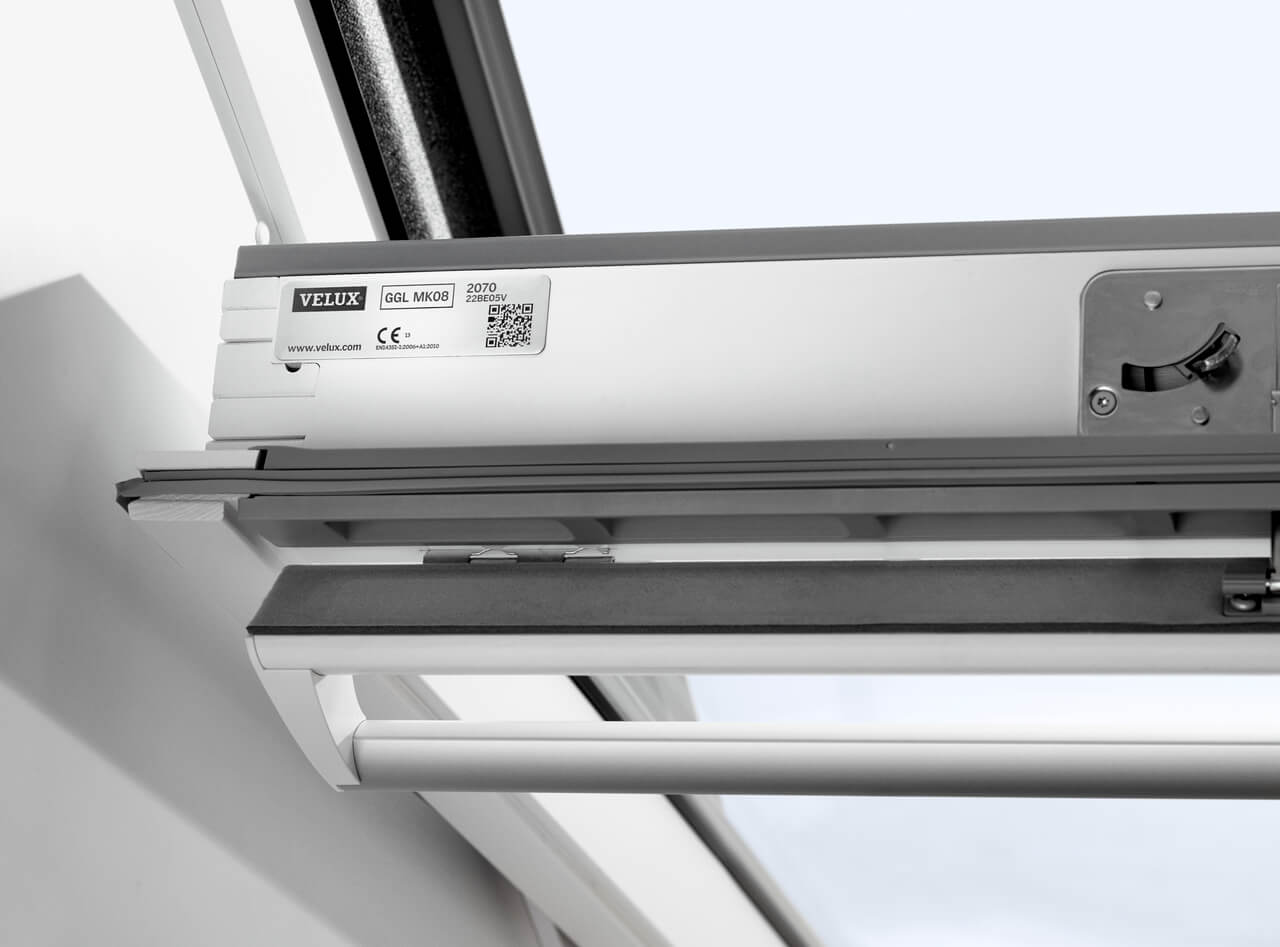
Only inspect the plate from a safe position. Do not lean out of the roof opening or stand on unstable furniture to reach it. A photo taken by an installer may be more useful than a risky attempt to read a small label.
Record the complete information, not just a size code. Two windows of similar dimensions can have different controls or production-era parts. A blind’s product label is also not necessarily the roof window’s identity.
Which type of window are you operating?
| Arrangement | Typical control to identify | Important distinction |
|---|---|---|
| Top-operated centre-pivot | Ventilation bar at the upper sash | Background ventilation and sash release can be separate positions |
| Bottom-operated centre-pivot | Lower handle with separate ventilation function | The top flap may not release the sash |
| Top-hung | Lower operating handle | Top-hung opening and cleaning operation are not identical tasks |
| Electric or solar sloped-roof window | Controller and model-specific manual arrangement | Motor-opened and manually opened states can need different recovery steps |
| Flat-roof or special-function product | Its own product instructions | Do not apply ordinary centre-pivot procedures automatically |
That table is a guide to identification, not a substitute for the manual. A roof balcony or another special product should not be operated from instructions written for an ordinary single roof window.
Manual centre-pivot operation
VELUX’s current manual-window guidance distinguishes top-bar centre-pivot models from bottom-operated variants. On the top-bar arrangement it describes, the initial position provides background ventilation and a further position releases the sash. The bottom-operated variants use their lower handle for sash operation.
To close, ensure nothing obstructs the meeting surfaces and return the sash through its intended movement. Put the operating control in the closed position described for the model. Check normal engagement without pulling on unsupported edges or using the handle as a lever to overcome an obstruction.
If the control is unfamiliar, locate the corresponding directions through the VELUX operating-and-care page. It separates product families so that a similar-looking handle does not lead you to the wrong instructions.
Ventilation does not always mean the sash is unlocked
A background-ventilation flap is different from leaving the glazed sash open. On supported VELUX centre-pivot arrangements, ventilation can be provided before the control reaches the sash-unlocking position. Therefore, a blanket statement that any open ventilation flap means an unlocked window is inaccurate.
That does not mean every visible gap or handle position is safe to interpret as a locked ventilation mode. Confirm the model’s intended positions and inspect the actual sash. If it is visibly displaced from the frame, you are dealing with a different condition from a closed sash with a ventilation feature.
Before leaving the property, use the documented setting appropriate to weather, ventilation and security needs. If you cannot establish what state the window is in, ask VELUX or an authorized installer rather than guessing from the position of a single flap.
Top-hung windows need their own operating sequence
On the top-hung arrangement described in VELUX’s manual guidance, the lower handle operates the sash and spring assistance supports its movement. Cleaning or centre-pivot functions on applicable products can involve a different sequence from ordinary top-hung use.
Do not mix those procedures or assume a sash that feels resistant should be pushed harder. The manufacturer’s guidance can include a particular first-use spring procedure for identified models, but that is not permission to force an unfamiliar or damaged window.
Keep hands clear of hinge and closing areas, control the sash normally and stop for unusual movement. A heavy roof window that does not behave as its instructions describe deserves professional assessment.
If the window will not close
Look for ordinary obstructions that are visible and safely reachable: a displaced blind component, insect screen, trapped material or debris at the meeting surface. Do not dismantle the sash to look for a cause that cannot be accessed safely.
Compare the gaps around the closed position and note whether one side appears to meet first. A window that has become uneven may need an adjustment or repair, not a new lock. Record whether the problem began after decoration, servicing, a storm or a period of non-use.
If the handle moves but the sash remains out of position, do not keep increasing effort. Explain that symptom to support along with the identification details and photographs. It is more useful than saying the window is broken.
If the sash closes but the control will not engage
Separate a control that is stiff in all positions from one that only resists during closure. The latter may relate to alignment or an obstruction, while internal hardware can also fail under load. This comparison is a clue rather than a definitive diagnosis.
Follow the model’s approved maintenance instructions. VELUX identifies lubrication of particular metal fixtures in its troubleshooting material; that does not mean grease belongs in every key cylinder, on the glass or on all seals. Component-specific advice matters.
For broader lock-maintenance principles, our maintenance guide explains why one lubricant cannot be prescribed for every lock. Avoid mixing products or applying an unknown spray simply because the handle feels stiff.
Electric and solar windows: check the control path
Confirm whether the controller itself has power, whether you are using the correct control and whether the window’s normal supported commands respond. Follow the exact product’s troubleshooting before performing a reset that may affect pairing or automation.
A rain sensor, schedule or home-control integration can influence behavior on equipped models, but do not assume that feature exists or is working on every window. Check the configured system and its actual status rather than treating a closed-screen icon as proof of physical closure.
Record whether the sash was opened manually or by the motor before the problem occurred. That distinction affects the supported recovery method and helps the service team avoid giving instructions for the wrong mechanical state.
Power outage: use the applicable manual recovery procedure
VELUX’s power-outage guide covers specified electric or solar centre-pivot sloped-roof windows. It distinguishes a closed window, a manually opened sash and one left open by its motor. For the motor-opened case, it provides illustrated chain-disengagement instructions that depend on the fitting.
Use that illustrated procedure only when your identified product matches it and you can work safely. Do not pull the sash against a connected drive or improvise a release. The guide explicitly excludes flat-roof windows from that procedure.
If the mechanism or control-bar arrangement does not match the instructions, contact support. A temporary manual closure should preserve the system for proper reconnection and testing rather than damage the motor chain to get the sash shut.
Additional locks and restrictors are not interchangeable
A restrictor limits movement; a lock controls access; a child-safety feature may have a separate intended purpose. A product serving one function should not be assumed to satisfy the others. Compatibility and the window’s required escape role remain important.
VELUX’s restrictor guidance identifies different accessories for centre-pivot and top-hung windows and warns that a particular permanent top-hung restrictor does not normally satisfy certain escape or climbing-prevention needs. That is a concrete reason not to buy solely by the phrase window restrictor.
Give the full window identification to the supplier and explain the objective. Ask how the accessory affects normal operation, cleaning, ventilation and any required emergency route before authorizing installation.
Do not drill an extra latch into an unidentified frame
A roof-window frame combines structural, drainage, glazing and weatherproofing functions. An apparently convenient screw location may not be suitable. Unapproved hardware can also interfere with the original mechanism or maintenance access.
Use manufacturer-compatible parts and an authorized installation where required. A universal window lock advertised for ordinary vertical casements may not be appropriate for a pivoting roof window or powered sash.
If the original mechanism no longer locks, repair it before adding a supplementary device. An accessory should not conceal a damaged main lock whose behavior remains uncertain.
Cleaning, filters and surrounding drainage
Follow VELUX’s product-family care instructions for glass, filters, finishes and moving components. Use only the supported cleaning position and retention arrangement when cleaning access is required. Do not climb out onto the roof or assume the open sash can support your weight.
Debris around external weatherproofing can require maintenance, but safe access is essential. If the relevant area cannot be reached from the documented indoor procedure, arrange suitable professional work rather than stretching through the opening.
Leaks and internal condensation are not necessarily the same fault. Record where moisture appears and the conditions in which it occurs. Applying sealant at random can interfere with designed water management without resolving the source.
What to send customer support
| Information | Useful detail |
|---|---|
| Identification plate | Full type, size, variant and production information |
| Window position | Closed, manually open or motor-opened |
| Control behavior | Which handle or controller responds and where resistance occurs |
| Recent changes | Servicing, accessories, painting or power interruption |
| Photographs | Overall sash and visible hardware from a safe position |
| Access limitations | Height, safe reach and whether an installer is needed |
Keep private account credentials out of public photos. The identification details help source the correct part without giving anyone access to a connected-home account.
Verify the repair in every intended mode
Test ordinary opening and closing, the documented ventilation setting and the final secured state. For powered models, confirm normal controls after any manual recovery or repair. Check that blinds or screens do not obstruct the sash.
Ask the installer to demonstrate the relevant maintenance and accessory release functions. Every regular occupant should understand which position ventilates and which releases the sash, rather than relying on an undocumented habit.
For overall protection, also inspect accessible lower windows and doors. A functioning roof window is one part of the home, and our window-security guide helps prioritize the rest without treating every opening identically.
Frequently asked questions
Does the ventilation flap mean the window is open?
Not necessarily. On supported models the flap can provide background ventilation before the sash is released. Identify the exact window and its control positions.
Can I close an electric VELUX window manually?
Some identified sloped-roof models have a documented manual procedure, but the steps depend on how the sash was opened. Do not apply it automatically to flat-roof or other products.
Why does the handle feel stuck?
Obstruction, maintenance, alignment or a mechanical fault may be involved. Do not force it without matching the symptom to the correct manufacturer guidance.
Will a universal window restrictor fit?
Not reliably. Choose an accessory approved for the model and the purpose, including any escape or child-safety requirement.
What should I do before ordering a replacement lock?
Record the full identification plate and describe the actual fault. A window that will not close may need a different repair from one whose lock fails after the sash is correctly seated.