Are Impact Windows Burglar-Proof? What Hurricane and Security Ratings Actually Mean
A video of a board striking a hurricane window can be persuasive. The glass cracks, the opening remains covered, and it is tempting to conclude that the same window must be burglar-proof. But resisting a defined storm test and resisting deliberate forced entry are different performance questions.
Impact-rated windows can contribute useful protection as part of a sound installed assembly. They are not unbreakable, and an impact label alone does not establish a particular burglary-resistance level. Before paying for a replacement, ask what the exact product was tested to do, what configuration the approval covers and whether the installation matches that evidence.
What impact-resistant means in this context
In a storm-prone market, impact-window discussions commonly concern windborne debris and the pressures associated with severe weather. The relevant tests, product approvals and local requirements define the performance expected for the building and location.
The Florida hurricane retrofit guide distinguishes wind pressure from windborne debris and emphasizes the vulnerability of poorly installed openings. Those are connected weather risks, but neither description should be substituted casually for a forced-entry specification.
A salesperson should be able to identify the applicable approval and exact model rather than relying on a demonstration clip. The dimensions, glazing, hardware and mounting instructions can be part of that approval.
Why burglar-proof is the wrong promise
Security products are generally evaluated for resistance under specified conditions, not for making an opening impossible to enter in every circumstance. A determined attack can differ in tools, duration and location from the test used to market a product.
Even if a pane remains attached after breakage, the lock, operating sash, frame or surrounding structure may be a separate concern. A window that is left open or has a failed latch does not become secured by having an impact-resistant pane.
A more useful question is whether the proposed assembly provides documented resistance appropriate to the risk you are addressing. That produces a specification you can compare rather than an absolute claim nobody can responsibly guarantee.
Separate the ratings on a quotation
| Claim | What to establish | What it does not automatically prove |
|---|---|---|
| Wind-pressure performance | The applicable pressure and installation requirements | Debris-impact or burglary performance |
| Debris-impact resistance | The actual test, approval and complete configuration | Resistance to every deliberate intrusion method |
| Safety glazing | The relevant human-impact or breakage requirement | A specific forced-entry rating |
| Forced-entry test | Which parts and actions the test includes | Glass attack if the test expressly excludes it |
| Thermal or acoustic rating | The measured performance for the exact glazing unit | Security resistance |
| Warranty | Covered defects, exclusions and responsible supplier | Independent proof of any particular security claim |
Several claims can legitimately apply to the same window. The problem is treating evidence for one as proof of all the others.
A useful example: a forced-entry test that excludes glazing impact
The title of ASTM F588-26 explicitly identifies tests for window-assembly forced-entry resistance excluding glazing impact. That scope matters. A claim of compliance should not be translated into a statement that the glass itself withstands every attack.
This does not make the test meaningless. It means the result answers a particular question and may need to be considered alongside other evidence. Ask the supplier to explain which security objectives are covered by each document.
A technical-looking standard number on a product listing is therefore only the beginning of verification. Read its scope and confirm that the actual installed configuration is the one being described.
How laminated glazing contributes
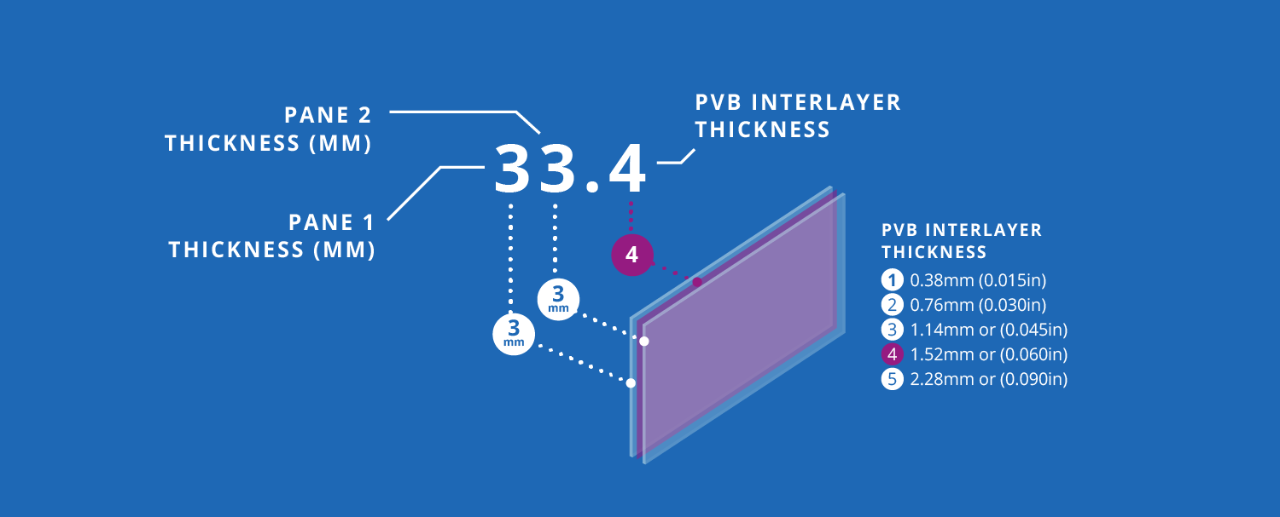
Many impact glazing systems use bonded layers and an interlayer intended to help retain fragments after breakage. The exact construction varies. A basic laminated pane and a specialized tested assembly should not be treated as equivalent simply because both contain an interlayer.
Pane thicknesses, treatment, interlayer, edge support and retention influence the result. A cracked pane remaining in place can be beneficial, but it does not mean the assembly remains safe or fully functional indefinitely after damage.
Our tempered-versus-laminated comparison explains why glass treatment and bonded construction are different concepts. That helps prevent a replacement quote from reducing a complex product to one reassuring word.
The frame and installation are part of the product
A strong pane needs suitable support. The frame, glazing retention and anchors transfer forces into the surrounding construction. Installing a rated unit into an unsuitable opening or substituting unapproved fixings can undermine the intended result.
Ask the installer to inspect the existing wall and opening before finalizing the quote. Water damage, corrosion, previous repairs or an out-of-square opening may require additional work. Decorative trim can conceal those conditions without correcting them.
Get the mounting specification and approved options in writing. A quotation for the window alone is not equivalent to a complete installation that includes necessary structural preparation and sealing.
Check the exact model, size and operating style
A product range can contain fixed windows, sliders and casements with different hardware and approved dimensions. Do not assume a test or approval for one unit applies unchanged to every size and style under the same brand name.
Record the product identifier and the options actually included. Glazing packages, locks and reinforcement can be selected separately in a range. A premium sample in a showroom may not match the configuration priced on the quote.
For large openings or unusual dimensions, ask whether the proposed unit remains within the documented scope. A custom installation deserves a documented assessment rather than a verbal assurance that it should be similar.
Locks and ordinary use remain important
Verify that the sash closes and the lock engages fully without lifting, slamming or exceptional force. A difficult mechanism can lead residents to leave the window partly secured, which defeats much of the purpose of the upgrade.
Confirm the difference between a ventilation position and a fully closed locked position. A handle that looks locked does not necessarily mean every available opening mode provides the same protection.
Our window-security guide covers the mechanical inspection. Impact glazing should be considered alongside that routine, not as a reason to stop using the original locks.
What a manufacturer claim can and cannot tell you
Pella’s impact-resistance information describes products intended for relevant storm conditions while cautioning against the idea of a hurricane-proof window. That distinction is worth preserving when discussing burglary as well: the manufacturer’s actual claim is more limited than a universal promise.
Read technical documentation and installation requirements rather than using the strongest sentence in a sales article as the entire specification. If a supplier additionally claims forced-entry resistance, request the supporting evidence for that separate claim.
Manufacturer documentation is a primary source for product specifications, not an independent ranking of competing brands. A responsible comparison should not pretend that we have tested the products merely because their certificates or brochures are available.
Impact windows versus storm shutters
Shutters and impact glazing can address storm-protection needs in different ways. Availability, deployment, local rules and maintenance affect the choice. A shutter must be the appropriate product and properly installed, not an improvised covering assumed to perform like a tested system.
For security, assess what happens during ordinary occupancy and when shutters are not deployed. A storm measure stored in a garage contributes nothing at the window until the required setup is completed. A permanently installed glazing system has a different operating routine.
Do not block required exits or ignore the needs of occupants while planning protection. Storm and security objectives should be coordinated with the applicable building and emergency requirements.
Can security film provide the same result?
Applying film to existing glass is a different construction from a factory-built impact window. A suitable film-and-attachment system may serve defined retention or security objectives, but it should not inherit a window’s storm approval or a laminated assembly’s performance simply by analogy.
Ask what the film system was tested to do on the actual glass and frame. Decorative or privacy film is not a substitute for a purpose-made safety/security product. Thickness alone does not settle the comparison.
Our film buying guide explains attachment and compatibility. Compare complete installed alternatives instead of accepting a claim that a roll of film turns every ordinary window into an impact-rated unit.
When replacement is worth considering
If the property needs compliant storm protection and the existing windows are already deteriorated, a properly specified replacement can address several needs together. If the windows are sound and the primary concern is a failed latch, a targeted repair may be the more sensible first expense.
List the desired outcomes separately: weather performance, security, comfort, noise and maintenance. Then ask suppliers to quote for the actual combined requirement. Otherwise you may pay for an expensive feature that does not solve the issue that prompted the purchase.
Do not replace every window purely because a sales presentation says impact glass will end all burglary concerns. The surrounding entrances, access management and response plan still matter.
Compare quotations on the same scope
| Ask for | Why it matters |
|---|---|
| Exact product and configuration | Connects the supplied unit to its documentation |
| Applicable approvals and test scope | Distinguishes storm, safety and security claims |
| Opening preparation and anchoring | Accounts for the building supporting the window |
| Locks and operating instructions | Establishes the fully secured condition |
| Glazing and seal details | Makes future replacement and repair traceable |
| Warranty and service responsibility | Clarifies who handles defects and adjustment |
Keep copies of the approval information, installation record and labels supplied for the unit. Those details can matter to an insurer, a later repairer or a future property owner.
Insurance discounts and claims
Ask your own insurer whether the proposed installation qualifies for a benefit and what documentation is required. A seller’s statement that impact windows reduce insurance does not establish a particular saving on your policy.
Separate a possible premium benefit from the reason you need the work. Compare the actual quoted saving with the installed cost and the other benefits relevant to the property. Do not rely on an invented payback period.
After an incident, follow the policy’s reporting process and arrange appropriate assessment. A pane that remains in place after damage may still require replacement, and the frame or seals may also need attention.
Inspection after storms or attempted entry
Keep people away from visibly damaged glazing and do not assume retained fragments mean the opening is safe to use. Photograph the condition from a safe position and contact a qualified installer or glazier.
Have the whole assembly assessed rather than replacing only the most obvious broken component. Repeated pressure, impact or water intrusion can affect hardware and support beyond the visible crack.
Do not perform your own impact demonstration to verify the replacement. Use documentation and competent installation; deliberately damaging household glazing creates risk without producing a meaningful certification.
Frequently asked questions
Are impact windows burglar-proof?
No. They can contribute useful resistance, but a storm-impact label alone does not establish a specific forced-entry performance or guarantee that entry is impossible.
Does cracked glass mean the impact window failed?
Not necessarily. Some systems are designed to retain fractured glazing under defined conditions. A professional still needs to assess the damaged assembly before continued use.
Is a high wind-pressure rating the same as impact resistance?
No. They address different aspects of performance. Check the actual product approval and the requirements for the location.
Does a forced-entry certificate always include the glass?
No. Some test scopes explicitly exclude glazing impact. Read what the referenced standard and configuration cover.
What should I ask first?
Ask the installer to identify the exact model, the intended storm and security objectives, and the documents supporting each claim for the complete installed assembly.