Window Security Bars: How to Choose and Install Them Without Blocking Escape
Security bars can provide a physical barrier across a window, but the wrong installation can create a more serious hazard than the problem it was meant to solve. A grille fitted to weak trim may offer little useful resistance. A strong grille that cannot be released from a required escape opening may trap occupants during a fire.
The correct approach starts with the window’s role, the building’s requirements and the people who will operate the release. Only then should you compare bar designs and installation methods. This guide explains how to specify the work, recognize unsuitable shortcuts and verify a finished installation without pretending one drilling template fits every wall.
Establish whether the window is an escape or rescue opening
Before buying anything, determine whether the window serves a required emergency function. Bedrooms, basements and converted rooms deserve particular attention. The relevant rules depend on jurisdiction, building type and use, so do not copy a dimension or exemption from an unrelated location.
Ask the local building or fire authority, or a qualified professional familiar with the property. Describe the actual room and window rather than asking whether bars are allowed in general. A change from storage to sleeping accommodation can alter the requirements.
Miami-Dade Fire Rescue’s guidance emphasizes releases that occupants can operate from inside without keys, special knowledge or excessive force. That is an important safety principle, while the applicable local rules still determine the exact installation requirements.
Do not confuse burglary bars with child-fall guards
Products can be designed to reduce intrusion, prevent children falling, limit ventilation or provide decorative metalwork. Those jobs are not interchangeable. A product meeting one purpose does not automatically satisfy the others.
The US Consumer Product Safety Commission’s window guidance warns that insect screens are not fall protection and discusses appropriate guards and stops. Its child-safety advice should not be translated into a claim that a restricted opening is burglar-proof.
If both child safety and intrusion resistance matter, have the complete arrangement assessed. The release, spacing, location and use must serve the actual occupants without undermining required emergency access.
Compare the main grille arrangements
| Design | Potential use | Question that must be resolved |
|---|---|---|
| Fixed grille | An appropriate opening where permanent restriction is permitted | Does it obstruct a required escape or rescue function? |
| Hinged grille with release | A compatible opening needing authorized operation | Can occupants release and open it promptly under normal conditions? |
| Removable system | A specific supported access arrangement | Does removal depend on keys, tools or steps unsuitable for the opening? |
| Retractable grille | A suitable opening with room for the stored grille | Does the full operating path preserve required clearance? |
| Decorative metalwork | Appearance or a defined nonsecurity purpose | Is there evidence for any claimed security performance? |
The strongest-looking pattern is not necessarily the most appropriate. Choose the configuration that fits the building, substrate and operating requirements, then assess its documented performance.
Inspect the window and supporting structure first
Check that the window itself closes, opens and locks correctly. Look for decay, corrosion, loose framing and damaged glazing retention. Bars are not a substitute for repairing a sash that no longer seats in its frame.
Identify what the grille will attach to. Decorative trim, a thin vinyl profile, sound structural timber and masonry are different substrates. A fastener that looks substantial can still be ineffective if it engages inadequate material.
For a damaged opening, request a repair assessment before accessory installation. Our window-security guide explains how to separate frame repairs, lock repairs, glazing and detection. Adding a barrier should follow that inspection, not conceal its results.
Measure the whole operating envelope
Measure according to the chosen manufacturer’s instructions, including the available fixing area and the space needed for hinges, catches and release components. The visible glass dimensions alone may not be the relevant ordering size.
Open the window through its normal travel and note handles, blinds, screens and nearby furniture. A grille can fit the closed opening while preventing the sash or release from moving far enough. Consider where an opened grille will rest and whether it blocks another route.
For a basement, include the window well and any cover. The person needs a usable route beyond the opening, not merely an operable latch inside the room. Our basement guide covers that complete path.
Why installation instructions are product-specific
Some grilles use hinged brackets, others use rigid flanges or frames. Release mechanisms may have restrictions on mounting depth and orientation. Those details can be essential to correct operation, so a generic list of drill sizes and screws is not a safe universal recipe.
Mr. Goodbar’s installation instructions, for example, include a mounting-depth restriction for its Keyless Quick Release arrangement and separate instructions for its bracket system. These requirements belong to that product, not every window bar on the market.
Use the current instructions for the exact model and confirm they suit the actual substrate. If the supplied hardware does not fit the building, contact the manufacturer or installer rather than substituting unverified anchors.
Choose fasteners for the supporting material
A timber fixing, masonry anchor and metal-frame connection transfer loads differently. The correct choice depends on the wall construction, condition and manufacturer’s specified installation. Longer or thicker is not an adequate substitute for that design.
Check for concealed services, reinforcement and glazing before drilling. Do not assume a clear space behind decorative casing is solid structural material. In rented or managed buildings, obtain permission before making permanent changes.
If you cannot identify the substrate or the approved fixing method, professional installation is the sensible next step. An incorrectly drilled opening can require repairs that cost more than the security hardware.
Quick release must work for the occupants
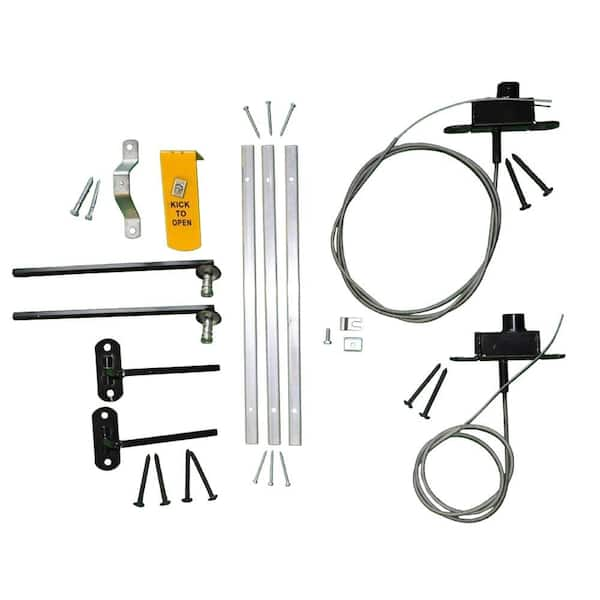
A release is only useful when the people who may need it can reach, understand and operate it. Consider height, strength, dexterity and furniture placement. A device that the installer opens easily may still be unsuitable for a particular resident.
Have the installer demonstrate the entire sequence: release, swing or move the grille, open the window and confirm the available route. Do this safely without requiring occupants to perform a risky climb. Seek appropriate assistance when the escape plan involves mobility limitations.
Keep the release unobstructed by curtains, shelving or stored boxes. Do not add a padlock because the hardware has an available loop without checking whether that defeats the required release function.
Do not leave a shipping restraint or temporary fastener in service
Some products arrive with transport components that are not the finished locking or release arrangement. Read the installation checklist and make sure the supplied parts are used for their intended roles. A component holding the grille closed during delivery may not be designed to secure the completed installation.
Ask the installer to account for any optional parts required by your application. A low advertised price may cover a fixed or basic configuration while the appropriate release system is a separate purchase.
The completed job should include a clear explanation of what was installed, which documentation applies and how normal maintenance is performed. Do not accept an unfinished arrangement on the assumption that the household will figure it out later.
Steel, finishes and corrosion
Material and finish matter, but the complete design is more informative than the weight of a sample bar. Welds, joints, hinges, release hardware and anchors all contribute to performance. A thick grille can still rely on a weak attachment point.
Exterior hardware needs protection appropriate to its exposure. Inspect joints, coating damage and areas where water collects. A rusted release may become difficult to operate before the whole grille looks severely deteriorated.
Follow the manufacturer’s maintenance guidance and avoid painting over moving components or identification labels. If repainting is permitted, use compatible preparation and coatings rather than sealing the mechanism under a heavy layer.
Security ratings and sales demonstrations
Ask what evidence supports the product’s claimed resistance and whether it applies to the complete installed configuration. A demonstration of a bar bending is not the same as a test of its frame attachment. A claim about one anchor in sound concrete does not establish performance in a damaged brick opening.
Do not accept burglar-proof as a substitute for a documented specification. A barrier can add resistance without guaranteeing that an intruder will abandon every attempt. Its role should be described honestly alongside locks, lighting and response arrangements.
For a higher-risk property, use an appropriate professional assessment. A general household grille guide cannot specify every commercial or targeted-security requirement.
Alternatives worth comparing before installation
If the main defect is a failed latch or frame, repair it first. A suitable replacement window may combine several needed improvements. Appropriate glazing or film may address some glass-related objectives, while a contact sensor provides warning rather than physical resistance.
Our security-film guide explains why film type, attachment and glass compatibility matter. It is not a universal replacement for bars, just a different option to evaluate against the actual problem.
Consider privacy and visibility too. Curtains can reduce casual views of belongings without a permanent barrier, but they do not strengthen the opening. Choose each measure for its real function rather than stacking products with overlapping marketing language.
Cameras and alarms remain separate layers
A sensor can report a window opening or a relevant impact, depending on its design. A camera can preserve activity around the approach. Neither guarantees that someone will respond or physically retains the glass.
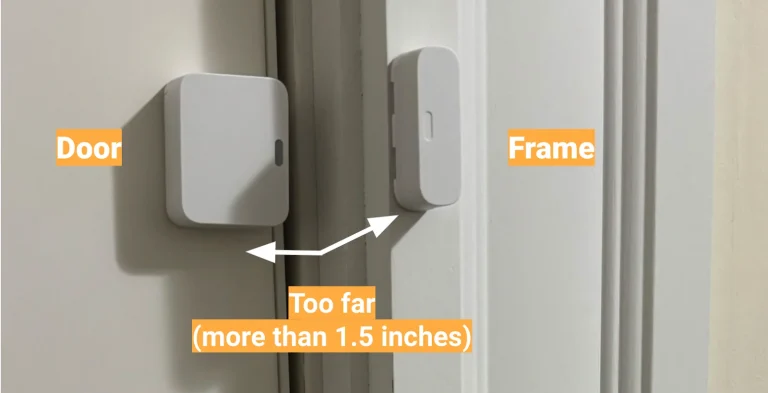
Test the system with the grille in its normal position. Metalwork can alter the camera’s view or interfere with the placement of a contact sensor. Confirm that recordings and alerts remain useful after installation.
For an indoor camera aimed through the window, review our through-glass guide. Bars, screens and reflections can complicate nighttime images even when daylight live view looks clear.
What to include in a quotation
| Item | What should be clear |
|---|---|
| Opening assessment | Window role, condition and supporting material |
| Exact product | Model, dimensions, finish and release configuration |
| Fixing method | Compatible anchors and preparation for the real substrate |
| Required approvals | Ownership, building and fire requirements |
| Commissioning | Normal operation and release demonstrated to users |
| Aftercare | Inspection, corrosion care, parts and service responsibility |
Compare quotations on the same scope. A fixed grille with no approved release is not a cheaper equivalent to a properly specified operable system on an escape opening.
Acceptance and routine checks
After installation, confirm that the window opens and closes correctly and the grille remains firmly installed without distorting the surrounding structure. Test the normal release through the approved procedure, and check that furnishings do not obstruct it.
Record the model and installation details. Recheck operation after painting, replacement curtains, furniture changes or work around the opening. A route that was clear on installation day can become blocked gradually.
Use the manufacturer’s inspection interval and local safety guidance. Do not wait for visible severe corrosion or a failed emergency to discover that the release has become stiff.
Frequently asked questions
Can bars be installed on a bedroom window?
That depends on the applicable requirements and the complete release and escape arrangement. Obtain local guidance before selecting or installing them.
Are decorative bars effective security?
Appearance does not establish tested resistance. Inspect the product’s purpose, supporting structure and installation evidence.
Can I use ordinary screws supplied with another kit?
Not without confirming they are approved for this product and substrate. Anchor selection is part of the installation specification.
Should I padlock an emergency-release grille?
Do not add a lock that defeats the required inside release. The fact that a loop accepts a padlock does not mean that use is appropriate.
What is the first decision?
Establish the window’s required role and the occupants’ needs. Product style and price come after that assessment.