Locked Out of Your House? What to Do, What to Ask and How to Avoid Damage
The door has clicked shut, the keys are inside and your first instinct is to make the problem disappear immediately. That is understandable. But climbing to an upper window or forcing a lock can turn a routine lockout into an injury and a much larger repair.
Start with safety, then legitimate access: another authorized keyholder, the property manager or a suitable locksmith. The right next step depends on whether keys were forgotten, lost or stolen and whether the mechanism itself has failed. This guide explains that sequence and the questions that help you obtain a clear service quote rather than an unpleasant surprise.
First decide whether this is an emergency
If a child or vulnerable person is at immediate risk, there is smoke, a dangerous appliance situation or another urgent hazard, contact the appropriate local emergency service. Do not delay urgent help while comparing locksmith prices or attempting repairs.
If everyone is safe and the issue is simply an inaccessible home, use the ordinary property-contact or locksmith route. Move to a safe place while making arrangements, particularly in severe weather or an unfamiliar area.
Explain the real circumstances accurately to whoever you contact. A routine lockout, a broken lock and someone trapped behind a door can require different responses.
Identify the kind of lockout
| Situation | First useful contact | Question for the repair afterward |
|---|---|---|
| Keys are inside and the lock worked normally | Authorized spare-key holder or locksmith | How can access be arranged without unnecessary damage? |
| Keys were lost away from home | Property manager or locksmith | Could the missing keys be associated with the property? |
| Keys or bag were stolen | Appropriate authorities and access professional | Which credentials need revoking or changing? |
| Key will not turn | Locksmith or authorized maintenance | Is the cause the key, cylinder or door alignment? |
| Electronic entry fails | Documented backup route and manufacturer or installer | Is this power, account, configuration or mechanical failure? |
Keep those distinctions in your explanation. Saying only that you need a new lock can lead the conversation toward replacement before anybody has diagnosed whether it is necessary.
Contact a housemate, family member or trusted person who actually holds a spare. For a rental, check the landlord or managing agent’s procedure and any out-of-hours contact. A workplace or shared building may have an established maintenance route.
Only use an ordinary alternative entrance where you are authorized and it is safe. Do not climb a roof, squeeze through a high opening or break glass to avoid a call-out. The cost of access should be compared with the full consequences of damage and injury, not only the price of a new pane.
Do not leave windows unsecured in advance as your permanent lockout plan. A better backup preserves normal security instead of deliberately leaving a weak entry route.
What to tell a locksmith before they travel
Describe the door material, visible lock type and whether the keys are missing, inside or not working. Mention any multipoint handle, smart lock or additional lock. If safe and appropriate, send a photograph through the business’s official channel without exposing unnecessary personal information.
State whether the property is rented or managed and whether the door may be fire-rated. A competent repairer needs to preserve the assembly’s required functions, not simply make it open.
Ask what information they require to confirm your authority to enter. Identification or proof of occupancy may be part of their procedure. If those documents are inside, explain that before the visit and agree an appropriate alternative verification process.
Choosing a locksmith without relying on an advert
Use a known recommendation, an appropriate professional directory or a business you can verify independently. Check the actual company name, contact details and whether the person attending works for that business or a subcontractor.
The Master Locksmiths Association’s selection guide recommends checking third-party credentials, comparing quotes where practical and asking what a low advertised price actually includes. Its directory and licensing discussion are UK-specific; requirements differ elsewhere.
Do not treat a prominent search placement as proof of competence. A very low starting price may be only a call-out fee rather than the complete cost. Obtain a clear explanation without expecting an exact final diagnosis from a photograph alone.
Ask for the price structure, not a fictional universal price
Lockout costs depend on location, time, travel, hardware and whether something has failed. A simple forgotten-key situation and a damaged multipoint mechanism are not equivalent jobs. Rather than relying on a worldwide average, ask how the quote is built.
| Ask about | Why it matters |
|---|---|
| Call-out charge | It may be payable independently of the repair |
| Labor and minimum charge | Clarifies what the advertised starting price covers |
| Night, weekend or travel supplements | Prevents unexpected additions |
| Replacement parts | Separates opening the door from fitting new hardware |
| Taxes and payment method | Makes the final amount comparable |
| Authorization for additional work | Ensures significant changes are explained before proceeding |
Where circumstances allow, compare more than one credible quote. Do not delay necessary emergency assistance merely to obtain a cheaper routine service.
Non-destructive access is a goal, not a guarantee
A qualified locksmith may be able to restore authorized access without replacing the lock or damaging the door. The MLA’s lockout guidance describes this as an important service objective. A failed or damaged mechanism may require a different repair.
Ask why destructive work is proposed and what will be replaced afterward. Do not demand that every broken lock be opened without damage, but do not accept unnecessary replacement without an explanation either.
This article does not attempt to turn a stressed homeowner into a locksmith. The practical task is choosing and supervising legitimate help, preserving the door and understanding the scope of work.
When the key is present but the door will not open
A key that enters but does not turn differs from one that rotates without releasing the latch. A handle that spins freely is another symptom. Describe the actual behavior instead of applying more force or assuming the cylinder is always the failed part.
Do not grip the key with pliers or introduce an arbitrary lubricant. The right maintenance product depends on the hardware, and extra leverage can break the key. Keep the damaged key or fragments for the repairer.
Our outside-lock troubleshooting guide focuses on the limited checks available before you regain entry. Once the door is open, the key and mechanism guide covers the wider diagnosis.
Smart locks and dead phones
Use the backup method documented for the exact product. It may be a mechanical key, supported local keypad or a specified emergency-power arrangement. Do not connect an improvised power source or assume a network outage means the physical lock has failed.
A lost phone, depleted lock battery and unavailable cloud service are different problems. Check which access methods remain authorized and functional. Another household member may have a legitimate local method even when your app session does not work.
After entry, test and document the fallback rather than treating the event as bad luck. Our smart-lock security guide explains local operation, account control and backup access.
Rekey, replace or leave the lock?
If a working key was simply left inside, you may not need to change the hardware at all. If keys were lost or stolen with information that links them to the address, review the access risk with the owner or locksmith.
Rekeying, where supported, changes the authorized keys while retaining suitable hardware. Replacement may be needed for a failed cylinder, incompatible system or a broader security upgrade. Those are separate services and should be explained accordingly.
For a managed building, the lock may belong to a controlled key system. Do not substitute a random cylinder without authorization, because it can affect legitimate maintenance and emergency arrangements.
Check the repaired entrance before the locksmith leaves
Operate the door normally from both sides with a safe backup available. The latch and locking mechanism should work without lifting, slamming or unusual pressure. Confirm that all supplied keys work and that inside release remains appropriate.
Ask what failed and what was changed. Keep the product details, invoice and any warranty or follow-up adjustment information. A receipt that only says door opened does not document a newly installed security component.
If the cause was misalignment, confirm that the underlying fit was addressed. Removing a broken key without correcting the pressure that broke it can leave the same failure waiting to recur.
Build a better spare-key arrangement
A spare arrangement should address both legitimate access and the risk of leaving a credential available to others. Our outdoor key-safe comparison checks documented security, mounting and code management instead of treating every lockbox as equivalent. If a missing key may still give someone access, compare rekeying with replacing the lock rather than assuming another key copy resolves that concern.
A trusted keyholder can be useful when they are realistically available. Agree who holds the key and how it will be retrieved. A securely installed, suitable key-management product may be appropriate in some circumstances, but check permissions and insurance conditions rather than treating every cheap lockbox as equivalent.
Do not label a spare with the full address or hide it in an obvious place immediately beside the door. Keep the arrangement controlled and review it when occupants or contractors change.
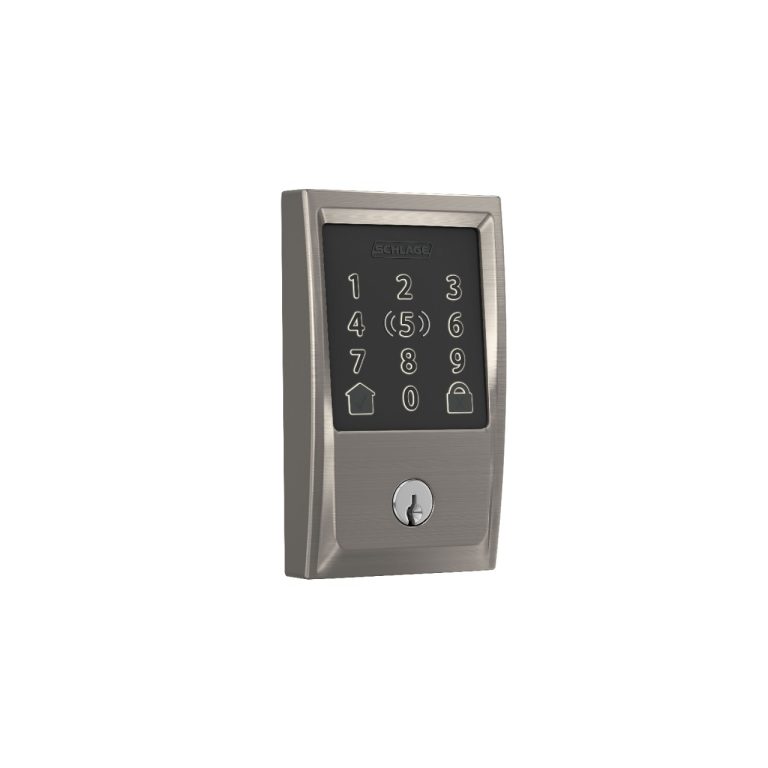
A keypad may help someone who frequently forgets keys, but it introduces its own code, battery and backup responsibilities. Choose a solution for the recurring problem rather than adding technology simply because the lockout was frustrating.
Prevent recurrence without weakening the entrance
Repair early warning signs: a sticking key, drooping handle or a door that only latches after being slammed. Establish a simple departure routine that includes the keys or intended access method before the door shuts.
For children, older occupants or people with particular support needs, choose a practical plan that does not rely on remembering a complicated sequence. Make sure a trusted contact can help through a legitimate process.
Do not defeat a fire-door closer or hold a shared entrance open as a permanent solution to forgetting keys. The remedy should preserve the building’s security and safety rather than transfer the problem to other residents.
Frequently asked questions
Should I call emergency services for a routine lockout?
Use emergency services when there is an immediate danger or other qualifying emergency. For a routine situation where everyone is safe, contact authorized property assistance or a locksmith.
Can a locksmith always open the door without damage?
No universal guarantee is appropriate. Non-destructive access may be possible, while a failed mechanism or particular installation can require repair or replacement.
Do lost keys always mean a new door lock?
Not necessarily, but assess whether the keys could be linked to the property. Rekeying or replacement may be appropriate depending on the system and circumstances.
What information should I have ready?
The address, proof-of-authority arrangements, door and lock details, symptoms and any urgent safety concern. Ask for a clear price structure and approval process for additional work.