

Best Locks for Moving Trucks: Fit, Overnight Parking and Cargo Security
The best moving-truck lock is a dependable lock that fits the cargo-door hardware correctly and can be used throughout the move. A heavy disc lock that cannot pass through the latch, or a long shackle that interferes with the ramp, is not an upgrade. Check the truck you actually receive before treating an online recommendation as universally compatible.
Lock choice is only part of the plan. A loaded rental vehicle also needs appropriate parking, controlled keys and a clear understanding of what your protection plan covers. This guide explains the useful lock categories, the checks to perform at collection and how to reduce exposure during overnight stops without altering rented equipment.
Identify the actual cargo-door arrangement
A box truck with a roll-up door usually has a latch or lever and a place for compatible locking hardware. A cargo van can use a different factory locking system, while a container or trailer may present another hasp entirely. Do not assume that the lock recommended for a storage unit fits all of them.
Ask the rental location to demonstrate closure and show the intended locking point. Photograph existing damage and report a bent latch or a door that will not close normally before loading. A padlock does not repair a defective keeper or unreliable door mechanism.
U-Haul’s operating guide explains its roll-up-door and ramp arrangement and notes that some rentals include a padlock. Verify the actual equipment supplied rather than buying an unnecessary second lock or assuming one will always be included.
The measurements that matter
Check shackle diameter, usable height and width, plus the clearance for the lock body. The lock should close completely while the truck’s latch is fully engaged. A body that collides with the handle or a shackle that requires forcing is not a correct fit.
Inspect the movement of the door and ramp with the rental representative’s guidance. Hardware may need to be removed or positioned correctly for loading operations. Do not attach a dangling accessory where it can interfere with another mechanism or strike surrounding surfaces during travel.
Buy from the rental location only after confirming the exact product suits the truck, or bring a candidate that can be tested before departure. Keep the receipt and arrange an appropriate alternative if the fit is wrong.
Standard, disc and shrouded padlocks compared
| Lock category | Reason to consider it | Important limitation |
|---|---|---|
| Conventional keyed padlock | Often straightforward to fit and operate on a suitable latch | Construction and exposed shackle vary widely |
| Disc padlock | Can reduce exposed shackle in a compatible arrangement | Restricted geometry may not fit every keeper or handle |
| Shrouded or closed-shackle padlock | Additional protection around parts of the shackle | The surrounding body can interfere with rental hardware |
| Combination padlock | No separate key to carry | Mechanism quality, code handling and fit still matter |
| Purpose-designed vehicle lock | May suit an owned vehicle with approved installation | Drilling or modifying a rental is not automatically permitted |
Do not rank these categories solely by shape. A well-made conventional padlock fitted properly can be more useful than an incompatible disc lock. No portable lock makes the cargo door or entire vehicle impossible to steal.
A product example, not a universal fit claim
U-Haul sells several lock types, including its U-Fortify disc padlock. The manufacturer’s listing provides body and shackle information that can be compared with the actual latch. It is a concrete example of the measurements to verify, not a claim that this lock fits every truck or has been personally tested by SecurityLatest.
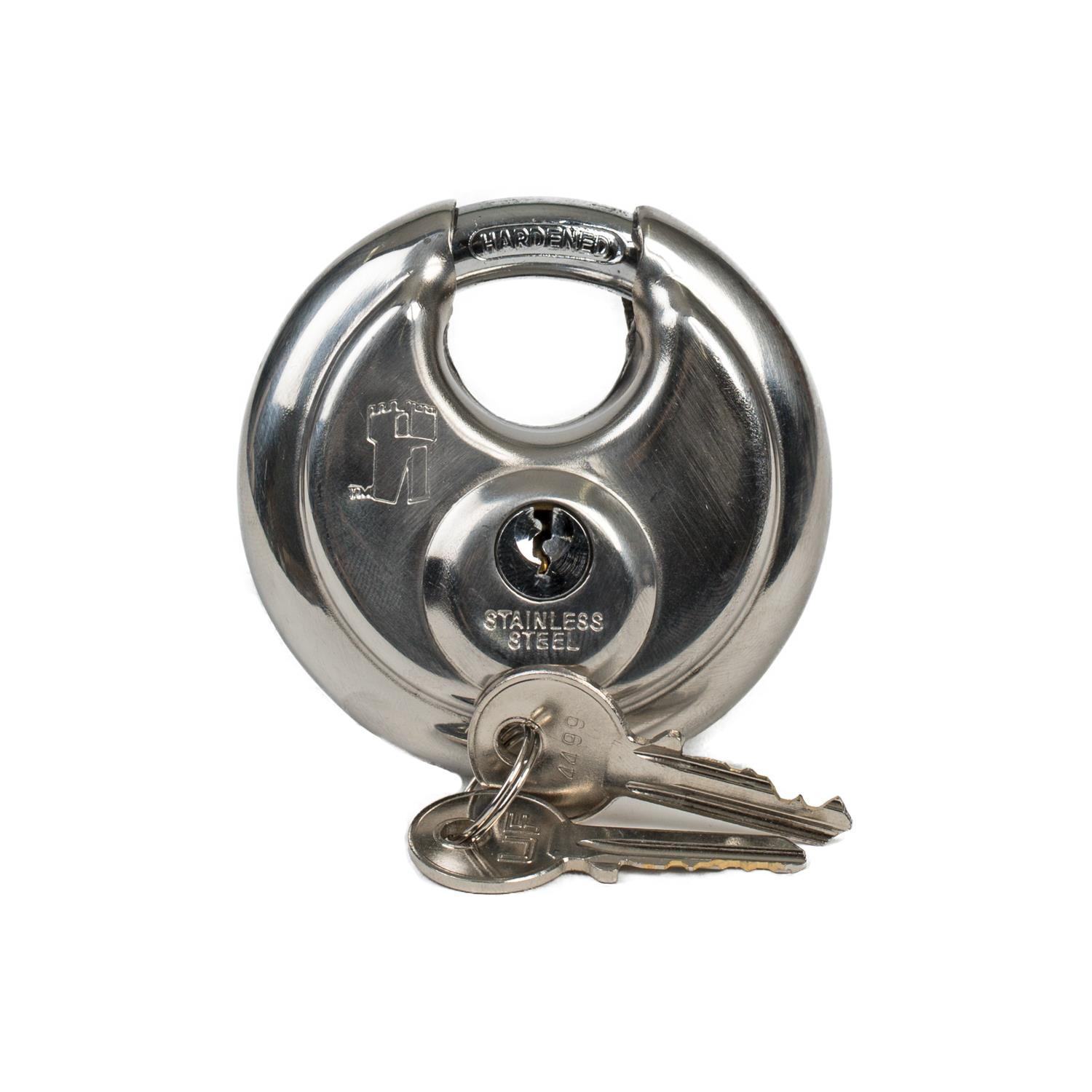
Current prices and availability vary by location and date. Compare the complete fit and reliability rather than choosing the lowest price or assuming a familiar brand’s entire range has identical performance.
Check the door before loading
Operate the roll-up door or van doors using the rental company’s instructions. Confirm that the latch engages, the lock can be applied and the door can be reopened normally with the authorized key or code. Do this while the cargo area is empty enough to inspect safely.
Keep people clear of moving doors and never lock someone inside the cargo compartment. The cargo space is not a passenger area. Follow the vehicle’s loading and operating instructions rather than improvising around a stiff door.
If the latch is damaged or the supplied lock fails, request a suitable remedy from the rental company before relying on it overnight. Do not drill additional holes, weld fittings or install an owned-vehicle accessory without explicit authorization.
Keep the truck keys and cargo keys organized
Decide who is responsible for the vehicle and cargo locks. Avoid leaving keys in the ignition, on a tire or inside the locked cargo area. An authorized spare should be available through a sensible arrangement without being exposed with the truck.
If using a combination, share it only with the people who genuinely need to open the cargo. Do not leave it in a visible note on the dashboard. During a move, many helpers may be present, so clear responsibility prevents both lockouts and uncertain access.
Before each departure, confirm the cab and cargo area are secured and the equipment is ready for travel. A padlock hanging from a handle is not evidence that the handle itself has been latched correctly.
Loading safety and theft prevention must agree
Follow the truck’s weight, load-distribution and tie-down instructions. Do not place a heavy item in an unsafe location merely to obstruct access to something valuable. Cargo restraint protects people and belongings during braking and turns; a rear-door lock does not restrain the load.
Keep essential medicines, identity documents and irreplaceable small items under appropriate personal control rather than burying them in the truck. Choose a travel arrangement that remains safe and does not overload the cab with loose objects.
Maintain an inventory and photographs of important belongings. Labeling can help you organize loading without advertising every expensive item on the outside of a box.
Plan overnight parking before the trip
Ask accommodation providers whether they have a legal space for the truck’s dimensions, including any trailer. Check height clearance, access hours and restrictions. A normal car parking reservation does not establish that a tall box truck can enter the site.
Penske’s moving guidance recommends checking overnight space in advance and securing the cargo latch with an appropriate padlock. Its security advice also emphasizes controlled keys and locked cab and cargo areas.
Choose an authorized, reasonably visible location where possible. Do not block fire lanes, exits or other vehicles to make the rear door harder to approach. Any parking arrangement must preserve safe vehicle operation and the site’s rules.
A wall or camera is not a guarantee
Some rental guidance suggests positioning the cargo entrance near a suitable barrier where safe and permitted. That may reduce convenient access, but it does not justify backing into a wall, eliminating necessary clearance or parking where the truck cannot leave safely.
Similarly, a camera overlooking the lot may record useful evidence without being continuously watched. Ask about the actual parking arrangements rather than assuming a visible camera provides a staffed security service.
At stops, check the cab and cargo lock before returning to the road. If anything appears damaged or unexpectedly open, prioritize safety and contact the rental company and appropriate authorities rather than confronting someone.
Protecting the truck and protecting the cargo are different
A cargo padlock cannot prevent every form of vehicle theft. Use the vehicle’s normal locks and follow the rental company’s instructions for keys and parking. Additional vehicle-security products need the company’s approval and must not interfere with safe operation.
If the entire vehicle disappears, report it promptly through the police and rental-company process. Keep the rental agreement, registration details provided to you and your inventory accessible without the truck.
A tracker may provide information if appropriately used, but it does not authorize personal recovery or confrontation. Share relevant information with the authorities and provider.
Read the coverage terms before assuming cargo theft is insured
Vehicle damage protection, liability cover and protection for the contents are different products or benefits. Do not accept a general reassurance that the rental is covered as an answer about your belongings.
U-Haul’s published coverage information explicitly excludes theft of cargo under the listed truck protections, while describing other covered causes and separate storage products. This is a service-specific example of why the exact terms matter, not a statement about every rental company.
Ask your own insurer and the rental provider about the particular move, unattended periods, exclusions, deductibles and evidence required. Obtain the applicable answer in writing. A padlock purchase does not automatically satisfy every policy condition.
When movers control the vehicle
Ask the moving company about custody, overnight parking, inventories and the process for reporting missing or damaged items. The company may control the locks and keys, so attaching an independent lock without agreement can interfere with the contracted operation.
Document the handover and condition of important belongings. Keep the inventory and contract available separately, and distinguish a delay or misdelivery from confirmed theft until the facts are established.
Do not assume a service called full protection has unlimited coverage. Review the actual valuation and claim terms for your jurisdiction and contract.
If a lock fails during the move
Contact the rental company’s approved assistance route rather than cutting or altering equipment without authorization. Explain whether the cargo is accessible, whether the door itself is damaged and what must be secured afterward.
Keep helpers and bystanders away from unsafe mechanical work. A roadside attempt with powered tools can create injury, fire or property-damage risks. Authorized professional help may cost less than repairing a damaged rental latch.
Our damaged-padlock guide explains why material, access and surroundings matter. It is not permission to modify a rental vehicle independently.
A departure and overnight checklist
- Confirm the cargo door is fully closed and its intended latch engaged.
- Apply a compatible lock and check normal locked retention.
- Secure the cab and keep keys under authorized control.
- Confirm cargo restraint, ramp storage and safe vehicle readiness.
- Use only approved parking with suitable access and clearance.
- Keep essential documents, inventory and assistance details available separately.
The checklist should remain quick enough to use at every relevant stop. A sophisticated lock helps little if nobody is certain who was supposed to close the cargo door.
Frequently asked questions
Is a disc lock always best for a moving truck?
No. It must fit the actual latch and surrounding clearance. Check a documented compatible product rather than relying on category alone.
Do rental trucks include locks?
Some do and some do not. Confirm the specific vehicle and rental arrangement before departure.
Can I fit an extra hasp to a rented truck?
Not without the rental company’s authorization. Altering hardware can damage the vehicle and affect your responsibilities.
Does rental protection automatically cover stolen belongings?
No. Read the exact cargo and vehicle terms separately and check with the relevant insurer or provider.


