Tools for Removing a Damaged Padlock: Capabilities, Safety and When to Call a Locksmith
A seized padlock on your own shed can make a cutting tool look like the obvious solution. But the lock may be repairable, the hasp may be more expensive than the padlock, and the area behind it may contain paint, glazing or flammable materials. The best removal method is the one that restores authorized access without creating a larger problem.
Before buying tools, identify the lock, the fault and the surrounding installation. Lost keys, corrosion, a jammed shackle and a damaged door are different situations. This guide compares tool categories and their limits, explains how to interpret specifications and helps you decide when professional removal is the more economical and safer option.
If the lock belongs to a rental property, workplace, storage facility or shared building, obtain authorization from the responsible person before removing it. Establish who will restore security afterward and whether the lock or surrounding fittings must be retained for an insurance or incident investigation.
Describe what has happened. A missing key is not evidence that the cylinder has failed. A key that turns while the shackle remains stuck may have a different cause from a completely seized mechanism. A gate under pressure can make a functioning lock difficult to release.
Use the manufacturer’s approved maintenance or recovery route where appropriate. Do not pour several solvents into the lock and then introduce a tool that creates heat or sparks. Tell the professional what chemicals have already been applied.
Consider non-destructive service first
A locksmith may be able to restore authorized access while preserving expensive surrounding hardware. That can be valuable on a vehicle, coated metal cabinet or integrated locking system where a careless cut creates more repair work than the lock itself is worth.
Ask about the likely approach, call-out, labor and replacement parts. Non-destructive access is not guaranteed when the mechanism is damaged, but destructive removal should not be assumed necessary merely because you do not have a working key.
For a door cylinder or multipoint mechanism rather than a separate padlock, specialist diagnosis is particularly useful. Our lockout guide covers choosing authorized help and reviewing the quote.
The tool categories compared
| Option | Where it may be appropriate | Important limitation |
|---|---|---|
| Manufacturer or locksmith recovery | Lost keys, serviceable mechanisms or valuable surrounding hardware | Suitability depends on the actual fault and product |
| Manual bolt cutters | Accessible material within the tool’s rated capacity | Jaw opening alone does not establish cutting capacity |
| Hand saw with suitable blade | A stable accessible workpiece the blade is designed to cut | Hardness, clearance and workholding can make it unsuitable |
| Powered cutting equipment | A controlled task performed by a competent operator | Sparks, heat, debris, wheel failure and nearby materials add risks |
| Professional removal and repair | Confined, hardened, integrated or hazardous installations | Quote must include restoring the damaged security arrangement |
This is a capability comparison, not a promise that one tool opens every padlock. The material and physical access determine what is realistic, and the surrounding property can determine whether an otherwise capable tool is appropriate.
Bolt cutters: read the material rating, not just the handle length
Bolt cutters are rated for particular material types, hardness and dimensions. A large jaw opening means the tool can physically accommodate a certain shape; it does not prove that the tool can cut every material that fits between the jaws.
For a concrete example, KNIPEX’s 71 72 610 specification lists different cutting capacities at different material hardness levels and separately lists its jaw opening. The cutting-edge hardness is another specification, not the hardness of every workpiece it can successfully cut.
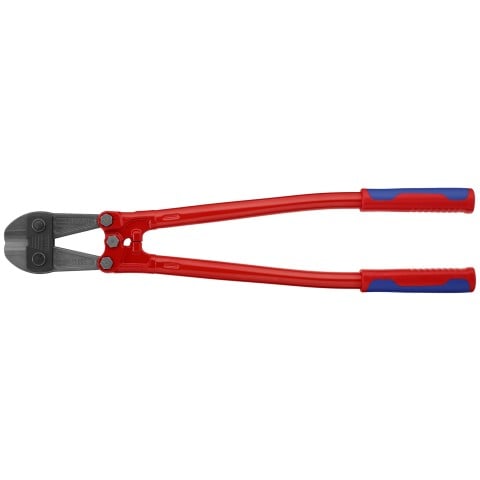
Do not use improvised handle extensions or exceed the manufacturer’s limits to compensate for an unsuitable tool. Damaged cutting edges or an unstable work position can create injury risks and spoil a tool without resolving the lock problem.
Hand saws: simple does not mean suitable for every lock
A hand saw can avoid some powered-tool hazards, but the blade still needs to suit the material and the work must be accessible and stable. Hardened or awkwardly positioned components can make a generic metal-cutting blade an inefficient choice.
Consider what is behind the cutting area and how the item will move as it separates. A loose lock can shift unexpectedly, while a gate or chain under load may behave differently from a spare lock held in a workshop.
Do not keep buying blades without identifying why the method is failing. At some point the combined cost of tools, time and damaged hardware exceeds a professional removal.
Powered tools require a controlled work area
Grinders and other powered cutters can create heat, sparks and fragments, and an unsuitable or damaged accessory can fail. They are not an automatic next step when a manual tool struggles. The operator needs suitable training, equipment and access.
The Canadian Centre for Occupational Health and Safety’s grinder guidance emphasizes correct attachments, intact guards, inspection, suitable protective equipment and controlling sparks and debris. It also warns against forcing or twisting a cutting disc.
Do not remove a guard to reach an awkward lock, use a damaged wheel or substitute an accessory not approved for the tool. If the task cannot be done within the equipment’s intended use, change the plan rather than disabling its protections.
Look beyond the lock before creating sparks
A shed entrance may be close to fuel, paint, solvents or dry vegetation. A vehicle lock can sit near wiring, upholstery, glass or a battery. A storage locker may contain items you cannot see from outside. These are reasons to assess the area before choosing a method.
Protect bystanders and keep the work zone controlled. Eye protection alone does not address every hazard: hearing, respiratory, fire and mechanical risks depend on the equipment and materials. Follow the relevant tool, accessory and site safety instructions.
Where hazardous materials, unknown contents or confined access are involved, use a professional who can assess the complete situation. Saving a small padlock-removal fee is not a sensible reason to improvise around an electrical or fire risk.
Removing the lock is not the same as repairing the entrance
Once access is restored, inspect the hasp, staple, door and supporting fixings. If corrosion or misalignment caused the original failure, another padlock on the same damaged fitting may repeat the problem.
Do not leave sharp edges or a weakened loop in normal use. Replace or repair affected components with suitable hardware and verify that the door or gate closes naturally. The new lock should fit without forcing the shackle into an awkward position.
Our shed-security guide explains why the padlock and hasp should be selected together. A strong replacement lock attached to thin deteriorated material is not a complete upgrade.
Special cases that deserve professional handling
A lock integrated into a vehicle, fire door, commercial exit or managed access system has consequences beyond the immediate opening. Removal can damage sensors, approved hardware or functions that other people rely on.
Likewise, an abandoned lock on shared property should be handled through the property owner’s documented process. Confirm authority and ownership rather than assuming that a lack of recent use makes removal permissible.
If the lock may be evidence of attempted intrusion, ask the appropriate authority or insurer about preservation before destroying it. Photograph the condition from a safe position and keep the relevant records.
Tool purchase versus professional service
Compare the total outcome, not just the tool’s shelf price. Include suitable consumables, protective equipment, workholding, cleanup and replacement security hardware. A tool you will use regularly for legitimate maintenance may justify purchase; a one-off awkward removal may not.
Renting equipment does not provide the operator’s competence. Ask the rental supplier about permitted applications, accessory compatibility and instructions, and do not proceed merely because the tool is available.
| Question | Why it affects the decision |
|---|---|
| Is the material and hardness known? | Determines whether a proposed tool’s rating is relevant |
| Is there safe working clearance? | A capable tool can still be unsuitable in a confined installation |
| What surrounds the lock? | Glass, wiring or flammable contents can change the risk |
| What must be repaired afterward? | The cheapest removal may create the most expensive restoration |
| Will the tool be used again? | Affects whether buying is good value |
| Who has authority to approve damage? | Prevents a maintenance task becoming an ownership dispute |
What to send a locksmith before the visit
Provide photographs of the lock and its surroundings, the reason access is lost and any visible product markings. Mention whether the lock is on a gate, container, vehicle or another structure and whether the surrounding hardware must be preserved.
Disclose chemicals already used and any potentially hazardous contents nearby. Explain whether the work is urgent and who can confirm authorization. Those details help the professional plan a suitable visit rather than arrive expecting a different task.
Ask whether the quote includes replacement hardware and securing the property afterward. A lock removed successfully can still leave you unable to protect the contents that evening.
Choose the replacement for the environment
Outdoor exposure, contamination and frequency of use influence the right replacement. Check the manufacturer’s intended conditions, drainage and maintenance requirements. A weather cover does not turn every indoor lock into an outdoor product.
Match shackle size and body clearance to a sound hasp. Avoid an unnecessarily long exposed shackle simply because it is easier to fit. Where independent ratings matter for insurance or the value stored, verify the exact model and policy conditions.
Keep an authorized spare key and product identification somewhere appropriate. That can make a future lost-key problem easier to resolve without sacrificing the lock.
Prevent another seized lock
Operate rarely used locks periodically according to the manufacturer’s maintenance plan and respond when effort changes. Clean and lubricate only with approved products. Avoid mixing graphite, oil and sprays based on conflicting generic advice.
Inspect the supporting door or gate so that the padlock is not routinely loaded by sagging hardware. Repair water traps, loose hinges and damaged hasps where appropriate.
Our maintenance guide explains how cylinder care differs from hinge and frame maintenance. The best prevention addresses the cause rather than making destructive removal easier next time.
Frequently asked questions
Will large bolt cutters cut any padlock?
No. Capacity depends on the material, hardness, dimensions and access. Read the actual manufacturer’s rating rather than using handle length or jaw opening as a guarantee.
Is a grinder always the fastest solution?
Not once setup, hazards and surrounding damage are considered. A suitable professional or non-destructive approach may be the better total outcome.
Should I remove the hasp instead of the lock?
That is a property-specific repair decision for someone with authority. It can damage the support or affect a managed assembly, so assess the complete installation rather than assuming the cheapest component should be sacrificed.
What should happen after the lock is removed?
Restore sound hardware, clear hazards, fit a compatible replacement and verify normal closure. Regaining access is only part of the job.