Best Door Chain Alternatives: Safer Visitor Screening and Stronger Door Security
A door chain provides a way to limit how far the entrance opens while you speak to a caller. Many people expect more from it: the resistance of another deadbolt, reliable protection against a shove or a way to identify someone safely. Those are different jobs, and the best alternative depends on which one you actually need.
For identifying visitors, a suitable viewer, intercom or video doorbell can let you keep the door closed. For improving forced-entry resistance, assess the primary lock, strike, frame and hinges. A swing-bar guard may suit certain doors, but changing a chain for a rigid bar does not automatically transform the strength of the whole entrance.
Choose the job before choosing the product
| Your concern | Useful option to consider | What it does not do |
|---|---|---|
| You cannot see callers | Optical or digital door viewer | Physically reinforce a weak frame |
| You want to speak without opening | Intercom or suitable video doorbell | Guarantee a caller’s identity |
| You want limited opening | Compatible chain or swing-bar guard | Replace a properly fitted primary lock |
| The door feels vulnerable to force | Complete door and frame assessment | Make monitoring unnecessary in every situation |
| You need temporary room privacy | A permitted, compatible temporary device | Provide a universal exterior-door security solution |
| You struggle with small fittings | Accessible visitor-screening and exit hardware | Resolve the issue through strength claims alone |
This distinction prevents wasted spending. A new camera will not repair a latch that fails to catch, while an additional bolt may do nothing to help someone identify a caller through a solid door.
Option 1: a conventional door viewer
An optical viewer is simple, does not normally depend on a network and allows a person at the door to look outside before opening. It can be a useful replacement for the habit of opening a chain-width gap simply to see who is there.
Fit matters. Check door thickness, approved drilling location, viewing angle and the height appropriate for the occupants. On a fire-rated or managed entrance, use an approved compatible product and obtain permission before drilling. A standard retail viewer should not be assumed suitable for every rated door.
Yale’s conventional viewer example illustrates the purpose: seeing a caller while the door remains closed. It is not a universal model recommendation. Compare the actual dimensions and installation requirements for your entrance.
Option 2: a digital viewer with an indoor screen
A digital viewer can be easier for someone who finds a small optical opening difficult to use. A larger screen may allow more than one person to see the caller and may be positioned or operated differently from a traditional peephole.
Check how it is powered, whether the screen wakes quickly and what happens when batteries run low. Some models offer recording or motion features; others are simply a local display. Do not assume the words digital viewer mean smartphone access or cloud history.
For example, Yale’s Standard 500 support information distinguishes that product’s operation from app-connected devices. Select the features needed by the actual user rather than paying for a complicated system they will not maintain.
Option 3: an intercom or video doorbell
An intercom lets you speak through a closed entrance. A video doorbell adds a camera and a visitor-operated button, often with notifications and remote answering. This can be useful for deliveries, mobility limitations and situations where someone does not want to approach the door immediately.
The system needs reliable power, connectivity and a usable view. A caller can stand outside the frame, a bright background can obscure a face and an app can take too long to open. Test an ordinary conversation at the actual entrance rather than relying on a showroom demonstration.
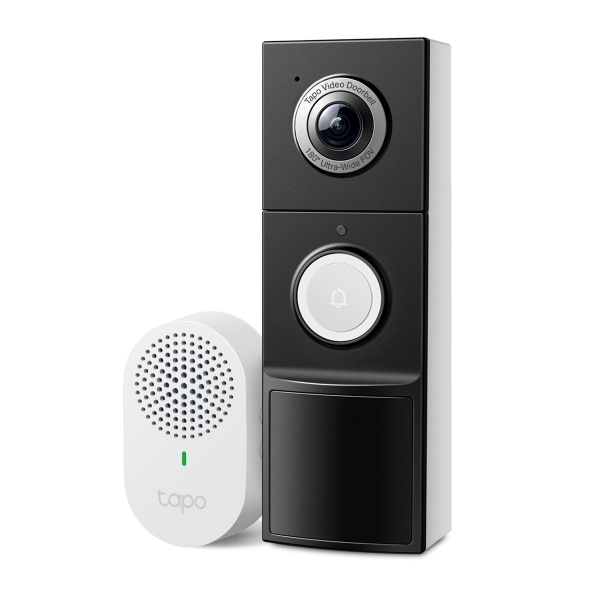
Check what recording remains available after a free trial and who can access the account. Our doorbell comparison and recording guide explain the difference between a live view, motion clips and a continuous timeline.
A phone notification is not a substitute for an indoor chime that the household can hear. If a Ring unit shows the visitor but does not ring inside, use our chime and notification troubleshooting guide to identify the actual chime arrangement before changing settings or wiring.
Option 4: a swing-bar guard
A swing-bar guard uses a rigid arm rather than a flexible chain to limit opening. It may be more convenient on a compatible entrance, but the result still depends on the device, frame, door geometry and fixing support. A strong-looking arm on fragile trim is not a strong installation.
Check that the device is intended for the opening direction and available clearance. It should not obstruct the latch, scrape the door or require the frame to be distorted. Follow the manufacturer’s template and obtain professional advice when the support behind the fixing is uncertain.
Do not assume a hotel-style guard is automatically appropriate for a home, apartment fire door or required exit. Verify the building rules and the ability of all relevant occupants to release it promptly.
Option 5: improve the primary door hardware
If your real concern is someone forcing entry, a viewer or guard is not the whole answer. Inspect the lock, receiving strike, frame and door leaf. A correctly specified reinforcement or repair may address a more meaningful weakness than adding a second visitor restraint.
Do not install a new deadbolt in an unsuitable door simply because a guide calls it the strongest alternative. Multipoint, metal and rated assemblies can have specific limitations. Compare the full door specification and use compatible hardware.
Our reinforcement guide and strike-plate guide explain those decisions. The useful alternative may be repairing the original entrance rather than purchasing another accessory.
Option 6: temporary devices, used within their limits
Portable locks, wedges and bars are sometimes useful for a permitted temporary situation, but they are not interchangeable. Many depend on an inward-opening door, a particular strike arrangement or a suitable floor. Some prevent authorized outside access even when that is needed.
Read the intended-use instructions, obtain permission where required and assess emergency exit. A device that is awkward to remove or relies on unusual strength can be unsuitable for children, older occupants or anyone with limited mobility. Do not leave someone dependent on a mechanism they do not understand.
For an exterior home entrance, temporary blocking is not a substitute for repairing a failed lock. Avoid improvised chains to furniture or other arrangements that can become trip hazards or trap occupants.
Why a chain can still be useful without being a complete solution
It is not necessary to declare every chain useless to understand its limits. Properly installed and used as intended, it can provide a limited-opening function. The mistake is assuming that function establishes the same resistance as a complete entrance lock.
Police advice often recommends checking through a viewer first and using the chain if the door is opened. For example, Warwickshire Police’s caller guidance combines visitor screening with independent identity checks. Hardware is one part of the routine, not proof that a convincing caller is genuine.
If the chain fitting is loose, damaged or attached to deteriorated material, have it repaired or replaced appropriately. Do not continue using it merely because it still spans the gap.
A better routine for unexpected callers
Keep the entrance closed while you establish who is there and what they want. Use the viewer, intercom or a safe view from a window. You do not have to admit someone because they claim urgency, wear a uniform or show an unfamiliar identification card.
Where verification is appropriate, contact the organization through an independently obtained official number rather than one supplied only by the caller. Ask them to wait or return at an agreed time when another trusted person can be present. Genuine procedures should not depend on rushing you into opening.
If you feel threatened or an immediate crime is occurring, use the appropriate local emergency response. Do not turn a security check into a confrontation or attempt to detain a visitor yourself.
Accessibility should determine the installation
Consider who uses the entrance. A viewer mounted for a tall adult may be useless to someone seated. A small chain slider can be difficult for arthritic hands. An app-only intercom may not suit someone without a smartphone.
Test the proposed operating sequence before committing to installation. Can the person see the screen, hear the caller and release the normal door hardware without unusual effort? Include a practical fallback when power or batteries fail.
A simple local viewer and a well-adjusted primary lock can be more valuable than a feature-rich system that the occupant avoids using. Convenience and security are not enemies when the equipment matches the user.
Renters and apartment entrances
Check permission, rated-door requirements and shared-corridor privacy before fitting anything. Replacing a chain may seem minor, but new holes or different hardware can affect an approved assembly. Ask the responsible manager which products and installers are acceptable.
A doorbell camera can also record neighbors unnecessarily if the corridor is narrow. Check the applicable rules and use a proportionate view. An indoor viewer may answer the visitor-identification question with fewer external changes.
Our apartment security guide covers how individual hardware decisions interact with communal access and management responsibilities.
Compare the complete cost
Include installation and maintenance, not just the product price. A viewer may require a compatible approved opening. A video doorbell may need electrical work, a chime or recurring storage. A guard may require frame preparation rather than a few screws into trim.
Also consider how much work you are willing to maintain. A simple mechanical device needs inspection; a connected product adds accounts, updates and batteries or power. Neither category is maintenance-free.
| Option | Ongoing responsibility | Good acceptance test |
|---|---|---|
| Optical viewer | Keep the view clear and fitting sound | Every relevant user can identify the caller position |
| Digital viewer | Power and device maintenance | Screen wakes and remains usable in expected lighting |
| Intercom or doorbell | Power, network, accounts and supported updates | Complete a real conversation and retrieve any promised recording |
| Chain or guard | Inspect fixings and normal release | Door operates without interference and occupants can release it |
| Primary-lock upgrade | Maintain alignment and suitable hardware | Full reliable locking and safe inside exit |
What I would choose in common situations
For someone who mainly wants to see a caller, I would start with a suitable viewer. For someone who needs remote conversation or delivery management, I would compare intercom or video-doorbell options and test their actual performance. For a door with weak hardware, I would repair and reinforce the entrance first.
A swing-bar guard is a compatibility decision, not a universal upgrade tier above a chain. A portable device is a limited-use decision, not a permanent answer to every front-door concern. Keeping those jobs separate makes the purchase clearer.
Frequently asked questions
Is a swing-bar guard always stronger than a chain?
No general claim is reliable without the exact product, support and installation. Both depend on the door and frame to which they are attached.
Can a video doorbell replace a chain?
It can help you identify and speak to callers without opening the door. It does not physically restrain an open door or reinforce the primary lock.
What is the best no-drill option?
That depends on the door, permissions and task. Do not choose a temporary blocker without checking compatibility and safe exit; an existing viewer or intercom may already solve the need.
Should I add more locks if I am worried about callers?
First distinguish visitor identification from forced-entry resistance. A better screening routine may address the immediate concern, while the primary door should be assessed separately.
What should be checked after installation?
Normal closure, latching, locking, visibility or audio performance, and the ability of every relevant occupant to exit. Any accessory that interferes with those functions needs correction.