

Security Camera Not Working? Diagnose Power, Network, Recorder and App Failures
When a security camera stops working, the missing picture is only a symptom. The camera may have lost power, the recorder may be using the wrong input, or the phone app may have lost remote access while local recording continues normally. A factory reset can erase useful settings without addressing any of those causes.
Start by identifying which part of the system still works. Compare local and remote viewing, one camera and the others, live footage and saved recordings. The pattern often tells you where to investigate before you replace hardware or delete anything important.
Preserve evidence before troubleshooting
If the outage coincides with an incident you may need to investigate, export accessible recordings and note the apparent start time of the failure. Keep screenshots of error messages, storage status and the camera list. Do not format a card or hard drive merely because a support screen offers the button.
Record the camera model, recorder model, power arrangement and recent changes. A new router, changed Wi-Fi password, firmware update or moved cable can provide a useful starting point. Do not assume a recent change caused the fault, but include it in the diagnosis.
For a business or professionally managed system, contact the authorized administrator before changing network addresses or account credentials. A well-intended fix on one device can affect other users and integrations.
Find the scope of the failure
| What has stopped? | Likely area to inspect first | Useful comparison |
|---|---|---|
| One camera, others normal | Its power, cable, connection or configuration | Same camera locally and remotely |
| All cameras on one recorder | Recorder, shared power or network component | Recorder menu and individual camera status |
| TV picture, but app still works | Display input, output resolution or HDMI path | Recorder menu on another supported display |
| Remote app, but local view works | Internet, account or remote-access service | Viewing on the home network |
| Live view, but no saved clips | Recording schedule, storage or entitlement | Event log and storage health |
| Only nighttime operation | Illumination-related power demand, settings or image problem | Daytime status and original night footage |
This is not a definitive fault code table. It is a way to avoid troubleshooting a phone notification setting when the recorder itself has no power.
Identify the system type
A plug-in Wi-Fi camera, a battery camera, an IP camera powered over Ethernet and a coax-connected DVR camera have different dependencies. Look at the actual model and wiring rather than assuming every device called CCTV is interchangeable.
An IP camera sends network video to an app, recorder or other compatible destination. A coax camera may require a compatible DVR signal format and separate power. A cloud camera can depend on an online account even when the local network is functioning.
Write a simple chain for your setup: camera power, connection, recorder or cloud, viewing device. Then identify the last point in that chain where you can confirm normal operation.
Check power safely
Inspect accessible connections and the status indicators described in the manual. Confirm the intended power supply is connected and any switched outlet or power strip is on. Do not open mains equipment, work on wet connectors or substitute an adapter merely because its plug fits.
A replacement supply must match the manufacturer’s electrical and connector specifications. Voltage, polarity, power capacity and the supported power method matter. If a shared supply feeds several cameras and all fail together, that shared component deserves attention.
Do not rely on the absence of a visible infrared glow as universal proof that a camera is unpowered. Illumination settings and wavelengths vary. Use the product’s documented indicators and diagnostics rather than looking directly into emitters.
Power-over-Ethernet requires compatible equipment. An ordinary Ethernet port may supply data only, and different power arrangements are not automatically interchangeable. Check the exact camera and switch or injector specifications before connecting a substitute.
Review the switch’s port status and power information if available. A system can have enough power for some devices but not the intended complete load, especially after adding equipment. A port light alone does not prove the camera is operating correctly.
Inspect the accessible cable path and weather-protected connections. Where the manufacturer permits, an authorized controlled test with a known-good compatible cable or port can help isolate a component. Change one element at a time and restore the documented arrangement afterward.
Wi-Fi cameras: separate local connectivity from internet access
A phone loading a website beside the router does not prove that a camera at the garden gate has a reliable connection. Check the camera’s actual location, supported wireless band and signal information. Walls, metal surfaces and distance can affect the link.
Confirm whether the network name or password changed. A camera configured for an old network may need the manufacturer’s supported network-change procedure. That is different from an account problem or a cloud-service outage.
A home router can provide local Wi-Fi while its internet connection is unavailable. Conversely, the phone may silently use mobile data, hiding a home-internet problem. Compare carefully before deciding which component failed. Our home Wi-Fi guide explains how to preserve security while making legitimate network changes.
Battery cameras: charging and waking behavior
Check the battery state and the manufacturer’s operating-temperature guidance. A solar accessory does not guarantee uninterrupted charging in shade or seasonal weather. A camera that sleeps between events may not behave like a continuously powered device.
Use the approved charging method and inspect for damage. Do not charge a visibly damaged battery or improvise a power connection. If the camera repeatedly goes offline after a short period, record whether that correlates with charge level, temperature or heavy event activity.
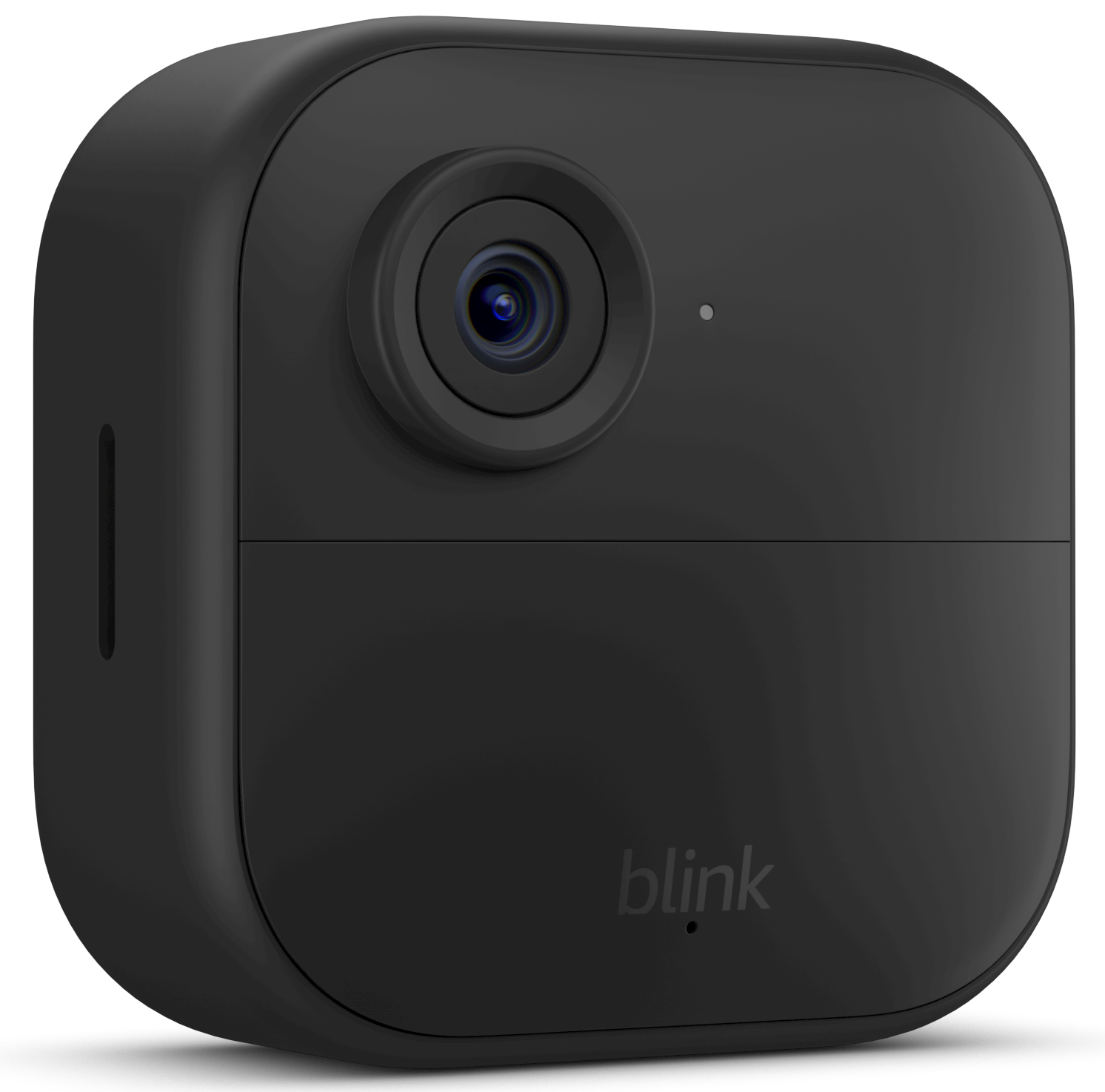
If live view works but motion events are missing, use our motion-detection guide. That is not necessarily a complete camera outage.
DVR systems: is the camera missing or the display missing?
Try to display the recorder’s own menu using its normal controls. If the menu appears but a camera tile reports video loss, the recorder-to-display path is functioning at least enough to show the interface. If nothing from the recorder appears, investigate the display connection and input before assuming every camera failed.
Swann’s DVR troubleshooting guide explicitly distinguishes camera video loss from monitor problems and notes that signal compatibility matters. Its procedure is for the listed DVR equipment, not a universal guide for IP NVR systems.
Check that the camera format and recorder input are compatible. A BNC connector does not make every analog or HD-over-coax signal interchangeable. If the fault began after replacing a camera, compatibility may matter more than cable tightness.
If you are unsure which recorder architecture you have, use the NVR-versus-DVR comparison to identify the video path before buying replacement parts. Record the exact camera and recorder models; similar connectors or a familiar brand name do not establish signal compatibility.
NVR systems: check discovery, credentials and channels
An IP camera can be powered and connected yet unavailable to a recorder because credentials changed, its address changed or the expected protocol is not supported. Review the recorder’s camera-status screen and preserve the actual error message.
Do not solve an address conflict by assigning random numbers. Document the network and use the manufacturer’s supported configuration, ideally with the responsible administrator. A camera behind a recorder’s built-in network ports may be on a different network from devices connected to the household router.
When adding third-party equipment, verify protocol and feature compatibility for the exact models. Basic video may work while audio, analytics or motion events do not. A successful live picture is not proof that every integration feature is available.
When only remote access has failed
Use the camera outage-function comparison to separate loss of Wi-Fi from loss of internet and identify which recording functions your arrangement is intended to retain. Once the original failure is resolved, the camera backup-power guide helps plan protection for the camera, network equipment and recorder together rather than assuming a battery on one component covers the whole system.
Compare viewing on the local network with viewing from mobile data. If local playback works, preserve that capability while investigating internet access, the account and the manufacturer’s remote service. Check whether the app is current and whether the owner account remains authorized.
Do not expose the recorder directly to the internet or open broad port ranges as a generic troubleshooting shortcut. Use the vendor’s supported secure access method or an appropriately managed remote-access solution. A temporary fix that removes important protection is not a successful repair.
The FTC’s camera-security guidance emphasizes updates, account protection and network security. Keep those protections in place while investigating connectivity.
When live view works but recording does not
Check recording schedules, camera arming mode, storage health and any subscription required for the chosen recording path. A live feed proves only that a current stream is available. It does not prove yesterday’s footage was saved.
Inspect whether the system records continuously or only triggered events. Confirm time zone and clock settings so you are searching the correct interval. A missing person classification can also differ from missing footage; inspect the full timeline where available.
Export important clips before formatting or replacing media. If the recorder reports disk errors or unexplained gaps, stop treating a reboot as a permanent solution and obtain model-specific support. Our recorder-beeping guide explains common warning categories.
Use a controlled restart before a destructive reset
A normal restart can clear some temporary states, but note what was happening first. Follow the approved shutdown procedure for a recorder to avoid unnecessary storage risk. Do not repeatedly disconnect power while it is writing or updating.
A factory reset may remove pairing, schedules, users and network settings. Before doing one, confirm you have the owner credentials, setup information and a way to restore legitimate access. Save evidence and configuration records where supported.
Reset only when the manufacturer recommends it for the diagnosed situation. It cannot repair a damaged cable, inadequate power supply or incompatible video format.
When hardware service is the right next step
Visible internal moisture, damaged connectors, recurring power cycling or a failed supported diagnostic may justify professional service. A device that became unreliable after impact or a storm deserves physical assessment rather than endless app changes.
Do not open sealed equipment or mains-powered housings unless the manufacturer explicitly provides an authorized user procedure and you are competent to perform it. Warranty and safety considerations may make replacement or professional repair more appropriate.
Collect the camera and recorder model numbers, firmware versions, error messages, test times and which comparisons succeeded. This allows support to distinguish a device fault from a system problem more efficiently.
Verify the repair end to end
- Confirm stable power and expected device status.
- Check local viewing and, where required, remote viewing.
- Trigger a controlled event in the area the camera monitors.
- Verify the recording actually saves and can be exported.
- Confirm the intended notifications arrive.
- Recheck after normal day-to-night transition and ordinary use.
A single successful live view after a reboot is not enough. The camera should perform the task for which it was installed and remain usable without repeated intervention.
Frequently asked questions
Should I reset an offline camera immediately?
No. Identify whether power, network, account or recording has failed first. A reset can remove useful configuration without fixing the cause.
Why do all cameras stop at once?
A shared component such as power, recorder, network or service may be involved. Compare the recorder interface and local access before replacing individual cameras.
Can I use any adapter with the same plug?
No. Electrical specifications and connector details must match the manufacturer’s requirements. A physical fit is not proof of compatibility.
Why does the camera work at home but not away?
Local viewing and remote access use different paths. Investigate internet, account and supported remote-service configuration while preserving local recording.
What proves the problem is fixed?
A stable, retrievable recording of the intended event, with the required local and remote access and notifications. The live picture alone is only one part of the check.


