Best Anti-Theft Backpacks: Three Designs Compared for Travel and Commuting
An anti-theft backpack can make casual access less convenient, but only when its closures and layout fit the way you actually travel. A bag that requires a lengthy unpacking routine every time you need a ticket may encourage you to leave its protection disengaged. The useful purchase is not the bag with the longest list of security trademarks. It is the one you can carry comfortably and use consistently.
This guide compares three different approaches: a larger travel daypack, a compact city backpack and a structured commuter design. The recommendations are based on current manufacturer specifications, not claimed hands-on testing. Treat the suggested uses as a decision aid and check the exact regional model before ordering.
Which backpack should you compare first?
| Model | Published capacity | Best reason to consider it | Main question before buying |
|---|---|---|---|
| Pacsafe GO 25L | 25 liters | More room for a full day of travel and a larger laptop | Will the size remain comfortable on crowded transport? |
| Travelon Anti-Theft Classic 42310 | 11 liters | A compact bag for lighter city essentials | Will the actual device and daily load fit? |
| XD Design Bobby Hero Regular | 16 liters | A structured, electronics-oriented commuter layout | Does the opening and organization suit frequent access? |
These are not interchangeable sizes. An 11-liter bag can be appropriate for documents, a light layer and small essentials while being frustrating for someone carrying a full workday’s equipment. A 25-liter pack can solve that problem but become unnecessary bulk for a person who only needs a phone, water and wallet.
Pacsafe GO 25L: compare it for a larger day load
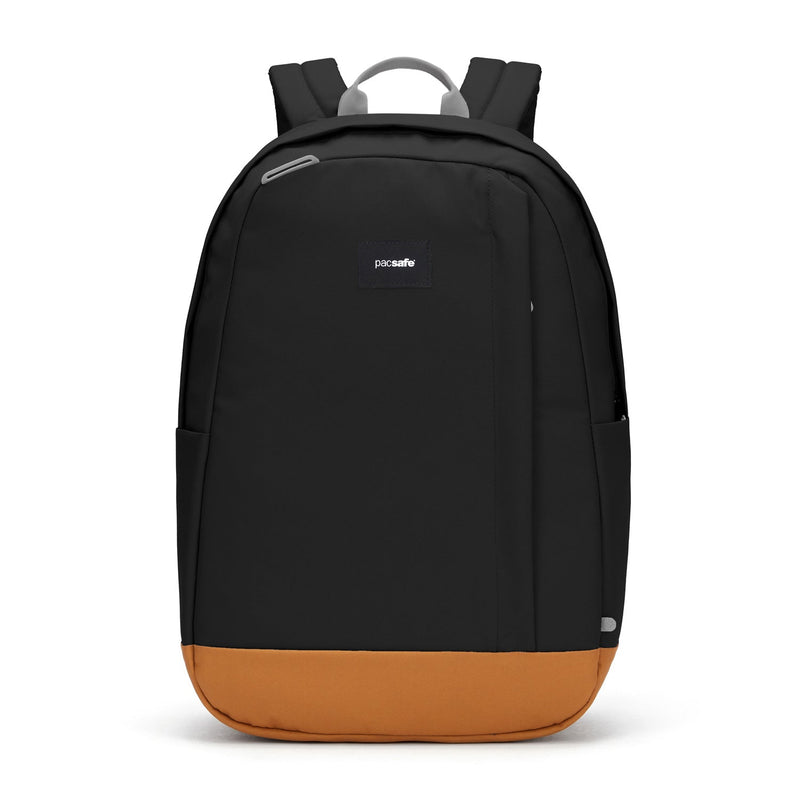
Pacsafe lists 25 liters of capacity, a padded compartment for a 16-inch MacBook Pro or most 16-inch laptops, a luggage pass-through and a hidden pocket. Its published security features include securable zippers, cut-resistant elements and an RFID-blocking pocket. Those features support a practical travel layout, but the exact laptop fit still needs checking.
I would put this category on the shortlist when the usual load includes a jacket, food, chargers and electronics rather than only pocket-sized essentials. The larger volume can reduce the temptation to leave items protruding from an overfilled bag. That is an argument about fit, not proof that capacity itself improves resistance to theft.
The tradeoff is the amount you carry through busy spaces. Test the pack with the load you intend to use and check whether you can reach essential compartments without placing everything on the ground. A bag that is spacious but awkward to manage can create avoidable moments of distraction.
Travelon Classic: a compact alternative
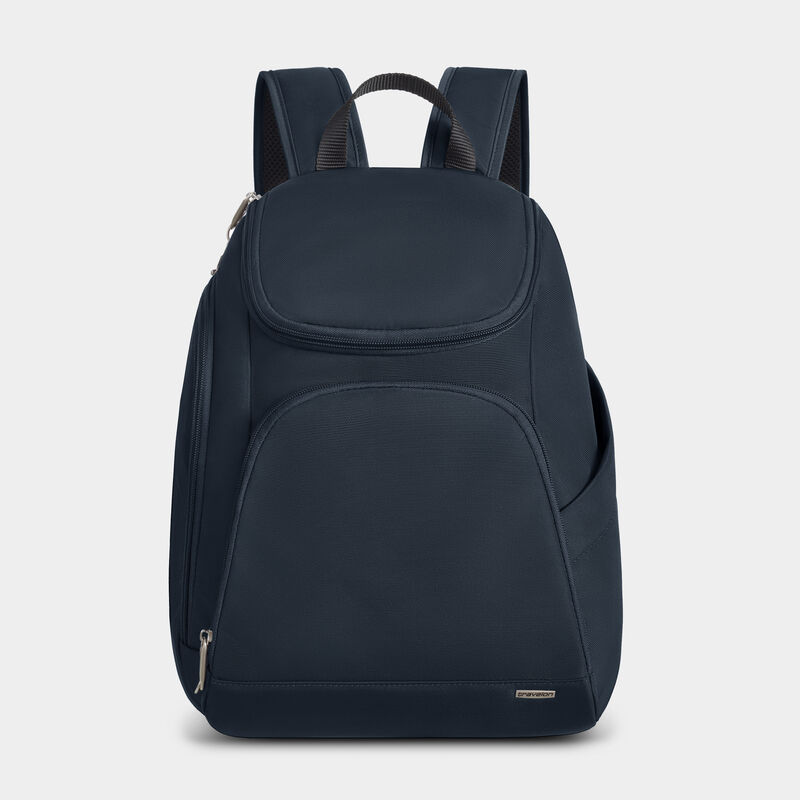
The current 42310 listing specifies 11 liters, a padded sleeve for a tablet or laptop up to 13 inches, locking compartments, reinforced body panels and a slash-resistant strap. It also lists an RFID organizer and a tethered key clip. Those are the specifications of this particular Classic backpack, not every model carrying the Classic name.
A smaller bag is worth considering when you repeatedly carry less than a full commuter load. It can be easier to keep organized because there is less unused space in which essentials disappear. Before ordering, pack the proposed contents into a similarly sized bag or compare measured internal space with the items themselves.
Do not buy it for a larger computer simply because another retailer describes the series as laptop-friendly. Screen diagonal does not give the full dimensions of a device and protective sleeve. Check the actual fit, including closure clearance and whether the computer forces the compartment against other contents.
XD Design Bobby Hero Regular: a structured commuter layout
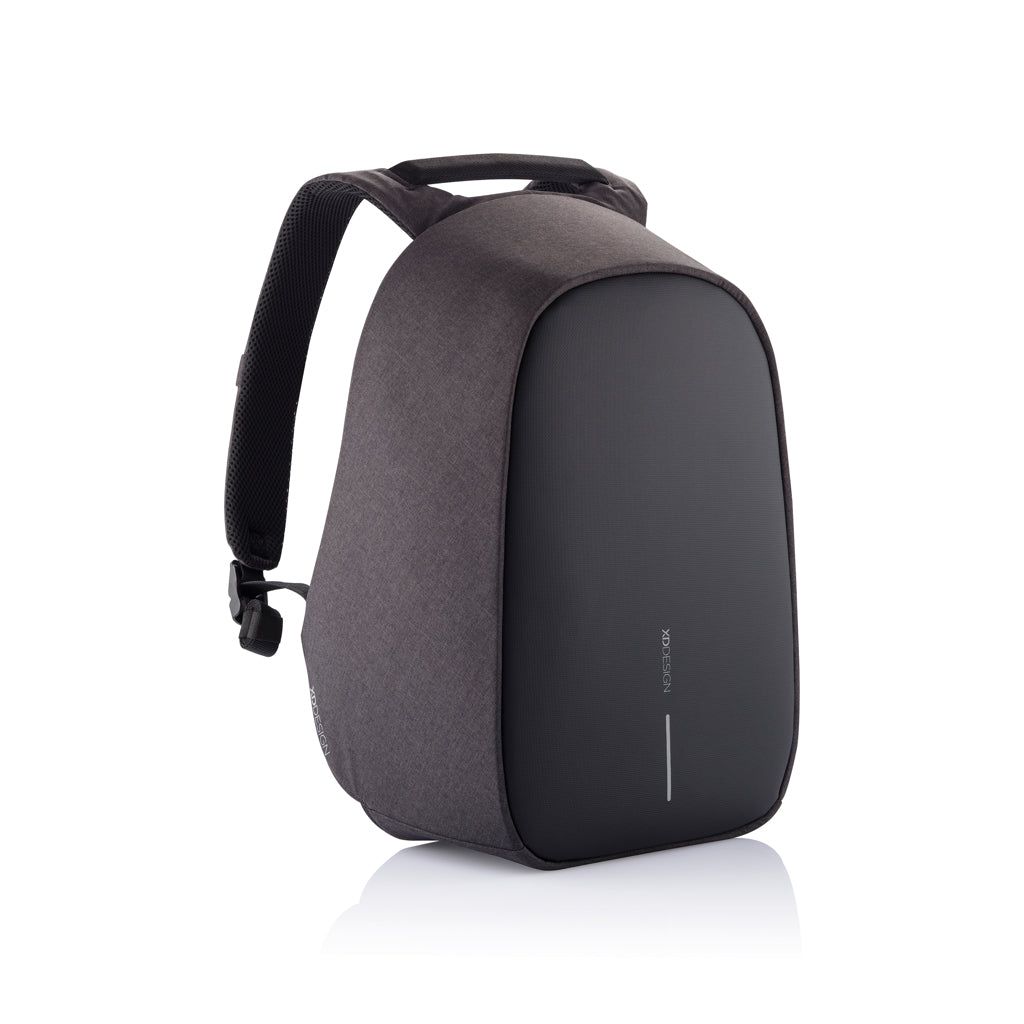
XD Design’s current page lists 16 liters, a 15.6-inch laptop compartment, a tablet compartment up to 12.9 inches and an empty weight of 1,110 grams. It describes concealed zipper arrangements, reinforced materials, an RFID pocket and water-repellent fabric. An integrated USB port is a connection feature, not evidence that a power bank is supplied.
This is a sensible design category to compare when daily organization revolves around electronics, documents and a compact load. Its structured profile may appeal to someone moving between transit and an office. A traveler who needs to compress the bag into irregular spaces or repeatedly reach a large jacket may prefer a different layout.
The practical test is the opening sequence with your own belongings packed. Can you retrieve a laptop at a checkpoint without spreading smaller items across a public table? Can you reach a ticket while keeping the main compartment controlled? A concealed zipper only helps when its access pattern remains usable.
What anti-theft features actually do
Securable zipper pulls can make casual opening more involved than simply pulling an exposed tab. A concealed opening can place access closer to your body. Reinforced panels or straps can resist particular forms of cutting compared with an unreinforced design. None of those features turns a soft bag into a safe.
Read which panels and straps are protected rather than assuming the entire product has identical construction. Look at the closures and attachment points as well as the fabric. A feature description should identify a mechanism, not merely create a general impression that theft is impossible.
The most useful question is whether the feature reduces a relevant opportunity without making you abandon it. A closure that you leave undone because it is irritating provides little benefit. A discreet pocket that can be reached comfortably while the bag remains controlled may be useful even without a dramatic marketing name.
Do not confuse resistance with personal safety
A bag should not be treated as a reason to fight someone who demands it or grabs it forcefully. Property is not worth escalating a dangerous encounter. Likewise, do not attach yourself or the bag to a moving object or create an entanglement hazard in the name of security.
Some products offer a detachable strap intended to secure the bag temporarily to a suitable fixed object. Use only the documented arrangement and understand that the whole object or bag may still be vulnerable. A chair that can be lifted is not the same as a sound fixed anchor.
Keep ordinary custody habits regardless of the material. A backpack left unattended can be taken whole, and its features may be irrelevant once someone has unlimited time with it. Our travel bag-security guide focuses on those routines.
RFID protection is a separate purchasing question
An RFID-blocking compartment is intended to limit certain radio-frequency interactions with compatible credentials. It does not stop someone taking the bag, reading a document already exposed or compromising an online account. Avoid paying primarily for a frightening description of a risk that is not clearly connected to what you carry.
Check which pocket is shielded and how it must be used. A protected compartment does not mean every exterior pocket provides the same function. If a particular access card is important to you, verify compatibility through appropriate manufacturer information rather than assuming every credential operates identically.
For most ordinary purchasing decisions, compare physical fit, closures and access routines first. RFID can be an additional feature without being the feature that decides the entire backpack choice.
Capacity numbers do not replace a packing test
Manufacturers distribute space differently. Two bags with the same listed capacity can have different useful main compartments, narrow organizers and rigid sections. A water bottle or lunch container can expose those differences more effectively than a photograph of an empty interior.
Make a list of an ordinary day’s load and a heavier travel day’s load. Include chargers, the laptop sleeve, medication or other essentials you actually need, and an item representing a jacket. Check whether zippers close without strain and whether the security closures still engage comfortably.
A larger bag can encourage unnecessary packing. A smaller one can push essentials into unsecured exterior pockets. The right size is the one that supports your routine without either problem, not automatically the largest option within the budget.
Measure the laptop, not only its advertised screen size
Measure the computer with any case you normally use. Check width, depth and thickness against the available sleeve and access opening. Two laptops with the same diagonal display size can have different bodies, hinges and accessories.
Look at how the laptop sits relative to the bottom of the bag and the rest of the load. Padding helps with certain ordinary impacts but is not a license to drop the bag or place heavy objects against a screen. Keep liquids in suitable separate containers and consider the consequence of a bottle leak.
For the data side of device theft, use our laptop-protection guide. A good bag is not a substitute for encryption, independent backups and an account-recovery plan.
Comfort determines whether the security features get used
Try the pack with realistic weight and adjust the straps properly. Pay attention to how it sits when walking, standing on transport and bending to pick something up. A handle that feels fine empty may be uncomfortable when the bag is loaded.
Check how you will move the bag to the front in a crowded carriage and how much space it occupies. A rigid profile may be easy to organize yet awkward in a narrow aisle. A soft bag may compress well but need careful internal packing to keep valuables accessible.
Do not mistake a manufacturer’s lifestyle photograph for evidence of comfort on your body. A return policy that permits a careful indoor fit check is valuable, provided you keep the product in the required condition.
Water resistance and electronic accessories
Water-repellent fabric does not necessarily make a backpack waterproof. Seams, zipper construction and openings can affect how the complete bag behaves. Follow the exact product’s limitations and use suitable additional protection when contents cannot tolerate moisture.
A USB port does not supply electricity by itself. Check whether a compatible cable or battery is included and whether the arrangement remains useful with your devices. Do not prioritize a charging feature over the storage layout merely because it makes the bag sound technologically advanced.
For air travel, check the airline’s current baggage dimensions and battery rules separately. A backpack described as cabin-friendly is not a universal allowance across all carriers, fares or routes. Capacity in liters is not the same as compliance with a measured size limit.
Where to keep documents, money and daily-access items
Keep frequently used items accessible without exposing the whole contents. Put reserve payment methods and essential records in an appropriate separate arrangement so one lost bag does not remove every resource. Do not store all recovery information only on the phone or laptop inside it.
A hidden pocket is useful for organization when you can remember and reach it. Repeatedly opening a complicated compartment at a crowded ticket gate can undermine the intended convenience. Rehearse the ordinary routine at home before the trip.
Our travel-wallet comparison explains the difference between an everyday wallet and discreet reserve storage. A backpack should complement that plan, not become the single place containing every important item.
Buying used or from a marketplace
Confirm the exact model and inspect condition, especially security clips, zipper sliders, straps and reinforced sections. A worn closure can change how the feature works without being obvious in a distant photograph. Ask for current pictures rather than relying only on a stock image.
Check the seller’s authenticity and return arrangements through the actual marketplace. Avoid assuming a familiar product name guarantees the current manufacturer specification. Model updates and regional variants can change details, so compare the item offered with the relevant official page.
A large discount is not useful if you receive a similarly shaped bag without the documented construction. Conversely, an older genuine bag may remain usable if its condition and exact features fit the task.
How I would choose among these examples
I would start with the Pacsafe GO 25L category for a larger daily travel load, the Travelon Classic for a genuinely compact set of essentials, and the Bobby Hero Regular for a structured electronics-focused commute. Then I would let actual packing, comfort and closure use decide between them.
That is a more defensible recommendation than calling one universally best. A person with a large laptop and extra clothing should not be pushed toward a compact bag because it has an attractive price. A light traveler should not pay for unnecessary bulk merely to get a longer list of features.
Frequently asked questions
Are anti-theft backpacks worth buying?
They can be when their access and construction features address your routine and remain comfortable to use. They do not replace keeping the bag under your control.
Are these bags slash-proof?
Do not treat resistance claims as an absolute promise for the entire bag. Check the protected areas, construction and exact manufacturer wording, and avoid escalating a confrontation over property.
Will a 16-inch laptop fit every 16-inch-rated sleeve?
Check the actual device and sleeve dimensions, including any case. Screen diagonal is not a complete fit measurement.
Is RFID protection essential?
Not for every traveler. It addresses a specific contactless-reading concern, while ordinary removal, loss and account compromise require different precautions.
What should I test before keeping the bag?
Pack your real load, use every closure, retrieve a ticket and laptop, and walk with it. The useful security features are the ones you will continue using after the novelty wears off.