Best Home Safes: Choose for Fire, Water or Burglary Protection
A portable fire chest and a burglary-rated safe can sit beside each other in an online search while solving very different problems. One may be a sensible place for household documents; the other may be the more appropriate comparison for valuables that an intruder could carry away. A digital keypad and a heavy-looking door do not tell you which kind you are buying.
Choose the risk first, then the certification, installation and size. Fire, water and forced-entry performance need separate checks. This guide compares manufacturer-documented examples and explains how to avoid paying for the wrong protection. These are specification-based selections, not claims that SecurityLatest has performed physical attack or furnace tests.
Which type of safe fits your purpose?
For passports, certificates and other paper records, a properly specified fire-and-water chest may be a practical starting point. For higher-value contents where unauthorized removal is the main concern, prioritize documented burglary resistance and a suitable installation. For a substantial collection of records, the internal file arrangement can matter as much as the exterior size.
Do not assume every item belongs under the same protection claim. Paper, electronic media and heat-sensitive objects can have different storage needs. Check the exact model’s stated contents and certification rather than extending a paper-protection claim to everything that fits inside.
| Example | Reason to compare it | Published protection to verify | Main buying caution |
|---|---|---|---|
| SentrySafe SFW123GDC | A front-opening household fire-and-water safe | One-hour UL fire classification and specified ETL water verification | Anchoring can change the stated water protection |
| SentrySafe CHW20221 | A smaller portable document chest | Half-hour UL fire classification and specified water verification | Portability is not protection against removal |
| Honeywell 1108 | Organized hanging-file storage | Manufacturer-listed 60-minute fire and 100-hour water protection | Privacy locking is not a burglary rating |
| American Security BF1512 | A residential option with separate burglary evidence | Manufacturer-listed UL RSC Level I and 60-minute fire rating | Delivery, floor support and installation require planning |
Specifications were checked against the linked manufacturer pages for this revision. Confirm the current model, regional variant, installation manual and certificate before ordering. A similar product name or photograph does not establish an identical rating.
SentrySafe SFW123GDC: a practical household fire-and-water comparison
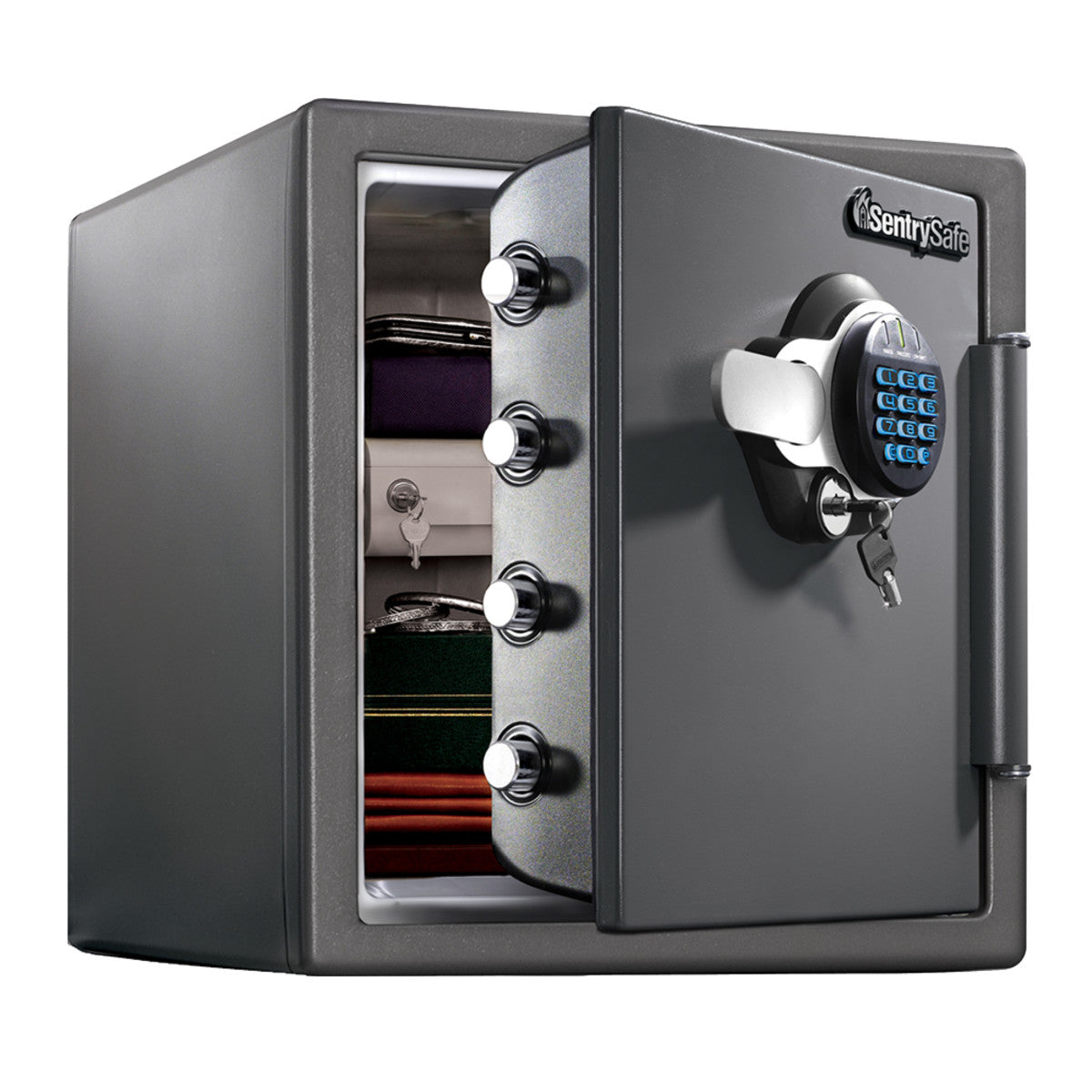
SentrySafe lists a 1.23-cubic-foot interior, a digital lock and a one-hour fire classification at 1700°F for this model. Its stated water verification covers up to eight inches for 24 hours under the specified conditions. Those are distinct claims; neither establishes a UL residential burglary classification.
This is a useful category for someone who wants organized access to household papers and permitted valuables without choosing a small portable case. Measure the items you actually store and the door’s opening clearance. An interior drawer may be convenient, but it also changes the usable arrangement compared with an empty cubic-foot figure.
The installation decision deserves attention before purchase. SentrySafe’s P50221 bolt-down-kit guidance says the listed compatible safes are not water resistant once bolted down. That is a real tradeoff between retaining the container and preserving the stated water claim, not a detail to discover after drilling.
SentrySafe CHW20221: compact document storage
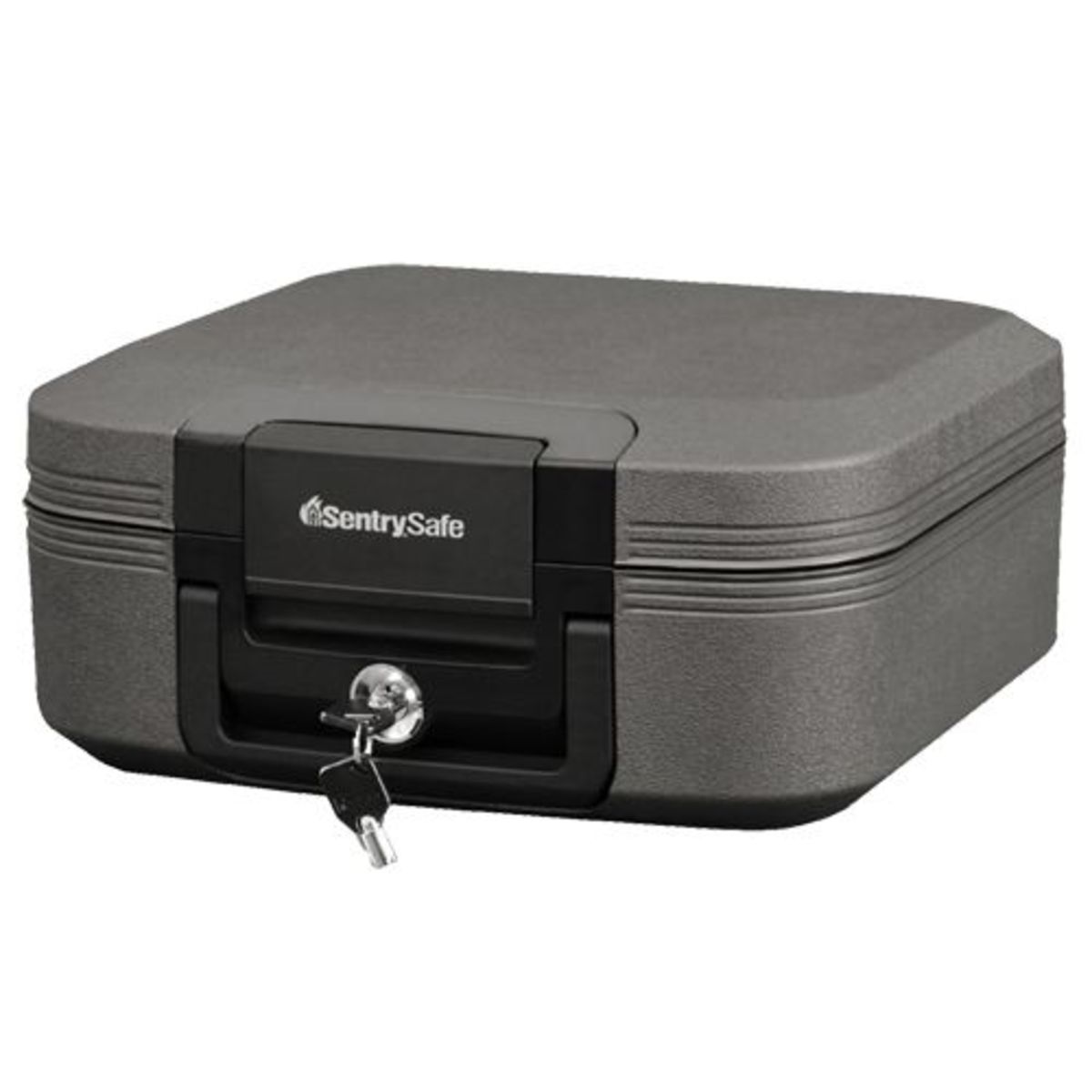
The manufacturer lists a 0.28-cubic-foot interior, keyed closure and carrying handle, with a half-hour fire classification at 1550°F and water verification up to 72 hours. Its published internal dimensions are only 4.4 inches high, 12.8 inches wide and 8.5 inches deep. Check folders and envelopes against those measurements rather than assuming a compact box fits full-size paperwork without folding.
A chest like this can suit a small, defined collection of documents. It is less convincing as the main answer to theft of valuable contents because someone may remove the whole container. That does not make the product useless; it means its practical role must match the problem you want to solve.
Think about routine access. If you open the chest frequently, choose a location where the lid can move safely and the contents can be organized without being left exposed. Keep its key available to authorized users but not hanging beside the box.
Honeywell 1108: when file organization matters
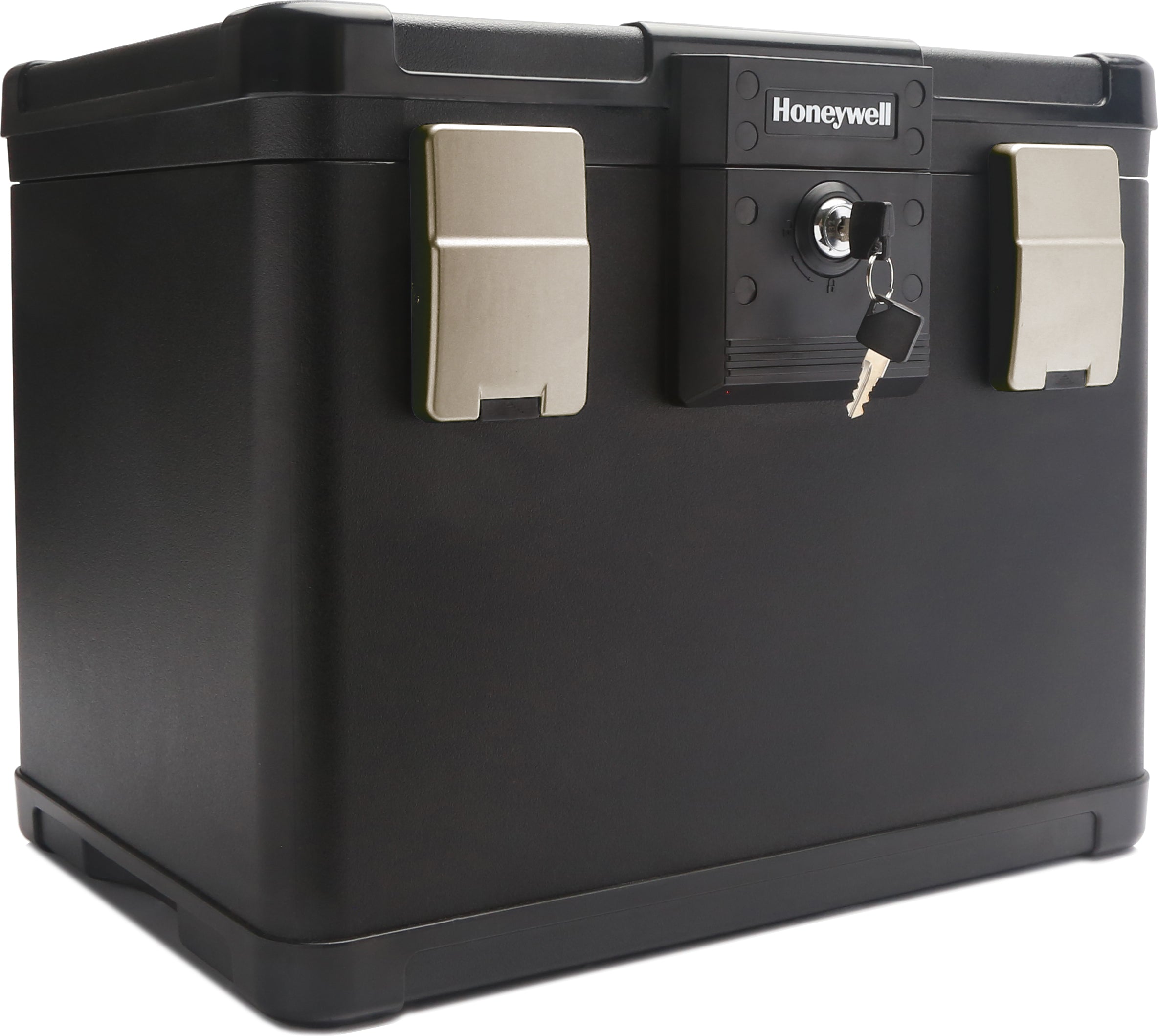
Honeywell lists a 1.06-cubic-foot file chest accommodating letter, A4 and legal hanging folders. Its current page describes a 60-minute fire rating at 1700°F and water protection for 100 hours up to one meter, with compression latches and a privacy key lock. Verify the exact current documentation supplied with the unit rather than relying on an older manual for another revision.
The file-oriented shape is its practical attraction. Someone managing household records may find it easier to retrieve a folder than search a stack inside a deeper safe. The tradeoff is floor space, lid clearance and handling. Do not choose it merely because its exterior appears large enough; check how you will open it in its actual location.
A privacy lock is not evidence of a particular burglary-resistance class. If removal or deliberate forced access is the primary concern, compare a product with the appropriate independent security evidence instead of expecting the document chest to serve every purpose.
American Security BF1512: a different security category
The BF1512 manufacturer page lists a UL RSC Level I security rating, a 60-minute fire rating at 1700°F and a weight of 288 pounds. American Security also identifies its intended anchoring provision and available mechanical or electronic lock options. Those details make it a relevant comparison when burglary resistance is an important purchase requirement.
Do not interpret that rating as unlimited protection or the highest available safe classification. It identifies a defined tested category. Ask a safe specialist and your insurer whether it is appropriate for the type and value of contents you plan to store.
Delivery is a meaningful part of this purchase. Confirm the route through doors and stairs, the support at the final location and the cost of appropriate installation. A heavy safe should not be moved up a staircase by an unprepared household merely to avoid a delivery charge. Obtain the exact dimensions, including projections and opening clearance, from the dealer.
Read fire and burglary ratings separately
Fire testing concerns performance under defined heat and duration conditions. Burglary testing concerns resistance under a defined attack method, equipment and test scope. One label does not supply the other. A sophisticated combination lock may itself have certification without the container receiving the burglary rating you expect.
UL Solutions’ anti-theft testing overview distinguishes standards covering safes, locks and residential security containers. Its RSC explanation also shows why a classification has a defined scope rather than meaning nobody can ever gain entry.
Ask for the certificate or label applicable to the exact model. Avoid translating a laboratory test duration into a promise of protection for the same number of minutes in every real incident. The installed situation, contents and other household security still matter.
Water resistance has its own conditions
Check the depth, duration and closure requirements attached to a water claim. A product can have a meaningful fire rating and no water protection, or water protection under conditions that do not cover every flood or installation. A closed lid and correctly engaged latches may be necessary for the stated performance.
Anchoring is a particularly important question because it can alter the enclosure. Some safes have manufacturer-designed provisions that preserve stated characteristics; others involve an explicit tradeoff. Do not drill new holes or assume a sealant restores the original claim.
Choose the location with both risks in mind. A basement can be convenient but may present a different water exposure from an upper room. The safest general advice is not a universal location; it is to assess the building, the product’s requirements and the installation together.
Size: measure the contents and the access route
Make a physical list of what will go inside, including the largest folder, device or container. Interior dimensions are more useful than exterior measurements because insulation, walls and fittings consume space. Check the clear door opening as well as the cavity behind it.
Allow enough room to organize items without forcing the lock or blocking a bolt. A safe that is too tightly packed can become frustrating to use, encouraging important documents to remain outside. Shelves and drawers should support the intended arrangement rather than simply look tidy in a product photograph.
Then measure the delivery route and final opening space. A chest needs lid clearance; a front-opening safe needs room for its door and the user’s access. Include floor suitability, service access and any anchoring work in the decision.
Electronic, mechanical and biometric locks
A keypad can make frequent access convenient and may support features suited to multiple users. A mechanical combination avoids battery maintenance but still requires an appropriate recovery and servicing plan. Biometrics can add convenience on certain products without proving that the entire container is stronger.
Ask how authorized access is restored when batteries fail, a code is forgotten or a component needs service. Some products have external power arrangements, keys or other documented procedures; others require professional assistance. Keep the correct process and proof of ownership available securely.
Do not store the only recovery key or code inside the safe it opens. Equally, leaving a backup key taped behind the safe can defeat the access arrangement. Decide who genuinely needs recovery access and document it appropriately.
Anchoring and professional installation
A container can resist opening yet still be removed intact. Anchoring can address that separate risk when the product and supporting structure permit it. Use the manufacturer’s specified location, fasteners and installation method, with competent assessment of the building substrate.
Do not assume a floor is suitable merely because it feels solid. Concealed services, underfloor heating, structural limits and tenancy restrictions can affect the installation. A safe installer should establish the actual conditions before drilling.
Ask the dealer to include delivery, positioning, anchoring and any necessary building work in the quotation. Comparing only the safe’s checkout price can make two very different installed solutions appear equivalent.
Keep contents usable and recoverable
Follow the product’s guidance on internal moisture, permitted materials and maintenance. Do not improvise by adding heat sources or storing substances the maker excludes. Check the condition of documents periodically rather than assuming the closed container requires no attention.
For digital information, keep an independent backup as well as any local media in the safe. A safe protects a physical object under specified conditions; it does not guarantee that the data remains readable or that the only copy survives every incident.
Store the inventory, model and serial information somewhere accessible without opening the safe. That helps with service, insurance and replacement if the container itself becomes inaccessible.
Match the safe to the wider security plan
A safe is one layer inside the property. Sound doors, controlled keys and a sensible response arrangement remain relevant. Do not let the presence of a heavy container excuse a back door that no longer latches.
Our home break-in prevention guide covers that wider plan. For apartments, check floor, installation and building permissions before ordering a large unit; our apartment guide explains the shared-building context.
For unusually valuable or irreplaceable contents, get specialist and insurer input before purchase. A product described as suitable for jewelry does not establish the insured value or conditions for your particular collection.
A buying decision you can defend
Choose the SentrySafe household category when its documented fire-and-water purpose fits and the installation tradeoffs are acceptable. Compare a compact chest for a small document collection and a file chest where organization is the main practical difference. When deliberate theft is a central concern, compare a suitably rated burglary-resistant product rather than upgrading only the lock style on a document box.
The exact model is less important than making the comparison correctly. Before paying, confirm the risk, certificate, internal fit, recovery method and installed cost. A clear answer to those five questions is more valuable than an unsupported best overall badge.
Compare document bags separately from rated containers
A fabric temperature claim does not establish the internal conditions of a closed document container during a fire. Our fire-resistant bag versus fire-rated safe comparison explains test scope, contents, closure and independent backups, with specific manufacturer examples and their stated limitations.
Frequently asked questions
Are fireproof safes also burglar-proof?
No. Fire and burglary performance are separate, and neither creates an absolute guarantee. Check the exact certification and the complete installation.
Should every safe be bolted down?
Evaluate the manufacturer’s approved anchoring and its effect on other protection claims. Building suitability and permission also matter; do not drill a container or floor by guesswork.
Is a fingerprint safe more secure?
A fingerprint reader changes the access method. The body, door, backup access and independent testing still determine the relevant security performance.
Can I store my only digital backup in a home safe?
That leaves both copies exposed to the same property-level incident. Use an appropriate independent backup arrangement and verify that the particular media is permitted by the safe’s documentation.
What is the easiest buying mistake to avoid?
Do not buy a portable document chest to solve a high-value burglary problem solely because it has a key. Match the product’s demonstrated purpose to the risk you actually need to manage.