

How to Prevent Car Stereo Theft: Head Units, Amplifiers and Safer Installation
Car audio theft is not one problem. A detachable aftermarket receiver, a factory touchscreen integrated with vehicle controls and a large subwoofer enclosure present different security questions. Advice that treats all three as a removable radio can cause expensive damage or compromise functions the vehicle needs.
Start with the car’s normal locks and alarm, then assess the actual audio equipment and its installation. Reduce unnecessary visibility, use any supported theft-deterrent features and keep reliable ownership records. The aim is to make the equipment less exposed without turning the dashboard or cargo area into a collection of unsafe homemade restraints.
Identify the equipment you are protecting
Record the make and model of the receiver, amplifiers, processors and other valuable components. Check whether they are factory-installed, vehicle-specific aftermarket products or a custom system. Photograph the installation before an incident makes identification difficult.
A factory infotainment unit may interact with navigation, parking cameras, warning sounds or other vehicle functions. Do not remove or modify it based on instructions for an older single-DIN radio. Consult the vehicle’s documentation and a competent installer familiar with the model.
| Equipment | Useful security focus | What to avoid |
|---|---|---|
| Factory integrated screen | Vehicle access, approved hardware and documented ownership | Improvised removal or mounting changes |
| Aftermarket detachable-face receiver | Use the manufacturer’s removable-panel feature consistently | Leaving the removed panel visibly inside the car |
| Amplifier | Secure, ventilated and vehicle-compatible installation | Enclosing it tightly to hide it |
| Subwoofer enclosure | Appropriate restraint and limited visibility | A heavy unsecured box in the passenger or cargo area |
| Portable media or navigation device | Take it with you and remove unnecessary visible clues | Assuming a glove compartment makes it immune to theft |
Secure the vehicle before concentrating on the stereo
Check that doors, windows and the luggage compartment close and lock normally. Confirm actual locking through the vehicle’s intended indicators and procedure rather than pressing the remote and walking away without noticing whether it responded.
Do not leave bags, phones or other portable valuables visible. A thief looking for something else can still damage the dashboard or discover audio equipment after entering. Police.uk’s vehicle guidance recommends locking even for short stops and avoiding visible accessories or cables that suggest electronics remain inside.
These habits do not guarantee prevention, but they address ordinary exposure without requiring a modification to the car. Repair a failing door lock before spending money on an elaborate receiver cover.
Use a detachable faceplate only where the receiver supports it
Some aftermarket receivers provide a removable front panel as a theft-deterrent feature. Follow the model’s removal, storage and reattachment instructions, and take the panel with you rather than leaving it in the glove compartment.
Sony’s DSX-B41D help guide is one example of a receiver designed for this. It does not establish that every Sony unit or factory screen has a removable face. Do not pry at a panel that is not meant to detach.
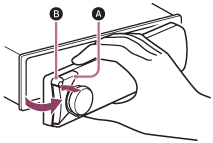
Protect the removed panel in its suitable case and avoid exposing contacts to dirt or moisture. A feature that is cumbersome for your routine may be used inconsistently, so consider everyday practicality when selecting a future receiver.
Security codes: useful when supported, not a universal shield
Some receivers require a configured code after particular resets or interruptions. Others use different protection or vehicle integration. Check the exact model and keep the legitimate recovery information somewhere secure outside the vehicle.
Sony’s code-recovery guidance directs owners of the covered systems to the seller, installer or official support. Do not assume every unit uses the same code length or recovery process, and avoid unofficial services asking for unnecessary account information.
A code can affect reuse of a stolen unit, but it does not physically prevent broken glass or dashboard damage. It is one part of the system, not a reason to leave the vehicle unsecured.
Mount the receiver with compatible hardware
Use the correct kit, brackets and wiring interface for the vehicle and receiver. A unit that rattles or sits loosely in an improvised opening is not well installed. At the same time, permanent adhesive, random screws and homemade cages can obstruct service or damage safety-related components.
Ask the installer how the mounting preserves airbags, wiring, ventilation and normal dashboard operation. Modern vehicles can have important systems behind areas that appear to be empty trim.
Do not drill into the dashboard or firewall without knowing the construction and approved route. A theft-prevention modification should not introduce a collision, electrical or maintenance hazard.
Amplifiers need retention and cooling
An amplifier should be mounted securely according to its instructions and have the required space for cooling and servicing. Hiding it inside an unventilated enclosure can create a reliability problem rather than a sensible security improvement.
MTX’s installation guidance stresses secure mounting, airflow, correct wiring and checking what lies behind a proposed drilling point. Its electrical procedures must be matched to the exact vehicle and product; they are not a universal DIY instruction for modern electric or hybrid systems.
Use a qualified installer when the work involves unfamiliar vehicle electronics, seat-mounted equipment or safety-system areas. The goal is concealed, safe installation where appropriate, not an amplifier wedged under a seat with cables rubbing against moving parts.
Subwoofer boxes and removable cargo
A large enclosure can be expensive, easy to notice and heavy enough to be dangerous if unsecured. Its mounting needs to suit the vehicle and the enclosure. A strap thrown over the box is not automatically an adequate restraint.
Ask the installer to explain how the enclosure is retained during normal vehicle movement and how it can be serviced legitimately. Avoid fastening into unknown locations near fuel, wiring or structural components.
If the equipment is intentionally portable, remove it when practical and store it appropriately. Leaving it under an ordinary blanket can reduce casual visibility but does not secure it against movement or theft.
Concealment should not interfere with safe operation
A clean, modest-looking installation can reduce unnecessary attention, but concealment has limits. Do not cover cooling openings, warning displays or controls you need while driving. A homemade radio cover that becomes loose in a collision is not a good tradeoff.
Window tint and security film have their own compatibility and legal requirements. Do not darken the driver’s view based only on a desire to hide audio equipment. Our automotive film guide explains why tint, fragment retention and theft resistance are separate questions.
Remove unnecessary accessories and packaging from view. Keep purchasing receipts and product boxes elsewhere rather than advertising a recent upgrade in the vehicle.
Choose parking with realistic expectations
Use authorized parking with reasonable visibility and activity where available. At home, an appropriately secured garage can reduce exposure, but the garage’s doors and access controls need to work. A garage remote left in an unattended vehicle can create another access path.
A camera or attendant may improve awareness without guaranteeing continuous monitoring. Check the actual arrangement rather than assuming every visible CCTV sign means somebody will respond immediately.
Do not obstruct traffic, exits or other vehicles to protect your audio equipment. Parking safely and legally remains the priority.
Alarms and parking-mode cameras
A vehicle alarm may detect certain openings or disturbances, depending on its equipment and settings. Find out which events it monitors. A blinking light is not proof that every window, compartment and aftermarket component is covered.
A dash camera with parking mode can record relevant activity if its view, power and storage are suitable. It may also miss the dashboard area or stop when power management reaches its limit. Have hardwired arrangements installed appropriately so they do not create battery or wiring problems.
Our battery-security guide separates theft concerns from electrical faults. Do not modify the vehicle’s power system casually to keep a camera recording longer.
Record serial numbers and installation details
Keep a list of models, serial numbers, receipts and photographs somewhere accessible without the car. Include the installer and relevant warranty information. A photograph of an attractive dashboard alone may not identify the exact stolen component.
Where an appropriate registration or property-marking scheme is available, consider whether it suits the equipment. Identification can support recovery but does not prevent removal. Do not engrave or mark components where the manufacturer says it could damage them.
Update the records after upgrades or repairs. An insurance claim is harder to explain when the only receipt describes a receiver replaced several years earlier.
Check insurance for aftermarket equipment
Ask the insurer what cover applies to the installed system, whether modifications must be declared and how evidence of value is assessed. Limits, deductibles and conditions vary. Do not assume the car’s general value automatically includes every aftermarket audio purchase.
Keep the answer and policy terms with the records. A retailer saying a product is insurable is not a promise that your existing policy covers it. For work vehicles, business-use and equipment arrangements may add different conditions.
The point is not to buy the most expensive cover automatically, but to understand the financial exposure before an incident rather than afterward.
If the stereo or other equipment is stolen
Do not enter or handle a visibly damaged vehicle if there is an immediate safety concern. Report the incident appropriately, preserve photographs and recordings and contact the insurer. Avoid touching exposed wiring or broken glass unnecessarily.
Have the vehicle assessed before assuming it can be driven normally. Damage around a dashboard, seat or cargo installation may affect more than audio playback. An installer should check the relevant wiring and retained safety functions before replacing components.
Do not confront someone advertising what appears to be your equipment or attempt a private recovery from a tracker location. Provide identifying records and evidence to the appropriate authorities.
Review the cause before reinstalling
A replacement receiver in the same poorly secured vehicle may repeat the original exposure. Check whether the entry point, visible valuables, mounting or parking arrangement can be improved. Keep the response proportionate to what is actually known.
For a factory unit, use the vehicle manufacturer’s authorized replacement and coding process where applicable. A secondhand part that physically fits may still have compatibility, ownership or integration problems.
For aftermarket work, agree on a complete installation and documentation handover. The new system should be safe, supported and identifiable—not merely able to play music when collected.
A practical owner checklist
- Verify the vehicle locks and windows work normally.
- Use supported detachable panels or code features consistently.
- Keep portable valuables and unnecessary clues out of view.
- Have amplifiers and enclosures mounted safely with appropriate cooling.
- Record equipment identifiers and clarify insurance cover.
- Review parking, alarms and any camera’s actual recording behavior.
These steps address different failure points. No single cover, code or warning sticker replaces the complete routine.
Frequently asked questions
Does removing the faceplate guarantee the stereo will not be stolen?
No. It is a deterrent feature on supported receivers, not a guarantee against entry or damage. Take the panel with you and secure the vehicle normally.
Can I glue the receiver into the dashboard?
Do not improvise permanent mounting. Use compatible hardware and preserve safe servicing, ventilation and vehicle functions.
Is a factory screen safe because it is coded to the car?
Integration may affect reuse, but it does not make the vehicle immune to damage or theft. Check the actual manufacturer features and maintain ordinary access security.
What is the most useful first purchase?
Sometimes no purchase is needed: repair a failed vehicle lock, remove visible valuables and document the equipment before adding another accessory.


