

Why Security Cameras Matter: Evidence, Monitoring and the Limits of Deterrence
A security camera is valuable when it answers a question that would otherwise be difficult to answer. Who approached the entrance? Did a delivery reach the loading bay? Which way did a vehicle leave after an incident? Those are clearer reasons to install CCTV than the vague promise that cameras make every criminal afraid.
The distinction matters because surveillance has costs and limits. It needs suitable placement, reliable recording, controlled access and somebody responsible for acting on relevant information. This guide examines cameras across homes, workplaces and other premises. For the narrower household buying decision, use our guide to home-camera benefits.
Start with an operational question
Before choosing equipment, write what each view needs to show and why. A car-park overview, visitor identification at reception and monitoring an unoccupied storeroom are different tasks. They may require different positions, lenses, recording schedules and response arrangements.
ProtectUK’s CCTV guidance describes using an operational requirement to link purpose, location, image detail and retention. That approach is useful beyond specialist high-risk sites: it prevents buying technology before defining the job.
For a small property, the requirement can be a short worksheet rather than a formal technical specification. The important part is that somebody can explain why the camera is there and how you will know whether it works.
What research says about crime deterrence
A 2019 systematic review by Piza and colleagues found a modest overall association between CCTV schemes and reduced crime, with the largest and most consistent effects in car parks. Actively monitored schemes and those combined with other interventions tended to produce larger effects than passive or isolated measures. The authors cautioned against treating cameras as a standalone crime-prevention solution.
The authors’ research summary supports a measured conclusion: cameras can contribute, but context and implementation matter. It does not establish a percentage reduction you can promise for one newly installed doorbell, nor does it show that every type of crime or property will respond in the same way.
Do not confuse a research finding about prevention with a camera’s ability to provide evidence after an event. A system can be useful for understanding an incident even when it did not prevent that incident from occurring.
1. Establishing a sequence of events
Footage can help reconstruct an approach, interaction and departure when the relevant area and time were recorded. That can be useful when accounts differ or when nobody was present to observe what happened. Context often matters more than one isolated frame.
Recording gaps, incorrect timestamps and blocked views limit the story the system can tell. A missing clip is not proof that nothing happened. A person seen near an object is not automatically responsible for its disappearance.
Preserve original files and a reasonable period before and after the event. Keep notes about camera-clock discrepancies rather than silently changing timestamps in an exported copy. Authorities or qualified investigators can advise on evidence requirements for the situation.
2. Supporting timely assessment of an alert
A camera can help an authorized person understand an alarm without immediately entering a potentially unsafe area. For example, a door contact may report an opening while the nearby camera shows whether it was an expected delivery or an unexplained event.
This does not mean a remote viewer should confront somebody or direct an untrained neighbor into the building. Define who is responsible for response and which circumstances require emergency services, the monitoring provider or a local maintenance contact.
A stream that takes too long to load or frequently goes offline may not be suitable for time-sensitive assessment. Test the actual communication path and fallback rather than assuming live view will always be available.
3. Documenting deliveries and handovers
A view of an appropriate delivery area can help establish whether an item arrived, where it was placed and what happened afterward. In a business, it may support an agreed handover process. At home, it can help investigate a missing parcel.
The camera is not a substitute for a recipient, secure storage or accurate delivery records. A parcel visible on the porch remains physically exposed. Our package-theft guide explains why delivery choices can address the opportunity more directly than another notification.
Frame the actual handover position. A clear image of the courier’s face is less useful for a missing package if the parcel is outside the bottom of the picture throughout the event.
4. Understanding access to buildings and equipment
Cameras can supply context around an access-controlled entrance, stock area or equipment bay. A credential log says a particular credential was used; a suitable recording can sometimes help clarify what occurred around that use.
Neither source should be treated as conclusive proof of a person’s identity in every situation. Credentials can be shared, people can follow one another through an entrance and images can be unclear. Use the information proportionately and preserve legitimate review procedures.
For a business, connect camera decisions with keys, user accounts and staff responsibilities. Our small-business security plan treats physical and digital access together rather than assuming cameras replace controlled permissions.
5. Reviewing accidents or operational problems
A properly governed system may help establish what happened during an incident in a workplace or public-facing area. It can reveal a blocked route, a missed handover or the timing of an equipment-related event when those activities fall within its legitimate purpose.
Do not silently repurpose a camera installed for perimeter security into unrestricted employee monitoring. Workplace recording, audio and retention can create specific legal and employment obligations. Obtain appropriate advice and communicate the actual use.
A recording is not a substitute for safe equipment, training or a competent incident investigation. It can show a hazard after the fact without removing the hazard before someone is hurt.
6. Checking a remote property
Remote viewing can help confirm the condition of an entrance or a visible area without a journey. This can be convenient for a seasonal property or detached building. The benefit depends on power, connectivity and the view actually needed.
A camera cannot reveal every leak or equipment failure, particularly outside its field of view. Environmental sensors and physical inspections may be more appropriate for other risks. An alert is useful only when somebody can arrange a safe response.
Our remote-property guide explains those dependencies. A solar accessory or cellular camera does not eliminate the need to check operating conditions, service costs and maintenance access.
What cameras cannot promise
| Claim | More accurate interpretation |
|---|---|
| Cameras stop burglars | They may contribute to deterrence, but prevention is not guaranteed |
| High resolution identifies everyone | Useful detail depends on distance, angle, lighting, movement and compression |
| Motion alerts capture every event | Detection can miss events or classify them incorrectly |
| A live feed means recording works | Storage and recording schedules need separate checks |
| Footage proves the whole story | Views and timelines can be incomplete and need context |
| A camera is a monitoring service | Equipment, attendance and response are separate provisions |
These limitations do not make cameras pointless. They make the procurement and operating plan more honest. A tool is easier to use well when its actual capabilities are understood.
Match image detail to the task
An overview and a close identification view can require different camera positions. A wide field of view may spread the available pixels across too much space to preserve a useful face at the far end. Digital zoom does not recreate details that were never captured.
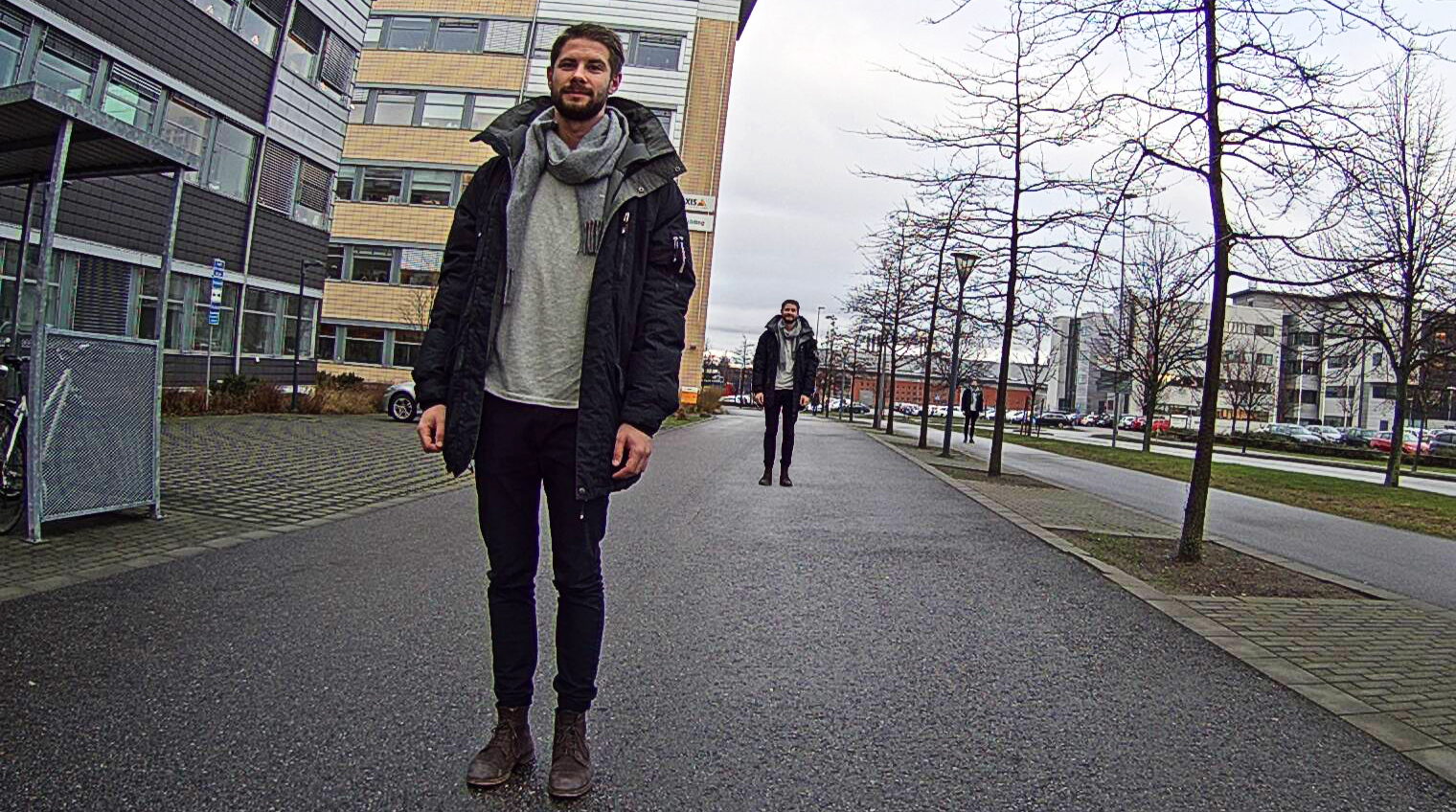
Specify where the subject will be and test it there. Our placement guide links entrance layout, detection and useful detail instead of recommending the same mounting height for every device.
Define recording and retention before installation
Decide whether event clips are adequate or whether an unbroken timeline is needed for a particular task. Check storage capacity, quality settings and the behavior when media fills. An advertised month of history may mean selected events rather than every second.
Choose a retention period appropriate to the purpose and applicable rules. There is no universal number of days that makes every system compliant or useful. Preserve specific incident footage through an appropriate process rather than retaining everything indefinitely just in case.
Test an export and playback outside the normal live-view screen. Know who can obtain the original and whether a proprietary player or additional metadata is required. Make this part of handover, not a discovery during the first incident.
Keep timestamps and evidence handling dependable
Check the recorder’s time zone, daylight-saving behavior and relationship to other devices. A few minutes of discrepancy can matter when comparing a door-access log, delivery record and camera clip. Document a known difference if correcting the time would affect evidence already recorded.
The College of Policing’s CCTV investigation guidance emphasizes checking relevant footage and time accuracy in the investigative process. For an owner, the practical preparation is to keep original recordings available and provide factual context rather than editing the only copy.
Restrict exports to authorized recipients. Posting an accusation and a short clip publicly can misrepresent an event and affect privacy. Use appropriate reporting channels and let the relevant authority assess evidence.
Protect the surveillance system itself
Use supported firmware, unique account credentials and appropriate authentication. Give users the access they need rather than sharing one administrator password with every employee or family member. Remove old invitations and integrations.
Protect the network and storage path. Local recording can be lost with a stolen camera or recorder, while cloud upload depends on service and connectivity. Choose a proportionate arrangement and understand the failure modes rather than declaring either method universally safe.
Our network guide and camera troubleshooting guide cover common dependencies. A secure-looking enclosure does not prove the account behind it is well managed.
Privacy is part of good system design
Record only the area and information needed for the stated purpose. Check audio separately, particularly where conversations extend beyond the intended scene. A system that captures neighbors, staff or visitors unnecessarily can create avoidable legal and practical problems.
Explain relevant recording to the people affected and follow the rules for the location and use. Domestic, workplace and shared-building arrangements are not necessarily governed by the same assumptions. Our privacy guide provides jurisdiction-specific examples rather than a universal consent claim.
Reassess when the purpose changes. A camera installed to check an empty storeroom should not quietly become a permanent close-up of an employee’s workstation.
Measure value with realistic outcomes
For a small installation, useful checks include how often the required footage is available, how quickly an authorized person can retrieve it and whether repeated alerts are relevant. Count gaps, false alarms and maintenance failures as well as successful recordings.
Do not infer a proven crime-reduction effect from a short period without an incident. Many other factors change, and a single household rarely has enough data for a reliable causal claim. It is reasonable to say the system passes its coverage and recording tests without claiming it has prevented a particular number of crimes.
Review whether every camera still serves a purpose. A view made redundant by building work may be better repositioned or removed than kept indefinitely because it already exists.
A buying specification that goes beyond megapixels
| Specify | Ask the installer or supplier to demonstrate |
|---|---|
| Event and location | The intended subject is visible in normal use |
| Required detail | Representative movement at the relevant distance |
| Recording mode | The expected clips or timeline are actually saved |
| Retention and export | An authorized user can retrieve an original recording |
| Failure behavior | Known limitations during power, network or storage problems |
| Privacy and permissions | Appropriate view, audio settings and account roles |
| Maintenance | A named owner and practical service access |
A supplier who can explain these items is more useful than one who promises universal deterrence. The purpose of CCTV is to improve what you can observe, document and respond to, within a broader protection plan.
Frequently asked questions
Do cameras reduce crime?
Research supports modest benefits in some contexts, with results varying by setting and implementation. It does not establish that every standalone home camera prevents every kind of crime.
Are cameras worth installing if they do not guarantee prevention?
They can be useful for evidence, visitor interaction and incident assessment. Decide whether those functions solve a real problem at the property.
Does more footage always mean better protection?
No. Useful coverage, proportionate retention, reliable recording and an appropriate response matter more than collecting everything indefinitely.
What is the biggest avoidable mistake?
Installing equipment before defining what it must show and testing whether a usable original recording is actually available afterward.


