

Benefits of Home Security Cameras: What They Can Show and What They Cannot Do
A camera earns its place when it answers a question you would otherwise struggle to resolve. Was the parcel delivered to this door? Did the gate remain open after the gardener left? What happened beside the parked car? Those are practical benefits. A vague promise that more cameras make every home safer is much harder to evaluate.
Home cameras provide information, recorded context and sometimes useful alerts or conversation. They do not repair a weak door, guarantee intervention or automatically preserve every event. Understanding that boundary helps you choose fewer, more useful devices and avoid subscriptions that add little to your actual security routine.
Benefit 1: know who is at the entrance without opening it
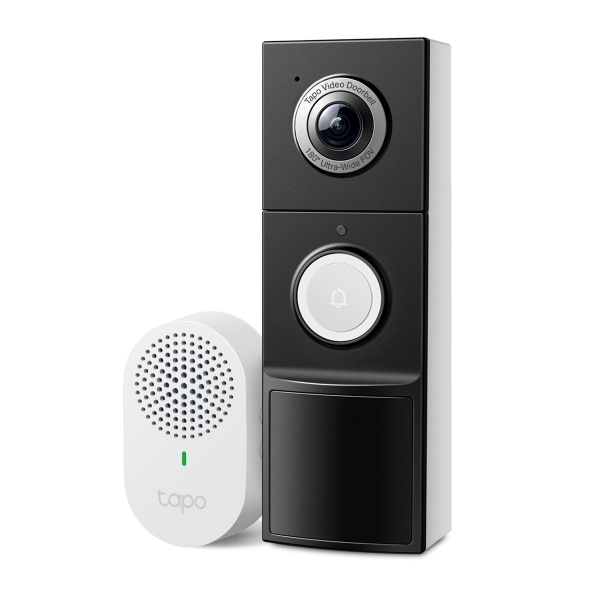
A suitable camera or video doorbell can help you see a caller while keeping the door closed. Two-way audio, where supported, can make a short conversation possible without walking to the entrance. This can be convenient when carrying a child, working upstairs or waiting for a delivery.
The view needs to include the place a visitor naturally stands. A device positioned for an attractive view of the street may miss the person directly below it. Check the image with someone of different heights and at ordinary standing positions rather than using one perfect demonstration.
A visible face is not proof of identity or authority. Verify unexpected requests through a known legitimate contact when appropriate. A camera improves the information available; it does not replace judgment about whether to admit someone.
Benefit 2: clarify deliveries and missing parcels
A saved clip may show the arrival time, which entrance was used and where a parcel was placed. That can help distinguish an unexpected delivery location from a missing package. It may also provide context when tracking says delivered but the threshold is empty.
Test whether the parcel area is actually visible. Some doorbell views prioritize faces and exclude the ground beneath them. An event-only camera may also miss activity outside its detection zone or during an interruption.
Better delivery arrangements remain the direct way to reduce unattended exposure. Our package-theft guide covers pickup points, handover and storage. A camera is useful supporting evidence, not a physical parcel locker.
Benefit 3: preserve context after property damage
When a fence panel, vehicle or garden item is damaged, footage can help establish the sequence of events. It may show weather, an accidental collision or another cause that is not obvious from the damage alone. That can prevent an unsupported assumption about what happened.
Context matters. Save footage from before and after the relevant moment rather than only one dramatic frame. Keep an original copy and record the approximate time and camera, particularly if a repairer, insurer or authority will need the information.
Do not assume every clip identifies a person or supports a particular legal outcome. Image quality, angle, continuity and local requirements affect its usefulness. Share evidence through appropriate channels instead of publishing accusations based on ambiguous video.
Remote viewing can answer simple questions while you are away: whether the garage entrance appears open, whether a permitted contractor arrived or whether the patio is affected by severe weather. It can reduce uncertainty when the camera covers a clearly defined area.
The value depends on connectivity and power. An app displaying an old thumbnail may not show the current state, and a camera that records locally may be unreachable while the internet is down. Check timestamps and device status before treating a frozen image as reassurance.
For a seasonal property, pair remote information with a realistic local response. Our cabin-security guide explains why being able to see a problem does not mean somebody can safely attend to it.
Benefit 5: receive relevant alerts
A well-configured alert can draw attention to activity at a gate or entrance without requiring you to watch live video. Some systems distinguish people, vehicles or other event types, but feature availability and performance differ by model and subscription.
Configure the scene and notification purpose together. A camera facing a busy public road may send so many irrelevant messages that the household eventually mutes it. Narrowing the relevant zone or moving the view can be more useful than increasing sensitivity.
Check detection, recording and notification separately. A clip can exist without a phone alert, and an alert can arrive without the history you expected. Our motion-detection guide explains that diagnostic split.
Benefit 6: review access without making the home difficult to use
A camera may help establish when an authorized person arrived or whether a shared gate closed behind them. This can complement access-control logs when the scene and timing are relevant. It is not a reason to record every private household interaction.
Agree what is monitored with the people affected and keep views proportionate. A sensor may answer an open-or-closed question without collecting video. Choose the least intrusive method that provides the information you actually need.
Review app permissions when guests, contractors or household members no longer need access. A camera should not become an indefinite live window into the property for everybody who once helped install it.
Possible deterrence is not the same as a guaranteed benefit
A visible camera may influence behavior, but its effect on a particular person cannot be promised. Do not base the entire purchase on a claim that a camera will stop every burglary. Its more directly testable contribution is whether it captures and retains useful information.
Maintain physical entrances and household routines regardless of how many devices are installed. A broken latch remains broken underneath a new camera. An obvious unattended parcel remains exposed even if the doorbell is recording.
Our practical deterrence guide separates visibility, resistance and detection. Those functions work best together, not when one is sold as a substitute for all the others.
Translate benefits into testable requirements
| Desired benefit | Requirement to verify | Simple acceptance test |
|---|---|---|
| Identify a caller | Usable face view in ordinary lighting | A helper approaches naturally in daylight and darkness |
| Check a delivery | Threshold and parcel area included | Place a normal parcel where couriers leave it |
| Investigate property damage | Useful retention and export | Retrieve an original clip from a known past time |
| Receive a meaningful warning | Relevant detection and notification settings | Trigger a permitted ordinary event and check each recipient |
| Check remotely | Supported off-site access | Use an authorized phone on mobile data |
| Continue during internet loss | Documented local behavior where required | Use the manufacturer’s supported controlled test |
This table is a better basis for comparison than counting advertised features. Two cameras can list the same headline capability and behave differently at the actual entrance.
Choose the recording arrangement before the brand
Local memory-card storage, a separate recorder and cloud history offer different failure modes. A card inside a stolen camera may disappear with it. A separate recorder needs power and protection. Cloud uploads need a supported service and communication path.
Confirm whether the camera saves continuously or only after selected events. A long list of motion clips is not the same as a complete timeline. A free trial can temporarily make the product appear more capable than its eventual subscription-free mode.
Our recording guide uses specific examples to explain the distinction. Apply the same question to any camera: can you play the uneventful interval before something happened, or only the clips the system classified?
Nighttime usefulness is often the deciding factor
Check a moving person rather than a static garden scene. Long exposures, reflected infrared or poor placement can make nighttime footage bright but uninformative. Advertised illumination distance does not establish recognizable detail at the same distance.
If the camera is mounted behind glass, test indoor reflections and its motion sensor. A clear daytime preview may conceal a failed nighttime arrangement. Our through-window guide explains those limitations.
For an outside-mounted device, use the night-vision setup plan. Correcting the scene or aiming may provide more value than replacing a working camera with one advertising more pixels.
Privacy and security are part of the product
Choose a manufacturer that provides supported updates and understandable account controls. Use unique credentials and additional authentication where offered. Do not share the administrator password merely because someone needs occasional viewing access.
The FTC’s camera guidance recommends checking secure sharing, software maintenance and network protection. Those controls matter just as much on a low-priced camera as on a premium system.
Limit the view and retention to a legitimate purpose and check the rules applying to your location and shared spaces. Our camera privacy article discusses the practical questions; it is not a universal legal permission to record beyond your property.
Cost includes the work of maintaining the system
Count accessories, approved outdoor power, storage, subscriptions and the time needed to respond to warnings. A camera requiring frequent ladder access for charging may be a poor fit even if its purchase price is attractive.
Consider whether an existing device can be repositioned safely or configured better. One carefully chosen camera can be useful; several redundant views can increase cost and notification fatigue without answering more questions.
For a first purchase, compare our budget camera guide and outdoor camera guide. Both distinguish documented specifications from claims of hands-on testing.
When a different tool is the better answer
If the question is whether a door opened, an appropriate contact sensor may be sufficient. If parcels are repeatedly exposed, a pickup arrangement or secure storage may address the cause. If the concern is a weak entrance, a repair or reinforcement assessment belongs first.
For life-safety hazards, use the appropriate dedicated alarms and maintenance arrangements. An ordinary consumer camera is not a replacement for required smoke or carbon-monoxide protection, nor a medical monitoring device.
Likewise, a camera should not become a reason to personally confront someone. Use appropriate authorities and established response arrangements when an event needs intervention.
A small installation that proves its value
Start with one location and write the intended benefit in a sentence. Install using suitable equipment, test real recordings and confirm that authorized users can retrieve them. Keep a record of the limitations you observed rather than overstating coverage.
After a few ordinary weeks, review whether the notifications are useful, whether the account is manageable and whether the camera has answered the original question. Expand only when a distinct important gap remains.
Our pre-mounting test guide helps avoid permanent holes for a view that never worked. Thoughtful commissioning is what turns a product feature into an actual household benefit.
Frequently asked questions
Are security cameras worth having at home?
They can be, when a useful scene is recorded reliably and the ongoing cost and privacy tradeoffs make sense. Begin with the question the camera will answer.
Can cameras work without a subscription?
Some models support useful local recording and alerts without one. Verify exact functions, storage requirements and the behavior after a trial ends.
Will footage always identify a thief?
No. Angle, distance, lighting, motion and retention affect the result. Preserve useful context without promising identification from every event.
How many cameras does a house need?
There is no universal number. Count distinct, worthwhile views and test each one rather than choosing a bundle by device count.


