Window Air Conditioner Security: Safe Support, Sash Locks and Better Installation
A window air conditioner changes the opening it occupies. The sash may remain partly raised, side fillers replace some of the original barrier, and a heavy appliance projects outside. Improving security means understanding that complete arrangement, not adding a chain or driving screws through the cabinet wherever they seem convenient.
The first priority is a stable, manufacturer-compatible installation that cannot fall or move during ordinary use. Then assess sash restraint, the remaining opening and any required escape function. A theft-prevention modification that damages the appliance, blocks drainage or prevents emergency exit is not a successful upgrade.
Start with the exact unit and window
Identify the air-conditioner model, intended window type and installation kit. A conventional double-hung unit, a casement model and a newer saddle or U-shaped design can have different support and operating arrangements. Instructions for one should not be transferred casually to another.
Check the model’s current support and recall information before installing or reinstalling it. A used unit may be missing brackets, seals or instructions that were part of its intended assembly. Obtain genuine or expressly compatible replacements rather than improvising with loose household materials.
Inspect the window and frame for damage, decay and reliable operation. A heavy unit should not rely on a deteriorated sill or an unsupported sash. In a rented or managed building, obtain the relevant permission and installation requirements before work starts.
Support and security are different jobs
| Component | Primary job | What not to assume |
|---|---|---|
| Support bracket or specified support system | Carry and stabilize the appliance as designed | That it independently secures every part of the window |
| Sash restraint | Limit unintended sash movement in the approved configuration | That any retail stop fits every profile |
| Side fillers and seals | Close specified gaps and help the installation perform as intended | That thin panels provide a tested intrusion barrier |
| Primary window hardware | Provide the window’s normal operation and locking | That it remains in its ordinary locked state with a unit installed |
| Sensor or camera | Provide information about a relevant event | That monitoring physically supports or retains the appliance |
A good installation addresses all relevant functions without confusing them. A bracket can be correctly supporting the unit while the remaining gap still deserves a security review.
Use structural support specified for the installation
Follow the air-conditioner and bracket manufacturers’ instructions together. The supporting system must suit the unit’s weight, window geometry and building material. A bracket’s advertised capacity does not establish that a particular sill or fixing point can carry the load.
New York City’s installation guidance calls for sound windows and frames, appropriate structural support, securely attached positioning components and no loose improvised supports. Those are useful safety considerations; its permit rules are specific to that jurisdiction.
Do not use loose bricks, books or scraps as a permanent support arrangement. Vibration, wind and ordinary window movement can change their position. If the installation cannot be completed using the approved parts and construction, obtain qualified help.
The sash must not accidentally release the unit
Some installations use the window sash as part of the retaining arrangement. Others have more independent support or different movement allowances. Check the specific design rather than assuming opening the sash is always harmless or always prohibited.
Use the supplied or approved sash restraint in the specified location. Confirm what happens when someone unfamiliar with the unit tries to open the window. An understandable household instruction can prevent a well-intended adjustment from destabilizing the appliance.
Do not fasten into an unfamiliar vinyl or metal frame without knowing the approved preparation. Internal reinforcement, drainage and glazing location can affect where modifications are permitted. A screw that holds today may still damage the window or compromise its intended function.
Do not drill through the appliance cabinet blindly
The case can contain refrigeration components, electrical parts and designed air or drainage paths. A convenient-looking location for a security screw or chain may not be safe. Use only attachment points and procedures identified by the manufacturer.
Adding a cable through a grille can interfere with a fan or damage fins. A homemade cage can restrict airflow or prevent servicing. Hardware that traps heat or blocks a vent can create a new operational problem while offering uncertain theft resistance.
If additional protection is needed beyond the supplied kit, ask the manufacturer or qualified installer for a compatible method. The absence of an easy approved attachment point is not permission to invent one.
Side panels: weather sealing is not the whole security answer
Expandable fillers are often selected to close the remaining space around the unit. Their structural properties vary, and they should not be described as equivalent to the original window glazing. Inspect the complete gap and how the fillers are retained.
Use manufacturer-compatible components rather than stuffing openings with arbitrary materials. A poorly sealed installation can admit water or pests and reduce comfort. A rigid replacement panel may still need an approved fixing and allowance for the appliance’s airflow.
For a reachable ground-floor opening, have the overall installation assessed. It may be more practical to use a different cooling arrangement than to turn thin fillers into an improvised security wall.
Preserve required emergency escape
Do not install the unit in a window that must remain available as an emergency exit unless the arrangement is specifically permitted and designed for that use. An appliance that one strong adult can remove with tools is not the same as a readily usable escape opening.
Check local requirements, room use and building rules. Bedrooms, basements and apartments can have particular constraints, and a generic article cannot determine the code for your property. NYC’s guidance expressly warns against blocking fire-escape windows and other exits.
Our basement-window guide explains why the complete route matters. If the only suitable AC location conflicts with required escape, consult the responsible professional about another cooling solution.
Children and pets need separate protection
A partly open window and appliance installation should be assessed for fall and contact hazards as well as theft. Do not assume an insect screen, filler panel or the air conditioner itself provides appropriate child-fall protection.
Keep climbable furniture and dangling cords from creating avoidable access. Use safety devices intended for the window and household, while preserving required emergency operation. A security stop and a child-safety product are not automatically interchangeable.
Where several objectives conflict, obtain a coordinated solution instead of adding accessories independently. The window, support, restraint and safety features need to work together.
Drainage and weather exposure
Follow the exact installation instructions for level, drainage and positioning. Some designs require a specified arrangement that differs from another model’s tilt guidance. Do not drill extra drain holes or change the slope merely because another owner’s unit looks different.
Keep designed air and water paths unobstructed. Security hardware, foam or coverings can accidentally block them. Inspect the surrounding wall and sill after rain or normal operation for signs of water damage.
Water damage can undermine both the frame and the supporting installation over time. A stain or soft sill is a maintenance issue to investigate, not something to hide under another sealant bead.
Electrical safety belongs in the same assessment
Use the power arrangement specified for the appliance and the building. Do not treat an indoor extension lead routed through a window as a permanent electrical installation. Avoid pinched cables and damaged plugs, and keep connections protected as required.
If the available circuit or outlet is unsuitable, consult a qualified electrician. A cooling unit that trips protection repeatedly or shows signs of overheating should not be made usable by bypassing a safety device.
The security plan should not require moving powered equipment or altering its cable every evening. A stable, approved installation is easier to maintain and less likely to be disturbed accidentally.
Assess whether the unit can be approached from the street, garden, balcony or shared walkway. Height alone is not a complete answer. A higher opening beside a roof or exterior staircase may still be accessible.
In a shared building, consider the area below the unit and the effect on other residents. Required installation methods may be designed to prevent falling equipment or interference with the facade, not merely to control appearance.
For renters, document concerns and contact management instead of drilling extra fasteners without authority. Our apartment security guide explains the distinction between a maintenance defect and an optional personal upgrade.
Can a sensor help?
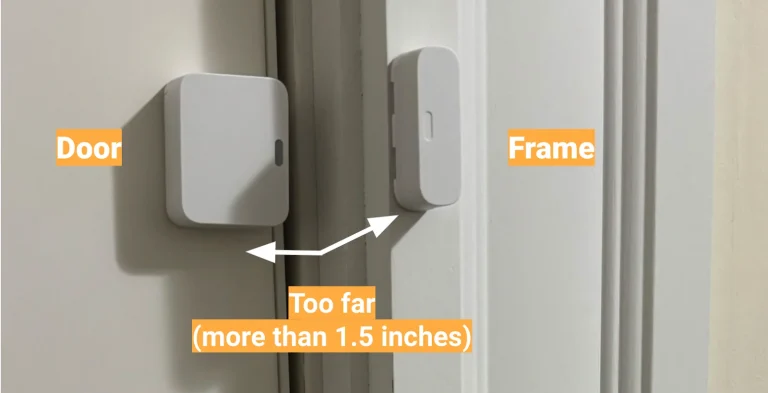
A compatible contact or movement sensor may provide warning about a relevant change, but it should be installed without interfering with the sash, appliance or required release. Check the intended detection behavior rather than assuming any window contact covers every possible movement.
Test normal cooling operation for nuisance triggers. Vibration, condensation and temperature can affect whether a device suits the location. An indoor sensor is not automatically appropriate for an exposed or damp section of the installation.
Decide who receives alerts and what response is safe. Monitoring can complement sound support and access control, but it does not replace them.
Camera placement near an air conditioner
A camera can document the approach to the window, but it needs a view of the relevant activity. A camera inside behind the same pane may have reflection and detection limitations, particularly at night.
Do not mount a camera on a vibrating appliance unless the manufacturer supports that arrangement. Keep its power and cable routing independent and safe. Check that the AC housing does not obscure the event you want to record.
Our through-window camera guide explains why a clear live image does not guarantee useful saved nighttime footage.
Seasonal removal and reinstallation
Plan removal with the unit’s weight, height and support method in mind. Follow the manufacturer’s procedure and use appropriate assistance. Do not loosen retaining parts while nobody is safely controlling the appliance.
After removal, restore the window to normal operation and inspect the frame, hardware and seals. Store the installation parts and model instructions together so the next season does not begin with missing brackets and improvised substitutes.
Before reinstalling, check current manufacturer notices and the condition of the unit and support. Reusing last year’s arrangement without inspection can miss deterioration in the sill, fasteners or power cord.
A practical installation acceptance checklist
| Check | What should be established |
|---|---|
| Model and opening | The unit is approved for that window type and size |
| Support | The specified system bears on suitable structure |
| Retention | Ordinary sash operation cannot accidentally dislodge the unit |
| Remaining gaps | Approved fillers and seals fit without obstructing function |
| Power and drainage | The actual manual and local requirements are followed |
| Escape and access | Required routes and household safety remain intact |
| Maintenance | Someone knows what to inspect and how to remove it safely |
Keep the installation record and product details. If a problem develops, the model, window type and symptoms give the installer a useful starting point.
When a different cooling arrangement is more sensible
If the window cannot support the unit, is needed for escape or cannot accommodate a secure installation, consider another approved solution. That may involve a different location, appliance type or professionally installed system.
Do not assume a portable unit has no window-security implications. Its exhaust arrangement can still require an opening and suitable retention. Compare the complete installation rather than only the indoor shape of the appliance.
The best choice cools the room while preserving safe, reliable use of the building. An accessory collection that cannot meet those conditions is not a bargain.
Frequently asked questions
Can I screw the AC case to the window frame?
Only through attachment points and methods approved for the actual appliance and window. Blind drilling can damage internal components or the frame.
Are expandable side panels burglar-resistant?
Do not assume so. They may primarily close and seal the installation gap. Assess the complete arrangement and any documented security specification.
Does a support bracket also prevent theft?
Its primary job is to support and stabilize the appliance as designed. Security and sash restraint need separate checks.
Can the unit remain in an escape window?
Do not block a required route with an ordinary installation. Check the applicable requirements and use an approved alternative where needed.
What should I check each season?
The unit’s current notices, support condition, frame, retaining hardware, power cable and normal drainage. Reinstallation is a new inspection, not merely lifting the same appliance back into place.