Cat5e vs. Cat6 for PoE Cameras: Choose the Cable, Jacket and Connectors Together
.sl-poe table{border-collapse:collapse;width:100%;margin:22px 0}.sl-poe th,.sl-poe td{border:1px solid #bdcbd0;padding:12px;text-align:left;vertical-align:top}.sl-poe th{background:#edf4f2}.sl-poe .table-scroll{overflow-x:auto}.sl-poe figure{max-width:850px;margin:28px auto}.sl-poe img{max-width:100%;height:auto;display:block;margin:auto}.sl-poe figcaption{font-size:14px;line-height:1.6;color:#425c63;padding-top:9px}
A camera that works on a short lead but disconnects after installation does not automatically need a more expensive cable category. The existing run may have poor terminations, unsuitable conductors, a damaged jacket or an exposed connector. Replacing Cat5e with badly installed Cat6 can reproduce the same problem at a higher cost.
Suitable Cat5e can serve many ordinary PoE camera links; Cat6 or Cat6A may be appropriate for a new installation or broader network requirement. The choice must include conductor quality, channel length, environmental rating and connector compatibility. This guide explains what the category label does—and the important decisions it leaves unanswered.
What the cable category tells you
The category describes defined transmission performance, not whether the cable is waterproof, suitable for burial or correctly terminated. A complete link also contains connectors and patch leads that must suit the intended specification. An expensive reel cannot compensate for inappropriate fittings at either end.
Eaton’s Ethernet-cable guide distinguishes Cat5e, Cat6 and Cat6A performance and notes their PoE uses. For a camera whose network interface and configured stream are modest, the highest advertised data rate is not automatically the decisive feature.
| Option | When to consider it | What still needs checking |
|---|---|---|
| Cat5e | Existing sound compliant cabling or an appropriate ordinary Gigabit link | PoE requirements, actual test result and environmental suitability |
| Cat6 | A new run where its installation characteristics and broader network plans fit | Connector dimensions, bend radius and the complete channel |
| Cat6A | A specified full-length 10GBASE-T link or a design that requires it | Size, installation space, compatible components and cost |
| Unidentified bargain cable | Do not specify from a marketing label alone | Manufacturer, conductor material, compliance and intended installation |
Choose for the planned connection, not for the claim that a higher category improves camera resolution. Once the network reliably carries the configured stream, the sensor, lens and recording settings determine the picture.
A camera does not necessarily need a Gigabit connection just because it records high-resolution video. Check its actual port specification and configured bitrate. Multiple camera streams sharing a switch uplink create a different capacity question from one camera’s individual cable.
For example, a fictional eight-camera system at 8 Mbps per stream produces 64 Mbps of recording traffic before other traffic and overhead. That arithmetic helps identify which links need attention; it does not require every camera to have a 10 Gigabit interface.
The PoE switch guide explains uplink and power planning. Use the stream and storage calculator for your actual settings instead of assuming a resolution label supplies the bandwidth answer.
Solid copper versus copper-clad aluminum
Confirm what the conductors are made from, not just the cable’s color or printed category. Copper-clad aluminum products can look similar to ordinary network cable and may appear to function in a light-duty test. That does not establish suitability for a standards-compliant powered camera installation.
Fluke Networks’ CCA application note explains the problems with nonstandard conductors masquerading as category-rated cabling. Buy from an accountable source, retain the product identification and question a listing that hides conductor information.
Do not perform an improvised destructive electrical test on an installed powered cable. A competent installer can inspect the specification and test the link with suitable equipment. Replacing a suspect reel is preferable to designing the whole system around unexplained intermittent behavior.
Conductor size and termination compatibility
The plug or jack must fit the actual cable construction and conductor dimensions. Solid-conductor installation cable and stranded patch cable can need different termination components. A plug gripping the jacket neatly does not prove its contacts have formed the intended connection.
Check the connector manufacturer’s supported gauge, insulation diameter and shielding arrangement. Use the specified termination method and suitable tools. Avoid mixing leftovers from different projects simply because they all have eight positions.
Hanwha Vision’s network-cable guidance connects cabling and termination problems with PoE reliability. In practice, a camera restarting under load can be a reason to assess the installed link rather than repeatedly resetting software.
Length includes more than the reel behind the wall
Measure the actual route, patch leads and any approved intermediate connections. In a conventional structured channel, the fixed permanent link and the complete end-to-end channel have different limits. Do not budget the whole allowance for hidden cable and then add long leads at both ends.
Fluke Networks explains the common 90-meter permanent-link and 100-meter channel arrangement. Particular cable assemblies and extended-reach products need their own specification; the general limit is not a promise that every improvised 99-meter run will be reliable.
A coupler does not regenerate the signal or erase the length already used. Count it as part of the actual channel and protect it appropriately. For a long route, change the design rather than making each segment look short on a shopping list.
Outdoor, wet-location and burial suitability are separate labels
An outdoor camera may need cable exposed to ultraviolet light, moisture or temperature extremes. A buried route presents further requirements. Check the actual manufacturer’s environmental rating and local installation rules rather than treating Cat6 as an outdoor designation.
Conduit can protect a route mechanically, but it is not a guarantee that the inside remains dry or that any indoor cable becomes suitable. An installer should assess the whole pathway, including entries, drainage where applicable and the building transition.
Do not route unapproved exterior cable through substantial indoor spaces merely because it is weather resistant. Interior flame and smoke requirements can also matter. This is a specification question for the actual route, not a reason to recommend one universal jacket for every home.
Shielding must be part of an intentional system
Shielded cable may be required by the camera manufacturer or justified by the electrical environment. Its effectiveness depends on the complete installation, including compatible connectors and the intended bonding arrangement. A foil layer is not a substitute for proper routing.
Axis’s shielding guidance discusses its equipment and demanding environments. Follow the requirements for your own devices and have the installer resolve grounding and protection rather than improvising connections.
Do not assume unshielded cable is always unacceptable or shielded cable is always a free improvement. The correct choice follows the specification and environment, especially around motors, exposed routes and separate buildings.
Check the camera’s waterproof connector before terminating
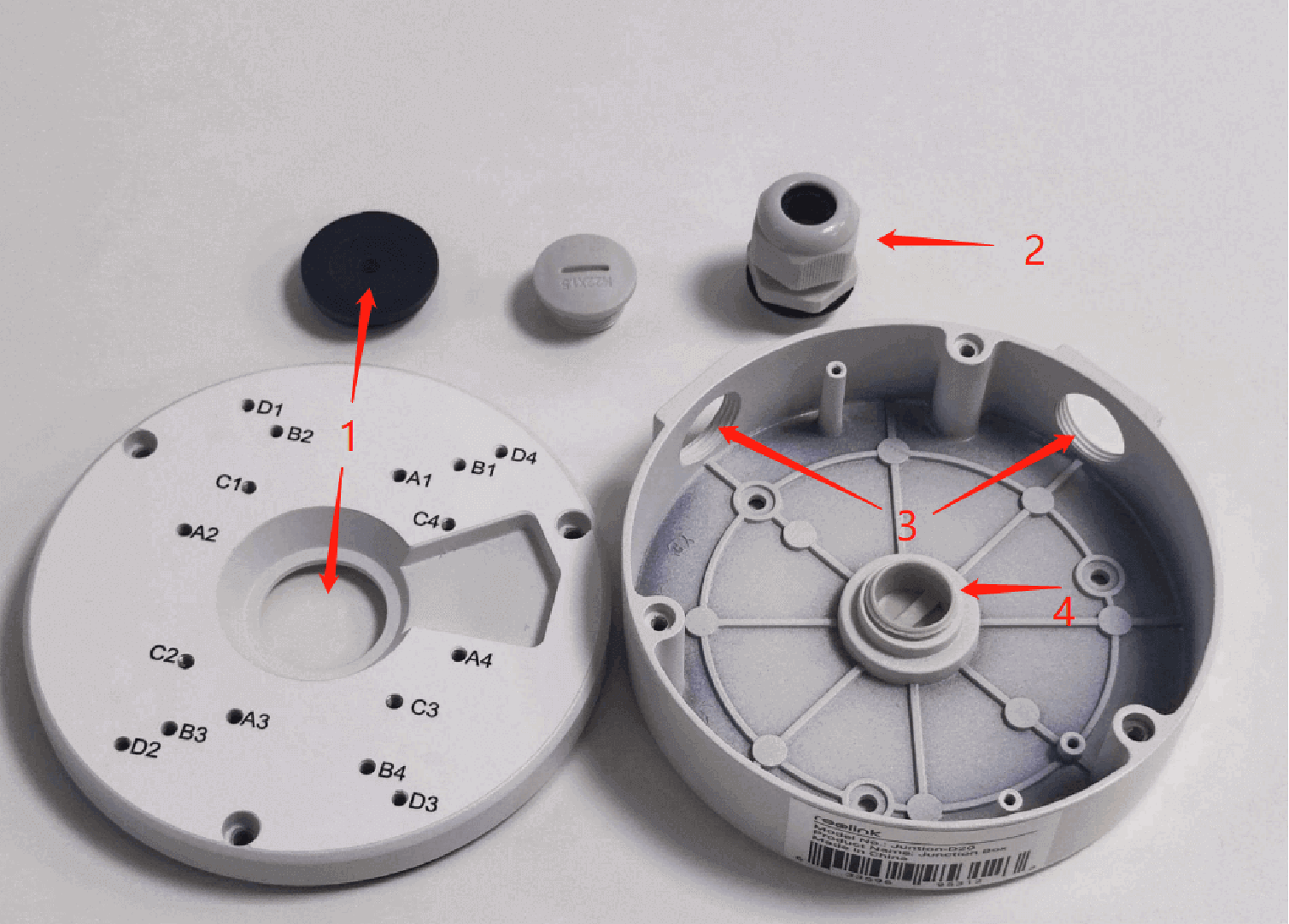
A large molded plug may not pass through a supplied gland or camera cap. A thicker cable may sit outside the fitting’s permitted sealing range. Discover those constraints while the cable and fittings are on the table, not after pulling a terminated lead through the building.
Keep required seals in place and follow their assembly order. Cutting the gland, removing an O-ring or leaving the connector hanging outside the box defeats the reason for selecting outdoor hardware. Use the correct approved fitting or a properly specified termination instead.
Protect the cable during installation
Respect the manufacturer’s bend radius and pulling limits, and use supports that do not crush the jacket. Leave sensible service access without creating coils or loops where they become a hazard. Label both ends clearly before several identical runs meet at the recorder.
Keep appropriate separation from mains wiring and protect building penetrations as required. Avoid running network cable through unknown spaces without checking concealed services. A low-voltage camera project can still involve work that needs a qualified installer.
A supplied mounting screw or plastic clip is not automatically right for every wall or environment. The route should remain serviceable and should not depend on tape holding a long exposed run indefinitely.
Continuity testing is not the same as certifying the link
A basic tester can help find an open conductor or an incorrect wire map. It does not necessarily verify all the transmission characteristics or PoE performance required by the design. A link light alone is an even narrower observation.
Fluke Networks’ testing guidance explains why the test method and appropriate limits matter. For a professionally installed structured system, agree what test report will be supplied and which standard or application it verifies.
For troubleshooting, compare the camera on a short known-good lead with its installed route using the same compatible power source. If the fault only appears on the installed route, document that result before changing firmware or buying another camera.
Keep or replace existing Cat5e?
Keep an existing run when its identity, condition and test results support the intended application. Replacing sound cable purely because Cat6 sounds newer can consume a budget better spent on a poor mounting position or inadequate storage.
Replace or reassess it when the conductor material is suspect, environmental protection is wrong, terminations are damaged or it cannot meet the required link test. A speed upgrade elsewhere in the network can also justify a planned cabling change.
When access is already open during renovation, compare the cost of an appropriate new run with the future disruption of reopening the route. That is an installation-economics decision, not evidence that every camera requires the highest available category.
A specification to send to an installer
| Specify | Ask for |
|---|---|
| Route and installed length | Includes patch leads, entries and service allowance |
| Conductor and category | Identified compliant product, not an unnamed reel |
| Environmental requirements | Appropriate outdoor, wet or burial suitability where needed |
| Connectors and protection | Fit to cable and camera seals, with suitable mounting |
| Shielding and surge design | Equipment-specific requirements and competent installation |
| Testing | Agreed link tests and a useful recording acceptance test |
Compare quotations on this scope. A cheaper cable-only quote is not equivalent to a tested, weather-protected installation with appropriate terminations and supporting work.
Frequently asked questions
Does Cat6 make a 4K camera sharper?
Not directly. A reliable link must carry the configured stream, but changing the category does not improve the camera’s lens or create missing image detail.
Can I reuse existing Cat5e?
Often that is a reasonable option when the installed link meets the actual requirements. Verify condition, conductor quality and testing rather than deciding from age alone.
Is outdoor cable automatically direct-burial cable?
No general assumption is safe. Read the specific product’s rating and use an installation appropriate to the route and local requirements.
Is a cheap continuity tester enough?
It can identify some basic faults, but it does not perform every application or certification test. Match the evidence to the installation you are accepting.
The complete PoE installation guide places cable selection alongside power, recording and handover. Treat those as one system rather than four unrelated purchases.